top of page

2040's EU: The true and welcoming land of opportunities

Anonymous

April 26, 2023
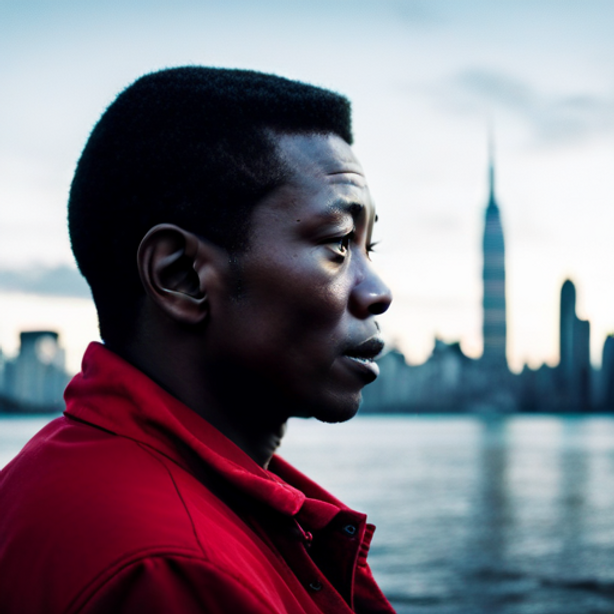
2040's EU: The true and welcoming land of opportunities

This image was generated with Dream Studio AI.

I hope and expect that our empathy for those from afar will increase in the next 20 years, and the international mobility of vulnerable people will not be as difficult and exhausting as it is today.

On the one hand, I would like 2040 to be a year in which those who are forced to flee their homes due to human or climatic catastrophes do not face unnecessary obstacles in their flight, resulting from prejudice and discrimination. I close my eyes and I see reception centres which respect and promote human rights, politicians that do not trade with border control measures, administrations that protect vulnerable people, laws that do not curtail human rights under any pretext or justification, and judicial systems that do not deviate from such red lines.

In addition, I also hope that those who cannot develop their full potential in their home country will be able to access the facilities we have in Europe, either to bring that talent back home or to stay in the EU. At present, the legal pathways to access the EU territory are mainly focused on people with higher education, entrepreneurs or people with some purchasing power. However, I believe that the ideal is to open up more circular migration channels through which those who do not have much can have a better future. This is not only "in our interest" because it would reduce irregular immigration, but I believe it should be an obligation, as a significant world power.

In my vision of an ideal 2040, mobility should be open to all - not a headache for those who need to flee or a utopia for those who cannot afford it.

related stories

hallo
Familie
I would like it to be easier to build and convert houses. That young families are given more support so that they can have a secure home. I also hope that my children are better supported by the state in their own child planning and that they feel financially secure during their parental leave
hallo
Le temps qui passe
The morning sun filtered through the dense foliage of the trees lining my Parisian apartment. Once a gray, noisy avenue, my street was now a verdant oasis, where birdsong replaced the roar of cars. The transformation of Europe had been radical. In 2025, we were on the brink of a climatic precipice. But a global awakening had taken place. Europe had embarked on an ambitious reforestation and sustainable development project. Cities were redesigned, and nature reclaimed its rights. Gasoline-powered cars disappeared, replaced by electric vehicles and efficient public transport. My day began with a bike ride along the old tracks, now transformed into winding cycle paths through parks and forests. Lunch consisted of fresh, local produce grown on rooftops and in community gardens dotted around the city. The afternoon was devoted to work, but even the offices were green and bright, with open coworking spaces and soothing views of the surrounding nature. Life in 2050 was slower, more conscious. We had swapped the frantic race for a pace more respectful of our environment and well-being. Europe had become a model of sustainable development, a society where technology and nature coexisted in harmony. And every day, I was delighted to have contributed, in my own small way, to this transformation.
hallo
Un espoir de bonheur collectif.
A European future capable of managing international crises with clear and precise objectives. Perhaps a new constitution less oriented towards a liberal economy (which doesn't mean freedom at all) but more towards respect for individual freedoms in relation to multinationals, more ecology, more autonomy in terms of food self-sufficiency. A greater capacity for energy autonomy, too, by being inventive in this area. Mass investment in research in this field would be an option. Regaining our pharmaceutical sovereignty would be reassuring. It would also be reassuring to see a return to social progress, and to stop blaming the weakest members of society (women, the unemployed, immigrants, etc.), who are not responsible for the crises we're going through. The culprits are the economic system (mainly liberal) and over-protected professional politicians. Limiting personal fortunes might be an interesting way of avoiding an oligarchic drift.
hallo
2040 début de la sobriété énergétique
on january 1, 2040, the european union will ban all individual vehicles, whatever their mode of propulsion. Subsidies have been distributed European citizens to invest in bicycles, be they 2-wheelers, 3-wheelers or family sedans. All cities are pedestrianized, and to get from one city to another, or from one country to another, numerous train and streetcar tracks have been created. The entire agricultural system has been overhauled and intensive productivity banished. Sobriety is on the march
Join #OurFutures now!

The future is shaped by our ideas and our actions today. Tell us about your visions of the future and help us create a futures narrative aimed at inspiring citizens, policy-makers and foresight experts alike!

Our-futures-banner-coloured_v3.jpg

The European Commission support does not constitute endorsement of the contents which reflects the views only of the authors, and the Commission cannot be held responsible for any use which may be made of the information contained.

ERA_logo.jpg

We support the European Research Area aimed at creating a single, borderless market for research, innovation and technology in the EU.

©OurFutures 2025, All rights reserved.

  • Instagram
  • Facebook
  • LinkedIn
  • YouTube
bottom of page