top of page

A Fragile Balance

Anonymous

March 19, 2025

A Fragile Balance

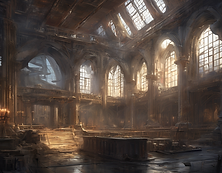
This image was generated with Dream Studio AI.

In the year 2040, the world had transformed in ways both hopeful and uncertain. Cities now thrived as green, interconnected hubs, their skyline dotted with sleek, solar-powered vehicles that hovered above the streets. Public transport, once overcrowded and polluting, had been replaced by autonomous electric pods, moving people swiftly through airways and tunnels, reducing congestion and emissions. The once-imposing traffic jams were a thing of the past.

Yet, as humanity reveled in its advancements, the Earth was also telling its story—a story of recovery and fragility. Nature, scarred by decades of climate chaos, had begun to heal, but not without difficulty. Vast forests, once endangered, were now flourishing thanks to restored ecosystems and rewilding projects. Cities had reclaimed their green spaces, integrating vertical gardens, green rooftops, and urban farms. These innovations, born out of necessity, had become a symbol of hope for the planet.

But the scars of past negligence lingered. Weather patterns had become unpredictable, and natural disasters, while less frequent, still struck with unrelenting power. A warning bell echoed in the back of people's minds—how much time was left before the tipping point came?

On the global level, nations had united in an unprecedented alliance, working toward a common goal: food security and environmental stability. Vertical farming, once a novel idea, had become the norm. Skyscrapers in every major city were now home to expansive farms that grew everything from grains to vegetables, using less water and land than traditional methods. The Earth’s soil had been treated with respect, and sustainable farming practices had revived once barren fields. It was a revolution in agriculture—one that seemed to promise a future free from hunger.
Yet, even as the world seemed to bloom, there were whispers of concern. Some wondered whether the changes were enough. Could technology truly fix everything? Could humans repair the damage of centuries in just a few short decades? It was unclear, but what was certain was that the path forward was one of careful balance—an ongoing dance between progress and preservation.

The future, both hopeful and wary, was a world of resilience, powered by innovation and a deep connection to nature. But the greatest question remained: Would humanity sustain the fragile balance they had fought so hard to build? Only time would tell.

related stories
hallo
Un posto in cui restare
In 2040 I would like the valley train to be frequent, even if only every two hours, and for on-call transport to cover the smaller villages, so that a 16-year-old boy can go to play sports or visit friends without the family having to organize for weeks. I would like fiber in every fraction, not as a promise but as a normal thing, because working from home here should be the obvious choice, not an exception to explain. I also wish the school wouldn't close. Classes with five children are a problem for those who organize the numbers, but for those who attend them they are a fortune: You learn differently, with the older ones helping the little ones and with the teachers who know each family. I imagine a mountain school that works with schools in other countries, with online twinning and real exchanges, and where Italian, German and English are spoken well, because languages are really needed here. And I wish young people had a way to do business without leaving. A cooperative that manages the forest and sells its wood in a sustainable way, a hostel run by those who grew up in the valley, a laboratory for the production of cheese or beer with the local raw material. Not everyone will have to become an entrepreneur, but those who want to try should find money, advice and someone to tell them they can do it. I don't know if that's gonna happen. But I know the question is not how to get young people back, but how to make sure they don't need to leave to have a full life. In 2040 I hope the answer is: There are things to do here, there are people to do them with, and someone will one day want to stay.
hallo
Test
TEST CVG: The future belongs to all of us. Let's think together about how your ideas and inspiration can shape the future of Europe. Life today is very different from the time of your grandparents. A lot will have changed in 20 years. Imagine living in 2040. What would your ideal future look like? Choose a topic that is important to you and that you would like to see changed or improved. test xx xx xx
hallo
test
test test test
hallo
The only way or no? (Fath in the wrong hands)
Philosophy/powerstructors/values/all of the above
Join #OurFutures now!

The future is shaped by our ideas and our actions today. Tell us about your visions of the future and help us create a futures narrative aimed at inspiring citizens, policy-makers and foresight experts alike!

Our-futures-banner-coloured_v3.jpg

The European Commission support does not constitute endorsement of the contents which reflects the views only of the authors, and the Commission cannot be held responsible for any use which may be made of the information contained.

ERA_logo.jpg

We support the European Research Area aimed at creating a single, borderless market for research, innovation and technology in the EU.

©OurFutures 2025, All rights reserved.

  • Instagram
  • Facebook
  • LinkedIn
  • YouTube
bottom of page