top of page

Beneath the Glass Skies

Anonymous

March 19, 2025

Beneath the Glass Skies

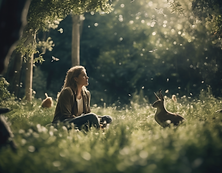
This image was generated with Dream Studio AI.

By 2040, Earth was unrecognizable. The scars of climate change had etched themselves across every continent. Rising seas had swallowed parts of coastal cities, while droughts and wildfires claimed once fertile lands. The Earth, though still beautiful, now bore an eerie, fractured majesty—an intricate mix of human resilience and nature's unrelenting wrath.

In New London, a sprawling megacity built atop the ruins of old London, a young woman named Lena tightened her augmented reality glasses and stepped outside. Above her, glass domes shimmered, shielding the city from the temperamental weather outside—acid rain, superstorms, and the occasional suffocating heatwave. These domes, known as Climate Bubbles, had become humanity's final defense against an environment it could no longer control.

Lena paused at the edge of the dome’s district barrier, watching workers in exoskeleton suits reinforce its joints. Beyond the translucent wall lay the Blightlands, a wasteland of dead soil, skeletal trees, and the ruins of smaller towns long abandoned. The land was barren, save for the scavenger drones zipping around to recover rare metals from old tech and the occasional crew of climate engineers planting carbon-absorbing bio-machines disguised as moss.

Life inside the domes was far from perfect. The air was clean, water was drinkable, and food was plentiful, though most of it came from vertical farms that spiraled skyward in shades of green and silver. But the economy was tightly controlled, dominated by mega-corporations that had stepped in to do what governments couldn't during the late 2020s. The tech giant Solaris ran everything from energy grids to public AI, its CEO seen as a messiah to some and a tyrant to others.

related stories
hallo
basanakin@hotmail.com
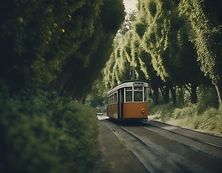
Free, easy travel by public transport throughout the EU. Lots of greenery, no overpopulation. Economic equality, not overly expensive (rental) homes. Velig and clean. There is always supervision that can intervene quickly, and streets and homes are well cared for. There are fewer cars and people have faith in science. Veganism is much more popular.
hallo
bojan.balaban2@gmail.com
I sit in my garden and breathe clean, scented air.In my sight is a forest and in it a multitude of animals.No private cars,only public transport.Everything is socially owned:my house,the company where I work,health,school... Every household has a dog, cat or some other domestic animal that it takes care of.Human rights are at a very high level and all are respected.At work it is allowed to come with pets.By winter I heat myself on electric heaters, and electricity is not expensive because it arises only from renewable energy sources.My city is full of parks where trees are not cut down because it is rotten. but when it is dried or wilted. The branches of the trees are not cut and circumcised and therefore the movement of people is restricted.
hallo
mtrumpickaite@gmail.com
Europe and the world are currently experiencing political tensions caused by several ill-equipped leaders. The Russian president's war in Ukraine makes people feel fearful, and the American president's speeches are just worthy of the title of comedian. These inadequate people rule a large part of humanity, causing chaos, fear and confusion. If the political situation changes, we can continue to live in peace and tranquility without fear of a possible war. Such a future, and I hope that we will live in peace, without fear, and that the government will be represented by intelligent leaders. Utopian society, in which there is no place for corruption, lies, anger, greed, should be an aspiration.
hallo
kari.porttila@gmail.com
In 2030, there was a war in Europe involving the use of tactical nuclear weapons in a restricted area. As a result of the war, dozens of cities were destroyed, and nuclear pollution spread to the territories of warring parties and neutral countries under the influence of winds, causing a large number of civilian casualties. As the consequences became widely known throughout the world, the demand for a total ban on nuclear weapons arose. This led, especially in the nuclear powers, to the fall of governments and, in a few years, to the deactivation of nuclear weapons everywhere. In 2040, atomic power was harnessed exclusively for civilian use - mainly for the production of energy and heat. The main focus is on local small-scale power plants, whose patent rights are freely available to all countries. Fossil energy use has decreased significantly: or in very sparsely populated areas, it remains the most advantageous option overall. Even the smog that plagued China's big cities has practically disappeared. At the same time, green construction in urban areas has taken over the sector in almost every part of the world. The roofs of the apartment buildings are like gardens. The use of geothermal heat has become more common, while fields and forest squares covered with solar panels have been restored to their natural state. Wind farms are set up either at sea or further away from settlements, although higher installation and energy transmission costs cause critical debate.
Join #OurFutures now!

The future is shaped by our ideas and our actions today. Tell us about your visions of the future and help us create a futures narrative aimed at inspiring citizens, policy-makers and foresight experts alike!

Our-futures-banner-coloured_v3.jpg

The European Commission support does not constitute endorsement of the contents which reflects the views only of the authors, and the Commission cannot be held responsible for any use which may be made of the information contained.

ERA_logo.jpg

We support the European Research Area aimed at creating a single, borderless market for research, innovation and technology in the EU.

©OurFutures 2025, All rights reserved.

  • Instagram
  • Facebook
  • LinkedIn
  • YouTube
bottom of page