top of page

Better tomorrow

Anonymous

March 19, 2025

Better tomorrow

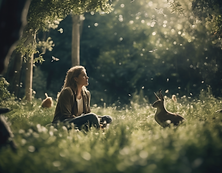
This image was generated with Dream Studio AI.

A Day in 2050: Reflections on the Past and Future
It's a crisp morning in April 2050. The world has transformed significantly since 2025, with technological advancements, environmental shifts, and societal changes reshaping our lives.

Morning Reflections
As I step out onto my balcony, I gaze at the sprawling cityscape. Solar panels and wind turbines dot the rooftops, a testament to the global shift towards renewable energy. The air is cleaner, thanks to the widespread adoption of electric vehicles and advanced air purification systems.

I recall the pivotal years between 2025 and 2050. The early 2020s were marked by rising tensions between nations, particularly over AI and cybersecurity. However, by the late 2020s, international cooperation increased, driven by the urgent need to address climate change and ensure global food security.

The History Between 2025 and 2050
Technological Leap: AI became integral to daily life, revolutionizing healthcare, education, and transportation. Virtual and augmented reality transformed entertainment and learning, making remote education accessible worldwide.

Environmental Progress: The Paris Agreement's successor, the "Global Climate Pact," was signed in 2030, committing nations to net-zero emissions by 2050. This led to rapid advancements in clean tech, with solar energy becoming the primary source of power globally.

Societal Shifts: Aging populations in developed countries were supported by advanced healthcare and automation, while younger nations like India and Africa experienced rapid economic growth. Gender equality and cultural diversity became central to global policies.

A Day in 2050
As I head to work, I use my augmented reality glasses to navigate through the city. They provide real-time traffic updates and suggest the most efficient routes. My job as a sustainability consultant involves advising companies on how to integrate green technologies into their operations.

During lunch, I meet with friends at a community garden. These gardens have become common in urban areas, providing fresh produce and serving as community hubs. We discuss the upcoming "Global Happiness Index" report, which measures not just economic growth but also social well-being and environmental health.

Evening Reflections
As the day ends, I reflect on what I'd like to change. Despite the progress, there's still a gap in access to quality education and healthcare in some regions. I hope that by 2060, these disparities will be significantly reduced through continued technological innovation and global cooperation.

The future is promising, but it requires constant effort to ensure that progress benefits everyone. As I look out at the city, I feel a sense of hope and responsibility for the world we're building.

Important Aspects to Change

Education Accessibility: Ensure that quality education is accessible to all, using AI and virtual reality to bridge gaps in remote areas.

Healthcare Equity: Implement universal healthcare systems that leverage AI for early disease detection and personalized treatments.

Environmental Sustainability: Continue to innovate in clean tech and encourage global cooperation to protect natural resources for future generations.

By focusing on these areas, we can create a future where technology enhances human life without exacerbating existing inequalities.

related stories
hallo
bojan.balaban2@gmail.com
I sit in my garden and breathe clean, scented air.In my sight is a forest and in it a multitude of animals.No private cars,only public transport.Everything is socially owned:my house,the company where I work,health,school... Every household has a dog, cat or some other domestic animal that it takes care of.Human rights are at a very high level and all are respected.At work it is allowed to come with pets.By winter I heat myself on electric heaters, and electricity is not expensive because it arises only from renewable energy sources.My city is full of parks where trees are not cut down because it is rotten. but when it is dried or wilted. The branches of the trees are not cut and circumcised and therefore the movement of people is restricted.
hallo
mtrumpickaite@gmail.com
Europe and the world are currently experiencing political tensions caused by several ill-equipped leaders. The Russian president's war in Ukraine makes people feel fearful, and the American president's speeches are just worthy of the title of comedian. These inadequate people rule a large part of humanity, causing chaos, fear and confusion. If the political situation changes, we can continue to live in peace and tranquility without fear of a possible war. Such a future, and I hope that we will live in peace, without fear, and that the government will be represented by intelligent leaders. Utopian society, in which there is no place for corruption, lies, anger, greed, should be an aspiration.
hallo
kari.porttila@gmail.com
In 2030, there was a war in Europe involving the use of tactical nuclear weapons in a restricted area. As a result of the war, dozens of cities were destroyed, and nuclear pollution spread to the territories of warring parties and neutral countries under the influence of winds, causing a large number of civilian casualties. As the consequences became widely known throughout the world, the demand for a total ban on nuclear weapons arose. This led, especially in the nuclear powers, to the fall of governments and, in a few years, to the deactivation of nuclear weapons everywhere. In 2040, atomic power was harnessed exclusively for civilian use - mainly for the production of energy and heat. The main focus is on local small-scale power plants, whose patent rights are freely available to all countries. Fossil energy use has decreased significantly: or in very sparsely populated areas, it remains the most advantageous option overall. Even the smog that plagued China's big cities has practically disappeared. At the same time, green construction in urban areas has taken over the sector in almost every part of the world. The roofs of the apartment buildings are like gardens. The use of geothermal heat has become more common, while fields and forest squares covered with solar panels have been restored to their natural state. Wind farms are set up either at sea or further away from settlements, although higher installation and energy transmission costs cause critical debate.
hallo
denisgrnt@yahoo.ie
Here we are in 2040 I am now 83 years young and glad to be here the changes I have seen since times gone by are unleavable and let me explain some of them to you now. The government we now have work for the people and not themselves the wages now meet the cost of living needs, the fuel of petrol and diesel are now like gold dust to buy but the cars that run on these fuels now are nearly extinct and cost more than our EVs to buy now. Cleaner environment for us all to live in. The housing market is better now more houses are being built and at affordable costs not much poverty about at these times and we should thank god for that. Now some of the downfalls of this era are computers they control everything now we shop online now no more going to the supermarket the times of our local pubs are gone we are controlled by robots and AI this for me is hard to take I miss some of the old times open fires snow fall good summers and lots more are our times changing for better our worse YOU TELL ME.
Join #OurFutures now!

The future is shaped by our ideas and our actions today. Tell us about your visions of the future and help us create a futures narrative aimed at inspiring citizens, policy-makers and foresight experts alike!

OURfutures.png

The European Commission support does not constitute endorsement of the contents which reflects the views only of the authors, and the Commission cannot be held responsible for any use which may be made of the information contained.

ERA_logo.jpg

We support the European Research Area aimed at creating a single, borderless market for research, innovation and technology in the EU.

©OurFutures 2025, All rights reserved.

  • Instagram
  • Facebook
  • LinkedIn
  • YouTube
bottom of page