top of page

Better tomorrow

Anonymous

March 19, 2025

Better tomorrow

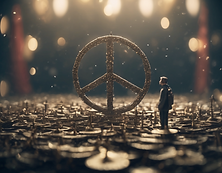
This image was generated with Dream Studio AI.

A Day in 2050: Reflections on the Past and Future
It's a crisp morning in April 2050. The world has transformed significantly since 2025, with technological advancements, environmental shifts, and societal changes reshaping our lives.

Morning Reflections
As I step out onto my balcony, I gaze at the sprawling cityscape. Solar panels and wind turbines dot the rooftops, a testament to the global shift towards renewable energy. The air is cleaner, thanks to the widespread adoption of electric vehicles and advanced air purification systems.

I recall the pivotal years between 2025 and 2050. The early 2020s were marked by rising tensions between nations, particularly over AI and cybersecurity. However, by the late 2020s, international cooperation increased, driven by the urgent need to address climate change and ensure global food security.

The History Between 2025 and 2050
Technological Leap: AI became integral to daily life, revolutionizing healthcare, education, and transportation. Virtual and augmented reality transformed entertainment and learning, making remote education accessible worldwide.

Environmental Progress: The Paris Agreement's successor, the "Global Climate Pact," was signed in 2030, committing nations to net-zero emissions by 2050. This led to rapid advancements in clean tech, with solar energy becoming the primary source of power globally.

Societal Shifts: Aging populations in developed countries were supported by advanced healthcare and automation, while younger nations like India and Africa experienced rapid economic growth. Gender equality and cultural diversity became central to global policies.

A Day in 2050
As I head to work, I use my augmented reality glasses to navigate through the city. They provide real-time traffic updates and suggest the most efficient routes. My job as a sustainability consultant involves advising companies on how to integrate green technologies into their operations.

During lunch, I meet with friends at a community garden. These gardens have become common in urban areas, providing fresh produce and serving as community hubs. We discuss the upcoming "Global Happiness Index" report, which measures not just economic growth but also social well-being and environmental health.

Evening Reflections
As the day ends, I reflect on what I'd like to change. Despite the progress, there's still a gap in access to quality education and healthcare in some regions. I hope that by 2060, these disparities will be significantly reduced through continued technological innovation and global cooperation.

The future is promising, but it requires constant effort to ensure that progress benefits everyone. As I look out at the city, I feel a sense of hope and responsibility for the world we're building.

Important Aspects to Change

Education Accessibility: Ensure that quality education is accessible to all, using AI and virtual reality to bridge gaps in remote areas.

Healthcare Equity: Implement universal healthcare systems that leverage AI for early disease detection and personalized treatments.

Environmental Sustainability: Continue to innovate in clean tech and encourage global cooperation to protect natural resources for future generations.

By focusing on these areas, we can create a future where technology enhances human life without exacerbating existing inequalities.

related stories
hallo
Frieden
I wish for a peaceful world in 2040. The world is open to other people and religions. No war and no hunger, just a better world where people accept and respect each other. No hatred, no violence and no terror and attacks. No people who die in war or in an attack.
hallo
saveinnella@libero.it
The technological future. Robots will no longer be an idea, they will be the present, with vehicles that will not only be electric, but will also have the characteristic of being able to fly for great distances on highways designed with special lights through the skies and buildings in the world. We will all have a helper at home made of technology to facilitate the work of the home and the education of our children, designed according to the needs of each one. Jobs will be increasingly remote and labor mobility will be better, making it easier for you to be hired anywhere in the world, as long as you have good computer equipment and a large capacity internet, that instead of being disadvantageous, will make it easier for information to travel at greater speed and immediacy
hallo
cortinovis.fabio@inwind.it
In 2040, everyday life is profoundly transformed by technology. Cities are smart, with self-sufficient buildings using solar energy and self-driving transport networks. Autonomous cars are finally a reality, reducing road traffic and reducing polluting emissions. Artificial intelligence is embedded in every aspect of society: Virtual assistants manage the house, book appointments and optimize work activities. Remote working is the norm, with holograms replacing video calls, making meetings more immersive. Medicine has also made great strides. Thanks to biotechnology, genetic diseases have almost disappeared and nanotechnologies allow immediate treatment for many diseases. Human longevity has increased, with many people over 100 in excellent health. Education is fully personalised where students learn through interactive experiences. However, new challenges are emerging. Dependence on technology raises ethical and social issues, and humanity must address the delicate balance between progress and mental well-being. Overall, 2040 is an era of extraordinary possibilities, where innovation continues to redefine the way we live, work and interact with the world.
hallo
jukka.sarvi@gmail.com
I see a united Europe, a federation that decides by majority vote with binding force. Money is common. Europe mainly produces its own food, and agriculture is planned with the rest of the world in such a way that food is distributed, sold to everyone as needed. The population has decreased according to the carrying capacity of nature. There is no war in Europe and the war is over. There is one common army in the world, ,, that controls the entire ball. Europe is involved in this. The production of energy relies on wind and solar power, which has been built all over the world from common resources. Nuclear power is part of the energy mix. The state of nature has been improved and 30% of land and water areas are in their own peace without human intervention. All operations are financed from a single fund and the surplus is returned to this fund. Citizens have a living income (citizens' wages) and everyone is equal, but also obliged to work of their choice. The profit-seeking of companies and people is limited to a very small amount. Everyone has the right to vote and decisions are preceded by extensive civic surveys.
Join #OurFutures now!

The future is shaped by our ideas and our actions today. Tell us about your visions of the future and help us create a futures narrative aimed at inspiring citizens, policy-makers and foresight experts alike!

OURfutures.png

The European Commission support does not constitute endorsement of the contents which reflects the views only of the authors, and the Commission cannot be held responsible for any use which may be made of the information contained.

ERA_logo.jpg

We support the European Research Area aimed at creating a single, borderless market for research, innovation and technology in the EU.

©OurFutures 2025, All rights reserved.

  • Instagram
  • Facebook
  • LinkedIn
  • YouTube
bottom of page