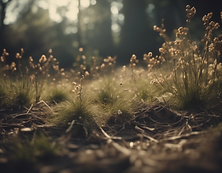
By 2040, the air and water are clean, food is healthy, and weapons are banned.

Anonymous
April 26, 2023

This image was generated with Dream Studio AI.
In 2040, the air and water will be clean, no one will have to go hungry, no weapons will be manufactured, and all wars will be over. All people - from politicians, business representatives, researchers, and bankers to employees, children, and pensioners - are involved in a circular bioeconomy which prevents emissions that pollute the environment, harm health and cause climate deterioration.
Renewable Organic Materials derived from plants, animals, microorganisms, and their excrement are only handled in the following local systems connected to "smart grids":
• "Non-Sewage systems" with hygienic and easy-to-handle devices for collecting both food and toilet waste - that prevent emissions which are polluting air and water, and facilitating the return of plant nutrients and organic carbon compounds to cultivated land - contributes to a) carbon storage, b) increased biodiversity of soil organisms, c) increased soil water holding capacity - as well as several other factors that are positive for soil fertility, while gray water is purified locally with biological methods.
• Sustainable biological transformation methods for Renewable Organic Materials in residues and waste are used in order to utilize bioenergy and all the essential chemical elements in ecologically, economically, and socially sustainable ways.
Unsustainable thermal methods such as combustion, thermal gasification and pyrolysis of Renewable Organic Materials as well as unsustainable chemical methods are banned.
Instead of manufacturing equipment for military purposes, all resources are used for continuous improvement of equipment that reduces the over-utilization of natural resources and thus benefits the CIRCULAR BIOECONOMY.
Gray water from settlements, treated with biological methods, is reused for irrigation in urban farms and parks and farms around cities as well as for fountains and for water-games.
------------------
Background
In 2021, political decision-makers and company representatives have begun to seriously realize the transition to a knowledge-based sustainable society. It started with media pressure when journalists launched campaigns in collaboration with conscious and committed citizens.
Information was disseminated about an SBRS concept, which in short is about
• saving water
• saving the arable land
• increasing energy efficiency
• reducing costs when the environment, health and climate are positively affected.
The "SBRS concept” stands for "Sustainable Biological Recycling System" and consists of using the following innovative types of equipment to be able to use sustainable methods:
• hygienic and easy-to-use devices for collecting food and toilet waste without diluting with water
• digitized logistics for everything related to Renewable Organic Materials, that was previously handled unsustainably in waste and sewage systems
• local high-tech biogas plants to produce biogas and biofertilizers
• local biological water treatment of gray water from households
• trigeneration for the conversion of energy in biogas to electricity, heating/cooling, etc.
• upgrading of "digestate" to biofertilizers.
The basis of all life is photosynthesis. In plants, the sun's radiant energy is converted into BIOENERGY with the help of at least 16 chemical elements (S. Pettersson, 1984). Carbon (C), oxygen (O) and hydrogen (H), which make up about 96% of the plants' dry matter, come from carbon dioxide (CO2) and water (H2O). The other 4% that must be present for photosynthesis to work are nitrogen (N), phosphorus (P), potassium (K), calcium (Ca), sulfur (S), magnesium (Mg), manganese (Mn), boron (B), iron (Fe), copper (Cu), chlorine (Cl), zinc (Zn) and molybdenum (Mo). In later literature, a few more elements are mentioned.
When facts about basic conditions for cultivation systems became widely known, it increased our understanding of food production without consuming or destroying the fertility of the soil, i.e., its production capacity. It was noted that soil degradation continued for decades, before 2020 became characterized by insufficient recycling of the essential chemical elements and organically bound carbon back to cultivated soils.
Particular attention was paid to information from the Ellen MacArthur Foundation, which in May 2019 published that less than 2% of the plant nutrients are reused. It was an alarm clock that showed that 98% of plant nutrients becomes pollutants in our air and water, due to unsustainable handling of Renewable Organic Materials.
All air pollutants move around the earth, fall with the rain, and pollute water, soil, vegetation and create costs through health problems, destroyed buildings, etc. Growers were forced to buy imported mineral fertilizers, pesticides, and fossil fuels, which after the transition, that lasted until 2030, were produced in each country, and usually locally, to minimize long transports.
Both direct costs via tariffs for water and waste and indirect for environmental problems caused by using unsustainable methods and synthetic chemicals, as well as uncertain food quality and increased health problems in unhealthy working environments, were borne by the citizens, which created major protests in many countries. These resulted in the media disseminating information about ecologically, economically, and socially sustainable alternatives.
After COP26 in 2021, both politicians and business decision-makers, including legislators and banks, had to take the idea of a transition to a knowledge-based sustainable society seriously. Everyone under COP26 agreed that the most important thing is health and that it can only be achieved with measures where technological innovations, only in the absence of military purposes, prevent most emissions that pollute the environment and thus threaten health and the climate.
The main goal was to prevent costly losses of bioenergy and the essential elements of life.
In 2022, the entire arms industry began to be restructured to manufacture equipment used for conversion, instead of weapons, for the benefit of the environment and humanity.
-------------------------
In 2040, my oldest grandson will be 40 years old.
related stories