énergie du futur

Anonymous
March 19, 2025

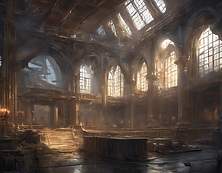
This image was generated with Dream Studio AI.
In 2040, the energy world underwent a radical transformation, the result of decades of innovation and efforts to reduce dependence on fossil fuels. Environmental challenges, rising global demand and technological advances have led to a reinvented energy landscape, where renewable sources dominate and energy efficiency has become a priority.
In 2040, solar and wind energy became the main sources of electricity. Photovoltaic panels, whose efficiency has exceeded 50%, cover not only the roofs of homes and businesses, but also roads and public infrastructure. Wind power has also progressed with floating turbines capable of exploiting more powerful and constant sea winds.
At the same time, storage technologies have grown dramatically. Graphene batteries, which are more efficient and durable than lithium-ion batteries of the past, make it possible to store excess energy produced for optimal redistribution.
Green hydrogen has also taken a central place in the energy transition. Produced by electrolysis of water thanks to electricity from renewable sources, it powers both heavy transport and industries, offering a clean alternative to fossil fuels.
With the progress of smart grids, energy management has become ultra-efficient. These networks allow distribution adapted to demand in real time, optimizing consumption and reducing waste. Homes and businesses have become energy producers thanks to autonomous and interconnected microgrids.
Artificial intelligence plays a key role in this revolution, predicting energy needs and adjusting production accordingly. Connected objects also enable fine-grained consumption management, offering users real-time recommendations to optimize their energy use.
In 2040, mobility became largely electrified. Thermal cars have almost disappeared, replaced by ultra-efficient electric vehicles, whose range exceeds 1000 km thanks to new batteries based on sodium and magnesium. Charging infrastructure is ubiquitous, integrated with roads and parking spaces for instant wireless charging.
Public transport has also been revolutionised. Hydrogen trains, hyperloops and autonomous electric buses have replaced the majority of traditional means of transport. In major metropolises, drones-taxis and solar bikes allow for fast and clean travel.
While nuclear energy slowed down in the years 2020-2030, it reappeared in a safer and cleaner form with molten salt reactors and small modular reactors (SMRs). These technologies allow stable production without radioactive waste in the long term.
Nuclear fusion, once reserved for science fiction, began to be exploited commercially. Fusion reactors operate without dangerous fissile fuel and offer an almost unlimited source of energy.
In 2040, the energy transition is based not only on production, but also on smarter and more responsible consumption. Energy efficiency has become an unavoidable standard. Buildings are designed to be self-sufficient, with intelligent materials capable of regulating the temperature without excessive use of air conditioning or heating.
Energy recycling has also developed. For example, the heat produced by data centers is recovered to power district heating networks. CO2 capture and storage systems reduce the industrial carbon footprint and produce new synthetic fuels.
In 2040, humanity entered an era where energy is clean, accessible and intelligently managed. Dependence on fossil fuels is no more than a memory, replaced by a sustainable system based on innovation and environmental responsibility. While challenges persist, notably in terms of fair energy distribution, the future looks bright and promising for a greener and more resilient planet.
related stories