top of page

EUARENAS City of the Future

Anonymous

February 11, 2025

EUARENAS City of the Future

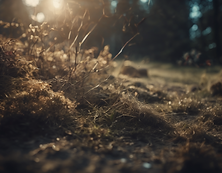
This image was generated with Dream Studio AI.

The City is based on liberating structures that are not only visible in the City’s built environment but also within the relationships between people, organisations and institutions.

At the heart of the City is a sprawling park. This landscape is a hive of activity. Crafted between the trees is sheltered learning space. A University Professor is delivering a talk on the opportunities and threats of artificial intelligence. The learners are working together with the Professor to decide how they share and use this knowledge. Nearby, people have gathered in the outdoor community cinema space watching an animated fictional film about an Autistic child who goes on an adventure to a new City. By the side of the river, a bandstand is housing musical performances from newcomers to the City - the sounds filter through the surroundings.

From the park, nature flows through the City - connecting and running through the districts that create the City’s ecosystem. Elsewhere, on a piece of wasteland, politicians and civil service staff are sat in a circle on seats fashioned from the tyres and breeze blocks that have been dumped on the land. They are discussing what to do with the land. Some residents feel it needs to be used for new, affordable, well-insulated housing with solar panels and heat pumps. Others feel it should be a communal allotment for the existing residents. An architect is listening and drawing sketches of these ideas. They are working out ways to combine them. Further down the pathway, a playground has been built using recycled materials. Each piece of equipment needs at least two children to participate in it to make it work; it has been designed to foster collaboration through play.
In a prominent square in the City is the City Hall. Large bi-folding doors open its ground floor space to the public, seamlessly connecting the pavement into its interior. Within this space are various seating areas and information displays about what is happening in the city and how people can be involved. The information is in text and audio, with technology translating into a variety of languages used by the City’s population. Civil service professionals are talking 1-2-1 with residents in the space, using the information in the space and portable digital tools to help them navigate the various processes and services that will help them address the challenges they are facing. Appointments are not needed in this space and the opening hours extend beyond usual office hours.

In the square outside a demonstration led by young people is taking place. They are protesting against surveillance methods proposed by the City’s administration. Speakers have been invited to use the public platform stage in the square to present their perspectives. Above, the windows of the City Hall are open so the ideas and concerns can flow into the building. A number of politicians have come out from the City Hall and are talking with the young people who are a part of the demonstration. Shoppers stop to listen to the talks as they go about their daily business, and some decide to sit down and talk to other residents. Nearby, a water fountain and public lavatories provide the means for people to stay a little longer than they’d imagined.

Across the river, a woman using a wheelchair takes the lift down to the metro station. As she is buying her travel ticket, she is offered a reduced fair for participating in a short survey about plans for revising the metro service. Outside, a digital display is showcasing recent actions taken by the local administration based on engagement with residents and local news from different communities. The display uses minimal text, communicating largely through visuals. There is an option to scan an icon to hear the updates as audio descriptions or as a fuller text report in a variety of languages. Similar displays, voting mechanisms and incentives are incorporated throughout the City’s public transport system.

In a corner of the City are a set of unused industrial buildings, reminders of the City’s past. Within them a group of residents are experimenting with how they can be repurposed or temporarily used to meet the needs of the City’s people. In one building, a temporary art gallery has been set up with work from independent artists. Outside, on a picnic table with parasol, a human library activity is taking place exploring migration. It is disrupted momentarily by a resident who feels the activity is excluding them and their stories. A Convenor intervenes and talks to the person about this. As you look at the industrial buildings, you realise that they gradually move from the ad-hoc into more longer-term usages. A formerly ‘pop-up’ clothes swap shop now has a permanent residence, a community café that uses locally produced food is open at regular times and an education space has been decorated by local residents. Gradually, the buildings are coming back to life and people are working together to find solutions.

This vision for the future is not out of reach. The ideas in it are already starting to happen around us. We need to mainstream them and embed them into our cities. The future is now.

related stories
hallo
Pour un monde vraiment meilleur
Capitalism is dead and buried, we all live in communion with nature. There is no more competitiveness or competition, just well-being everywhere around the earth. Everything's cleaned up. No more conflict or power. Equality and equity.The necessary tasks are carried out by robots and machines, as much as possible in a natural and non-polluting way, respectful of other species and the survival of the planet. Love is totally free and a blossoming sensuality brings joy to all humans. No more religion...
hallo
Ideale Welt
All of them now live in small villages where everyone has their own house, which is powered by solar and wind power. You have your own water treatment and a small garden where you can grow your own food. In politics, meanwhile, referendums have been introduced where everyone can participate in the decision-making process as laws are regulated and, above all, as it looks in the immediate environment. Cars are solar powered and can be recharged over the road surface. At home, a personal robot helps with housework and all other things. Politics has become a voluntary service whereby the financial resources of the state are sufficient to cover everything and to finance the necessary wages that are sufficient for life. The country has again set itself the goal of producing almost everything itself and thereby creating jobs and importing only the most necessary. Since this principle is regulated equally in all countries, there is peace among themselves and the famine is completely abolished. Ki is a daily companion and fully integrated into society and is not considered a threat. For older people, there are residential parks where you can live in community of others without being alone and with everything needed, from medical care, to shopping, care etc.
hallo
Eiropas nākotne
The sun is slowly rising above Europe’s unified energy network, which supplies the continent with clean and sustainable energy by 2050. Līga wakes up in her smart home in Riga, where the walls adapt to the temperature, while the windows filter the sun's rays to optimize natural lighting. A personalised diet plan tailored to her health data, connected to the European Health Network, awaits her in the kitchen. The road to work is no longer stressful: self-driving, energy-efficient public transport vehicles transport people with zero emissions to the nearest second. Urban centres are green, they are no longer busy with traditional cars, and people prefer bicycles or autonomous capsule transport. Air pollution in Europe has almost disappeared thanks to air purification technologies and nature-friendly infrastructure. Between 2025 and 2050, Europe underwent a major transformation. The climate crisis has made countries work more closely together than ever before. After 2035, when fossil fuels were completely banned, innovations developed rapidly, generating surplus energy and thus a new economic model in which resources are redistributed more efficiently and fairly. The introduction of universal basic income in 2040 allowed people to devote more time to creative and socially useful activities. Līga works as a digital historian – her task is to document and analyse the development of society, so that future generations can learn from past mistakes and achieve even higher goals. She believes that 2050 is just the beginning of an even brighter future.
hallo
On 18 February 2050, I wake up from my nap and, as I do every day, I roll down the window to enjoy my morning tea. All is quiet, but there is a gentle flow of energy all around - no loud engines, no smog. In my city, which could once be described as crowded and noisy, green spaces and sustainable solutions now prevail. Europe has changed radically in the last 25 years. The environmental crisis has become history, thanks to global initiatives that implemented a complete transition to renewable energy sources by the end of the 2020s. Major efforts have been made in all cities to restore the environment and in sustainable building projects. Transport has become clean and efficient - I drive an unmanned, electric car that produces nothing but quiet light and coolness as it passes through the city. I also feel that between 2025 and 2050 there has been a fundamental shift in society. People have become more connected to nature, but at the same time the power of technological innovation has increased. Everything is more convenient, but we have not lost our connection with humanity and nature. One of the biggest changes that has taken place is the change in people's attitudes towards work and quality of life. Health has also become much more accessible and mental health is no longer stigmatised. Europe is rich in different cultures and traditions, as in the past, but a new unity has emerged, where everyone is working together to improve our world for future generations. Today, we live as we once only dreamed of living.
Join #OurFutures now!

The future is shaped by our ideas and our actions today. Tell us about your visions of the future and help us create a futures narrative aimed at inspiring citizens, policy-makers and foresight experts alike!

Our-futures-banner-coloured_v3.jpg

The European Commission support does not constitute endorsement of the contents which reflects the views only of the authors, and the Commission cannot be held responsible for any use which may be made of the information contained.

ERA_logo.jpg

We support the European Research Area aimed at creating a single, borderless market for research, innovation and technology in the EU.

©OurFutures 2025, All rights reserved.

  • Instagram
  • Facebook
  • LinkedIn
  • YouTube
bottom of page