top of page

Evropa 2040: Novo Zlato Stoletje

Anonymous

March 19, 2025

Evropa 2040: Novo Zlato Stoletje

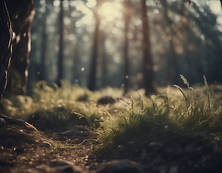
This image was generated with Dream Studio AI.

Europe in 2040 is a very different place than it was in the past. After decades of challenges - climate change, technological breakthroughs and social change - it has become the continent of the future. Big cities have been transformed into green metropolises, where electric flying cars glide silently through the air and streets are filled with pedestrians and cyclists, as cars have been almost completely phased out of city centres.

The most advanced country in Europe is now New Scandinavia - a combined region of Denmark, Sweden, Norway and Finland that has become a world leader in sustainable energy. All residents have free basic energy from solar and wind sources, while artificial intelligence regulates electricity consumption and distribution.

Meanwhile, Paris has become the capital of artificial intelligence, where humanoid robots help in everyday life - from healthcare to education. Teachers have become mentors as AI does most of the teaching, and doctors work alongside advanced medical robots that diagnose illnesses in seconds.

In Rome, the Old Town has been completely restored using nanotechnology to preserve historic buildings while modern housing complexes are hidden underground. The European Union has been transformed into a more decentralised system, where regions have more autonomy but are connected by high-speed hyperloop links that take people from Berlin to Madrid in less than two hours.

But Europe 2040 is not just a technological marvel - it is a society where the focus is on people's well-being. The working week is reduced to four days, with robots doing most of the repetitive tasks. People have more time for art, sport and personal development. Borders between countries have become almost invisible as citizens have digital identities that allow them to move and work freely anywhere on the continent.

Despite all these developments, Europe is not without its challenges. Climate change has left its effects, especially in the southern areas where people are gradually migrating northwards. However, the European Federation has developed a comprehensive plan to help the affected areas and ensure stability.

As the sun sets over the futuristic skyscrapers of Amsterdam, shining in the blue light of smart glass, young artist Lara smiles. In her studio, filled with holographic images and floating canvases, she creates a new masterpiece - a portrait of a Europe that never stops changing, but always remains home to its inhabitants.

related stories

hallo
Devillersrolandhubert@gmail.com
Hello everyone, thank you very much for this innitiative, I imagine rightly or wrongly that a certain number of problems can be solved As for example one of my projects is 1) equipment to effectively fight forest fires 2) marketed equipment neutralising the aquaplanig of vehicles But for lack of start-up aid my two projects are still waiting for my fault without a doubt and this day almost 79 years I ask myself questions ???,well thank you Signed, devillersrolandhubert@gmail.com
hallo
Lavorare meno, lavorare tutti
Whatever we do to improve the world is not enough if we spend as much as 8 hours a day working. Waiting for the weekend to live is barbaric in 2024. We should work 4 hours a day with an adequate salary and we all know that part-time work exists but it must be implored and those who want to work 4 hours earning less are considered lazy.
hallo
Αμφιλεγόμενο
paraskeuaidis.nicolas@gmail.com
hallo
gittevandegraveele@gmail.com
By 2040, I would like the way we deal with food and public space to have fundamentally changed. An ideal image I have in mind, based on the projects I am working on, such as Fruitstraat Gent, is that cities have been completely transformed into green, edible landscapes. In this future, cities are not only functional living spaces, but also productive ecosystems where fruit trees, vegetables and herbs grow lushly in streets, squares and parks. Everyone has access to healthy and local food thanks to the myriad of commons such as communal gardens and fruit trees, where residents have free access to pick. The idea of a short and sustainable food chain is fully embedded in urban life: people harvest their own food or buy it directly from neighborhood cooperatives, without the intervention of polluting, long distribution chains. In addition, there is a broad awareness of the importance of community and participation. Speculative design projects are no longer just a niche, but have been given a central role in shaping urban development. Residents are actively involved in designing the future of their city, with participation and engagement at the heart of policy decisions. Each district has its own projects and experiments that constantly contribute to the improvement of the living environment, both socially, economically and ecologically. This vision of the future would result in a healthier, cohesive and more resilient society in which people not only have a connection with each other, but also with nature and the food they consume.
Join #OurFutures now!

The future is shaped by our ideas and our actions today. Tell us about your visions of the future and help us create a futures narrative aimed at inspiring citizens, policy-makers and foresight experts alike!

Our-futures-banner-coloured_v3.jpg

The European Commission support does not constitute endorsement of the contents which reflects the views only of the authors, and the Commission cannot be held responsible for any use which may be made of the information contained.

ERA_logo.jpg

We support the European Research Area aimed at creating a single, borderless market for research, innovation and technology in the EU.

©OurFutures 2025, All rights reserved.

  • Instagram
  • Facebook
  • LinkedIn
  • YouTube
bottom of page