top of page

Future Europe

Anonymous

March 19, 2025

Future Europe

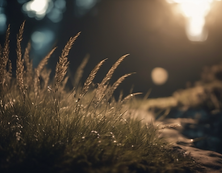
This image was generated with Dream Studio AI.

The year was 2040, and the sun rose over a Europe transformed. Cities shimmered with greenery, blending the organic with the technological in ways once thought impossible. Sofia, now 27, strolled through Berlin’s Solar Gardens, a breathtaking urban forest that stretched across the rooftops of interconnected buildings, generating energy while providing shade and food for residents below.

Sofia's day began like most: her wearable device, a lightweight bracelet, projected her itinerary into the air in front of her. It spoke to her softly, reminding her of her morning meeting with the Council of Futures, a collaborative body representing citizens across Europe that met virtually in the Metaverse—a now seamless blend of augmented reality and physical spaces. The Council was discussing new biodiversity zones, which had been expanding since the 2030s, when Europe unified its efforts to combat climate change and rewild vast stretches of land.

The decades leading up to 2050 were not without challenges. The Great Transition of the 2030s had seen Europe abandon fossil fuels entirely. It was a turbulent time, with protests, tough compromises, and ambitious policies. But it paid off. By 2040, clean energy powered every home, vehicle, and business. Small towns and cities had become self-sufficient, their local economies thriving thanks to advancements in renewable technology and vertical farming.

Education had transformed too. Sofia’s younger brother, Elias, spent his mornings learning history by exploring immersive recreations of past events. His favorite? The Unity Summit of 2035, where European leaders, activists, and youth representatives signed the Charter for a Regenerative Europe, committing to environmental, social, and technological renewal.

Today, Sofia’s task was to help finalize the design of a transcontinental wildlife corridor stretching from Portugal to Poland. This corridor would allow species to migrate freely and safely, undoing centuries of habitat fragmentation. As she walked, an autonomous tram passed by, silent and elegant, transporting passengers seamlessly across the city without a driver or delay.

Later that afternoon, Sofia joined friends in a cultural hub where artists from across Europe collaborated in shared spaces. They watched a holographic performance of a symphony written by an AI and inspired by data from the changing winds across the Alps. The performance symbolized how humanity and technology had learned to coexist—not with dominance, but in balance.

As the day came to a close, Sofia sat on a bench overlooking the River Spree, now teeming with life thanks to decades of revitalization efforts. She thought of the stories her grandparents told of the Europe of 2025—when climate anxiety loomed large, borders were sources of tension, and technology felt isolating rather than unifying. Those fears had not disappeared overnight, but step by step, Europe had chosen a different path.

Sofia watched as the sky turned a deep orange. A flock of starlings danced above her, their synchronized movements a reminder of what humanity could achieve when working together. Europe in 2040 was far from perfect, but it was hopeful, thriving, and resilient—proof that the future could be rewritten, one bold decision at a time.

related stories
hallo
2040 début de la sobriété énergétique
on january 1, 2040, the european union will ban all individual vehicles, whatever their mode of propulsion. Subsidies have been distributed European citizens to invest in bicycles, be they 2-wheelers, 3-wheelers or family sedans. All cities are pedestrianized, and to get from one city to another, or from one country to another, numerous train and streetcar tracks have been created. The entire agricultural system has been overhauled and intensive productivity banished. Sobriety is on the march
hallo
Leben in 2040
As I'm getting older, I want to live as lightly as possible. Less work in the garden and more relaxing on the terrace. Everything should be as easy to reach as possible, i.e. shopping facilities, doctors, hospital, swimming pools, physiotherapy practices, etc. There are also plenty of "meals on wheels", as people hardly ever cook for themselves anymore. Cabs should be free so that people are a little less dependent on public transport. Everything should be easily accessible on foot or in a wheelchair.
hallo
Klimaneutrale Bildungsfreundliche Zukunft
I imagine that mobility will become much more individualized - there will be cars/small aircraft that drive autonomously and can be called up at any time from wherever you want to go. Of course, the vehicles are climate-neutral and connected in such a way that there are no traffic jams or delays. Our education starts from an early age (even in kindergarten), there are appropriately small groups/classes. The teachers are well trained and can respond well to the children. So that they learn to enjoy education and feel self-efficacious and open up the world on their own. In school there is no more learning to forget but more knowledge to apply and how to learn. Because developments are very rapid. There won't be one profession that you learn for life. There will be no more truck colonies with enormous consumption, the electricity will come from renewable energies, at every house, garage, crash barrier, etc. Electricity can also be easily stored induvidually. Natural disasters are becoming fewer again, the weather is stabilizing.
hallo
Wird ein Traum Wahrheit?
I am now 86 years old and still feel really well. The last few years have not been easy, with the war in Ukraine, the fighting in the Middle East and political unrest in all countries leading people in a right-wing direction. Plus politicians who only had their own power in mind. It was difficult, but the common sense of the majority of people has led to a stabilization and consolidation of the political situation. It is important that the people have not drifted further apart and that common ground has once again come to the fore. We can actually be proud of Germany and its poets and thinkers again without feeling ashamed. The economy has become stable and the price hikes have come to an end. Children are getting an education that prepares them for life and makes them strong and intelligent. No one has to worry about falling ill and not being able to pay for necessary medical treatment. And why? - At last, everyone pays into the pension, health and long-term care insurance funds. Politicians are also paid according to the performance principle and are not rewarded with adequate pensions for poor performance or mistakes. It was a tough fight, but it was worth it. Oh yes, and pensioners are no longer a burden, but their lifetime achievements are recognized.
Join #OurFutures now!

The future is shaped by our ideas and our actions today. Tell us about your visions of the future and help us create a futures narrative aimed at inspiring citizens, policy-makers and foresight experts alike!

OURfutures.png

The European Commission support does not constitute endorsement of the contents which reflects the views only of the authors, and the Commission cannot be held responsible for any use which may be made of the information contained.

ERA_logo.jpg

We support the European Research Area aimed at creating a single, borderless market for research, innovation and technology in the EU.

©OurFutures 2025, All rights reserved.

  • Instagram
  • Facebook
  • LinkedIn
  • YouTube
bottom of page