top of page

Future Europe

Anonymous

March 19, 2025

Future Europe

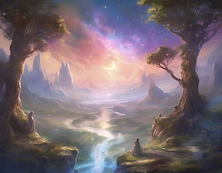
This image was generated with Dream Studio AI.

The year was 2040, and the sun rose over a Europe transformed. Cities shimmered with greenery, blending the organic with the technological in ways once thought impossible. Sofia, now 27, strolled through Berlin’s Solar Gardens, a breathtaking urban forest that stretched across the rooftops of interconnected buildings, generating energy while providing shade and food for residents below.

Sofia's day began like most: her wearable device, a lightweight bracelet, projected her itinerary into the air in front of her. It spoke to her softly, reminding her of her morning meeting with the Council of Futures, a collaborative body representing citizens across Europe that met virtually in the Metaverse—a now seamless blend of augmented reality and physical spaces. The Council was discussing new biodiversity zones, which had been expanding since the 2030s, when Europe unified its efforts to combat climate change and rewild vast stretches of land.

The decades leading up to 2050 were not without challenges. The Great Transition of the 2030s had seen Europe abandon fossil fuels entirely. It was a turbulent time, with protests, tough compromises, and ambitious policies. But it paid off. By 2040, clean energy powered every home, vehicle, and business. Small towns and cities had become self-sufficient, their local economies thriving thanks to advancements in renewable technology and vertical farming.

Education had transformed too. Sofia’s younger brother, Elias, spent his mornings learning history by exploring immersive recreations of past events. His favorite? The Unity Summit of 2035, where European leaders, activists, and youth representatives signed the Charter for a Regenerative Europe, committing to environmental, social, and technological renewal.

Today, Sofia’s task was to help finalize the design of a transcontinental wildlife corridor stretching from Portugal to Poland. This corridor would allow species to migrate freely and safely, undoing centuries of habitat fragmentation. As she walked, an autonomous tram passed by, silent and elegant, transporting passengers seamlessly across the city without a driver or delay.

Later that afternoon, Sofia joined friends in a cultural hub where artists from across Europe collaborated in shared spaces. They watched a holographic performance of a symphony written by an AI and inspired by data from the changing winds across the Alps. The performance symbolized how humanity and technology had learned to coexist—not with dominance, but in balance.

As the day came to a close, Sofia sat on a bench overlooking the River Spree, now teeming with life thanks to decades of revitalization efforts. She thought of the stories her grandparents told of the Europe of 2025—when climate anxiety loomed large, borders were sources of tension, and technology felt isolating rather than unifying. Those fears had not disappeared overnight, but step by step, Europe had chosen a different path.

Sofia watched as the sky turned a deep orange. A flock of starlings danced above her, their synchronized movements a reminder of what humanity could achieve when working together. Europe in 2040 was far from perfect, but it was hopeful, thriving, and resilient—proof that the future could be rewritten, one bold decision at a time.

related stories

hallo
Naturen er reddet
You have invented a technology that effectively breaks down CO2 from the atmosphere and you are back to a world without climate change. The gardens are healthy with beautiful coral reefs and full of fish. In the North there is winter with long periods of snow. Farther south in Europe there are rarer forest fires and normal amounts of rain that give good breeding. There are no climate refugees. They appreciate nature more and seek it out often. Animal welfare is also an important focus area and you eat less meat. Smartphones and computers are used less often, and you are less accessible by phone/mail both privately and at work.
hallo
Podróże w czasie
In 2040, the world looked very different than it did twenty years ago. Poland has become a peaceful, safe and united country around common values. The streets were clean, the cities well organized, and people lived in harmony, valuing their traditions and culture. There was an atmosphere of tranquility in the towns, with children playing in the backyards without fear, the elderly walking in the parks, and the neighbours knowing each other and helping each other in their daily lives. Local communities thrived and small family businesses thrived, supported by modern technologies and a conscious approach to the economy. There were no problems with crime or riots. The authorities have made sure that the country develops in a sustainable and safe way. Young people had good prospects – they could educate themselves at a high level, develop their passions and be sure that they would find a decent job. Thanks to a wise economic policy, Poland became self-sufficient – agriculture flourished, domestic companies produced modern technologies, and people enjoyed stability and prosperity. Society was united, proud of its history and ready to build the future in accordance with its own values. In the evening, sitting on the terrace of his house, John looked at the quiet streets and felt gratitude. He knew that his children were growing up in a world where they could feel safe, respect their roots and build a better future for generations to come.
hallo
Aucun
Au réveil, les machines préparent le petit déjeuner que j'ai l'habitude de prendre (café, pain grillé et un fruit). Mes vêtements sont prêts et se mettent automatiquement sur moi. Je prends des transports en commun qui vont vite, vole et permettent d'arriver rapidement sur son lieu de travail. Ce n'est pas très durable mais c'est pratique. Le vélo est devenu une activité en perte de vitesse car c'est moins rapide. La société va toujours plus vite. Tout est informatisé et ne permet pas d'avoir trop d'interaction sociale et c'est un bat qui blesse. Pour la vie de famille, cela reste tous ensemble dans la même maison mais cela ne permet pas vraiment de se croire en famille car chacun est plus isolé devant un appareil électrique qui occupe son temps libre
hallo
Unsere Hoffnung
There is no more war in Europe. The states have agreed well and respect each other and the borders. All European countries are in the European Union and manage it jointly and consensually. There are no political or economic dependencies on other states. This is where agreements come in. Poverty and homelessness are exceptional. Anyone can call for help. Migration is not a negative issue because people and their workforce are welcome. However, people who have become criminals are expelled and must return to their home country. Climate change continues to be a big issue, but work is underway around the world to make a difference. Resources are protected and protected. Recycling is normal.
Join #OurFutures now!

The future is shaped by our ideas and our actions today. Tell us about your visions of the future and help us create a futures narrative aimed at inspiring citizens, policy-makers and foresight experts alike!

OURfutures.png

The European Commission support does not constitute endorsement of the contents which reflects the views only of the authors, and the Commission cannot be held responsible for any use which may be made of the information contained.

ERA_logo.jpg

We support the European Research Area aimed at creating a single, borderless market for research, innovation and technology in the EU.

©OurFutures 2025, All rights reserved.

  • Instagram
  • Facebook
  • LinkedIn
  • YouTube
bottom of page