top of page

Future Europe

Anonymous

March 19, 2025

Future Europe

This image was generated with Dream Studio AI.

The year was 2040, and the sun rose over a Europe transformed. Cities shimmered with greenery, blending the organic with the technological in ways once thought impossible. Sofia, now 27, strolled through Berlin’s Solar Gardens, a breathtaking urban forest that stretched across the rooftops of interconnected buildings, generating energy while providing shade and food for residents below.

Sofia's day began like most: her wearable device, a lightweight bracelet, projected her itinerary into the air in front of her. It spoke to her softly, reminding her of her morning meeting with the Council of Futures, a collaborative body representing citizens across Europe that met virtually in the Metaverse—a now seamless blend of augmented reality and physical spaces. The Council was discussing new biodiversity zones, which had been expanding since the 2030s, when Europe unified its efforts to combat climate change and rewild vast stretches of land.

The decades leading up to 2050 were not without challenges. The Great Transition of the 2030s had seen Europe abandon fossil fuels entirely. It was a turbulent time, with protests, tough compromises, and ambitious policies. But it paid off. By 2040, clean energy powered every home, vehicle, and business. Small towns and cities had become self-sufficient, their local economies thriving thanks to advancements in renewable technology and vertical farming.

Education had transformed too. Sofia’s younger brother, Elias, spent his mornings learning history by exploring immersive recreations of past events. His favorite? The Unity Summit of 2035, where European leaders, activists, and youth representatives signed the Charter for a Regenerative Europe, committing to environmental, social, and technological renewal.

Today, Sofia’s task was to help finalize the design of a transcontinental wildlife corridor stretching from Portugal to Poland. This corridor would allow species to migrate freely and safely, undoing centuries of habitat fragmentation. As she walked, an autonomous tram passed by, silent and elegant, transporting passengers seamlessly across the city without a driver or delay.

Later that afternoon, Sofia joined friends in a cultural hub where artists from across Europe collaborated in shared spaces. They watched a holographic performance of a symphony written by an AI and inspired by data from the changing winds across the Alps. The performance symbolized how humanity and technology had learned to coexist—not with dominance, but in balance.

As the day came to a close, Sofia sat on a bench overlooking the River Spree, now teeming with life thanks to decades of revitalization efforts. She thought of the stories her grandparents told of the Europe of 2025—when climate anxiety loomed large, borders were sources of tension, and technology felt isolating rather than unifying. Those fears had not disappeared overnight, but step by step, Europe had chosen a different path.

Sofia watched as the sky turned a deep orange. A flock of starlings danced above her, their synchronized movements a reminder of what humanity could achieve when working together. Europe in 2040 was far from perfect, but it was hopeful, thriving, and resilient—proof that the future could be rewritten, one bold decision at a time.

related stories
hallo
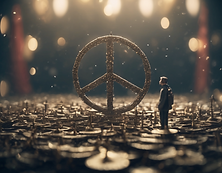
Frieden
I wish for a peaceful world in 2040. The world is open to other people and religions. No war and no hunger, just a better world where people accept and respect each other. No hatred, no violence and no terror and attacks. No people who die in war or in an attack.
hallo
saveinnella@libero.it
The technological future. Robots will no longer be an idea, they will be the present, with vehicles that will not only be electric, but will also have the characteristic of being able to fly for great distances on highways designed with special lights through the skies and buildings in the world. We will all have a helper at home made of technology to facilitate the work of the home and the education of our children, designed according to the needs of each one. Jobs will be increasingly remote and labor mobility will be better, making it easier for you to be hired anywhere in the world, as long as you have good computer equipment and a large capacity internet, that instead of being disadvantageous, will make it easier for information to travel at greater speed and immediacy
hallo
cortinovis.fabio@inwind.it
In 2040, everyday life is profoundly transformed by technology. Cities are smart, with self-sufficient buildings using solar energy and self-driving transport networks. Autonomous cars are finally a reality, reducing road traffic and reducing polluting emissions. Artificial intelligence is embedded in every aspect of society: Virtual assistants manage the house, book appointments and optimize work activities. Remote working is the norm, with holograms replacing video calls, making meetings more immersive. Medicine has also made great strides. Thanks to biotechnology, genetic diseases have almost disappeared and nanotechnologies allow immediate treatment for many diseases. Human longevity has increased, with many people over 100 in excellent health. Education is fully personalised where students learn through interactive experiences. However, new challenges are emerging. Dependence on technology raises ethical and social issues, and humanity must address the delicate balance between progress and mental well-being. Overall, 2040 is an era of extraordinary possibilities, where innovation continues to redefine the way we live, work and interact with the world.
hallo
jukka.sarvi@gmail.com
I see a united Europe, a federation that decides by majority vote with binding force. Money is common. Europe mainly produces its own food, and agriculture is planned with the rest of the world in such a way that food is distributed, sold to everyone as needed. The population has decreased according to the carrying capacity of nature. There is no war in Europe and the war is over. There is one common army in the world, ,, that controls the entire ball. Europe is involved in this. The production of energy relies on wind and solar power, which has been built all over the world from common resources. Nuclear power is part of the energy mix. The state of nature has been improved and 30% of land and water areas are in their own peace without human intervention. All operations are financed from a single fund and the surplus is returned to this fund. Citizens have a living income (citizens' wages) and everyone is equal, but also obliged to work of their choice. The profit-seeking of companies and people is limited to a very small amount. Everyone has the right to vote and decisions are preceded by extensive civic surveys.
Join #OurFutures now!

The future is shaped by our ideas and our actions today. Tell us about your visions of the future and help us create a futures narrative aimed at inspiring citizens, policy-makers and foresight experts alike!

OURfutures.png

The European Commission support does not constitute endorsement of the contents which reflects the views only of the authors, and the Commission cannot be held responsible for any use which may be made of the information contained.

ERA_logo.jpg

We support the European Research Area aimed at creating a single, borderless market for research, innovation and technology in the EU.

©OurFutures 2025, All rights reserved.

  • Instagram
  • Facebook
  • LinkedIn
  • YouTube
bottom of page