Futuro

Anonymous
March 19, 2025

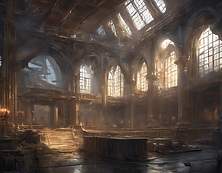
This image was generated with Dream Studio AI.
It was a bright morning in 2050 and Sofia woke up in her eco-sustainable home in Milan. The roof was covered with new generation solar panels, capable of storing energy even on cloudy days. The walls were coated with materials capable of purifying the air and the internal temperature self-regulated according to external conditions.
Without haste, Sofia approached her smart kitchen, which had already prepared a breakfast personalized according to her health parameters, monitored by a small device under the skin. He took his glass of coffee, produced by a completely circular chain that did not generate waste, and looked out the window. Milan had changed: Combustion cars were now a distant memory, replaced by self-driving electric vehicles and suspended bike paths surrounded by greenery. The sky was clearer, the air cleaner and traffic a forgotten problem.
At eight o'clock, Sofia left the house to go to work. He did not need to take a means of transport: The cities had been redesigned to be on a human scale, with services and offices within easy reach of homes. His company, a start-up that developed artificial intelligence for social well-being, had adopted a hybrid work policy, alternating office days and remote connections through high-definition holograms.
During the lunch break, Sofia connected with a friend who lived in another part of Europe. Thanks to the ultra-fast quantum network, the connections were instantaneous and without delays. Europe had become one big technological and social ecosystem, where each country worked together for innovation and sustainability. The energy crises had been solved through a mix of renewable sources and nuclear fusion, while climate change had been mitigated by a series of drastic but effective environmental policies.
In the afternoon, Sofia participated in a virtual event on the Moon, organised by a European university that had created the first off-Earth campus. Education had become fully accessible to all, without economic or geographical barriers.
In the evening, as he returned home, he stopped in a vertical urban park to relax among artificial plants and waterways that recreated natural ecosystems. He looked back at how the world had changed since 2025: Europe had been able to meet its challenges, becoming a more united, innovative and sustainable continent.
Looking at the starry sky, Sofia smiled. The future that once seemed like a dream had come true.
related stories