top of page

Mobile Europe (Mobilna Evropa)

Anonymous

April 26, 2023

Mobile Europe (Mobilna Evropa)

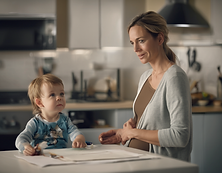
This image was generated with Dream Studio AI.

This is 18 years old and is not in fact as far as possible. One is what I want, but one is how I think it will be. This could be the case, i.e. a utopic performance: urban mobility, or sustainable urban mobility, is currently an area of great interest to me. It would be important to reduce the ownership of passenger cars in absolute terms, or to seek other improvements in the area of public transport, somehow undermining this symbolic value of cars. In other words, the fact that you have a car is no longer a status symbol, but only a functional thing, if any. However, it would be possible to abandon this functional aspect because it would have a well-organised and integrated public transport that is accessible to all. Even for the socially weaker; appropriate and accessible to all individuals, regardless of any discriminatory or marginalised group, such as persons with disabilities, other people with disabilities, children, the elderly, employees... public transport would serve all their needs, meaning that it should be fast and efficient, accurate, reliable, clean, comfortable and pleasant. You are happy to go to the bus to drive. Another issue is the integration into a wider system and at local level, and then in a certain area of Europe, but, at the same time, accessibility and rural environments and urban areas and, consequently, some relief and decentralisation of urban environments and, therefore, some general utopic satisfaction with the mode of movement. In addition to this more environmentally friendly public transport, this would mean: or some buses, trains, car-sharing shapes, in addition to walking and bikes of course, in order to have a good modality and a culture of walking and cycling in order to get more involved in our lives. That is, these means of transport would be more sustainable, of course as regards materials and all exhausts. That is to say, that is now a dissenting factor in the use of buses for a long period of time, including trains which have some exhausts and which operate by means of internal combustion, but are provided in repair and are used at all times, or the production of new, electrical ones. At the same time, there is a great deal of embedded carbon in these electrical parts because they are one of the new parts making up this massif, which produces very high carbon plus recycling of these parts at a very early stage and, in essence, we are not yet able to recycle them as efficiently as possible. In such a way that the utopic view would be to place the emphasis on the wheel, walking and then these shapes, which would be electrical for the time being, because it is also easier to generate electricity in more environmentally friendly ways. And trains and buses, salvages and those cars that would stay. Practically all means of transport that would still be accessible to all as well as to certain service providers. So I want it and I hope it will be. This is, in essence, an unrealistic idea because development is too slow, but rather in terms of development, not so much technological, but rather concerns about the development of the welfare state and the economy, because this still works to a great extent in such a way that things are profitable, including transport, is still seen as a way of earning, which should not be. Whereas public transport and public health, as well as education, must be at the service of and for people, as these are things that need to be available to the wider community. But how is it possible now? In particular, the focus is on education, educating younger people (in primary schools already, with some hours of teaching, dealing with understanding the care of a human being, reciprocity and this transition or understanding of a sustainable way of life). This is mainly because they are children who will grow up in the world and who will become adult people, and they are the ones who have to bear these changes and then integrate them everywhere throughout their lives. The school is not only an educational establishment, but also education. Because children bring some patterns from home, this is too little. When children learn something at home, they do so at home, but when they learn something at school, they bring home and can extend to their parents, grandchildren and midwives, and these networks can spread quickly and this is what is essential for any change and for a good Europe.

related stories
hallo
Fantaziram
Instead of a short maternity mother, she could get a new job that is done from home to be with the child. Or he works part-time on a full-pay basis. In addition, bonuses and benefits for each subsequent child to boost the birth rate a little. The father would be a pillar of the family again. Children do not have to be condemned to spend their childhood in kindergarten. After that, the school system could prepare them for real life. They would learn the basic things necessary for the functioning of the household and the family. And later something from the profession that they are interested in and there is a real demand for it. At least 5 numbing subjects can be removed from regular classes because everything is available online (geography, history...) or the subject itself is unnecessary and boring to most children (musical, visual...). For 99% of things, one query to a chatgpt is enough, I can't imagine how much AI will progress in 15 years, mostly schooling is almost completely unnecessary. If the flow and similar tricks made by fools from children are banned, they could grow into relatively normal people who have a goal and purpose in life instead of just consuming air. They'd be paid at work, and they'd have time to rest. States would not fund all sorts of nonsense and would not absurdly print nonexistent money, we would turn more to the local community and self-sustainability. Pensions would not be needed, there could be some state social system that would allow pensioners to get everything free (up to a certain limit) instead of cash payments. They would live and work in smaller local communities. It's a pretty unrealistic scenario, because all those billions of dollars have to be washed away. There are no men of progress in us when greed and the desire for power reign.
hallo
Raggiungere l'immortalità
Technology has taken unexpected steps since 2025, today we can live 300 years with the appearance of a twenty-year-old, there is no need to work robots work and create economy for us. Teleportation is now a solid reality, the next step is to achieve immortality. We are almost eternal.
hallo
Utopia
We have a society where young people are free from the anxiety that characterised young people in 2025. There is still free education for everyone, it will. Our hospital system is more resourced and works more efficiently. It's enough time to take good care of the sick patients. The different therapists in the primary and secondary sector, as well as the municipal care staff, talk a lot and share information about the individual patient, so that no patient is lost in sectoral transitions or between therapists. It is a pleasure and a joy to live in a nursing home. There is peace in the world, and we no longer spend billions on war, gunpowder and bullets. We find that politicians who have really done something illegal are held accountable for their actions. For example, in the future they cannot be allowed to give orders for something where the legislation is not in place (think of the mink scandal under Covid). We can travel freely around the world without fear of political unrest, war and infection with serious diseases. All who can work, work according to their ability and contribute to society. There is no cheating on social funds. Corruption does not exist. Everyone has a fair standard of living. Workplaces are flexible in terms of making work/life balance work.
hallo
Zjednoczona Europa
It's 2040. Finally, Europe has become one, united State, in which there are no better or worse - every person has the right to shape his or her life in the best possible way. Borders have been abolished and all citizens can live anywhere. They live in peace, respecting the diversity and cultural diversity of the members of the United State. They feel spiritually richer due to the fact that people of different faiths, skin color or sexual preferences live next to each other. Thanks to the unification, Europe has become a strong country and of great importance on the international arena. Its citizens no longer have to tremble for their future and fear the aggression of their opponents. The absence of borders and the free market allowed for economic development. Because people live better lives, they can invest in the development of science and culture. Higher social awareness translates into care for the natural environment. The former "Green Deal" has ceased to be an empty slogan, and has become a signpost that guides people to preserve the biodiversity of our planet, improve the cleanliness of the earth, rivers and air. This is the new world we want to pass on to our children.
Join #OurFutures now!

The future is shaped by our ideas and our actions today. Tell us about your visions of the future and help us create a futures narrative aimed at inspiring citizens, policy-makers and foresight experts alike!

Our-futures-banner-coloured_v3.jpg

The European Commission support does not constitute endorsement of the contents which reflects the views only of the authors, and the Commission cannot be held responsible for any use which may be made of the information contained.

ERA_logo.jpg

We support the European Research Area aimed at creating a single, borderless market for research, innovation and technology in the EU.

©OurFutures 2025, All rights reserved.

  • Instagram
  • Facebook
  • LinkedIn
  • YouTube
bottom of page