Mobile Europe (Mobilna Evropa)

Anonymous
April 26, 2023

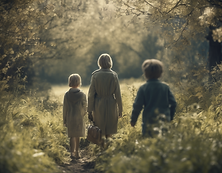
This image was generated with Dream Studio AI.
This is 18 years old and is not in fact as far as possible. One is what I want, but one is how I think it will be. This could be the case, i.e. a utopic performance: urban mobility, or sustainable urban mobility, is currently an area of great interest to me. It would be important to reduce the ownership of passenger cars in absolute terms, or to seek other improvements in the area of public transport, somehow undermining this symbolic value of cars. In other words, the fact that you have a car is no longer a status symbol, but only a functional thing, if any. However, it would be possible to abandon this functional aspect because it would have a well-organised and integrated public transport that is accessible to all. Even for the socially weaker; appropriate and accessible to all individuals, regardless of any discriminatory or marginalised group, such as persons with disabilities, other people with disabilities, children, the elderly, employees... public transport would serve all their needs, meaning that it should be fast and efficient, accurate, reliable, clean, comfortable and pleasant. You are happy to go to the bus to drive. Another issue is the integration into a wider system and at local level, and then in a certain area of Europe, but, at the same time, accessibility and rural environments and urban areas and, consequently, some relief and decentralisation of urban environments and, therefore, some general utopic satisfaction with the mode of movement. In addition to this more environmentally friendly public transport, this would mean: or some buses, trains, car-sharing shapes, in addition to walking and bikes of course, in order to have a good modality and a culture of walking and cycling in order to get more involved in our lives. That is, these means of transport would be more sustainable, of course as regards materials and all exhausts. That is to say, that is now a dissenting factor in the use of buses for a long period of time, including trains which have some exhausts and which operate by means of internal combustion, but are provided in repair and are used at all times, or the production of new, electrical ones. At the same time, there is a great deal of embedded carbon in these electrical parts because they are one of the new parts making up this massif, which produces very high carbon plus recycling of these parts at a very early stage and, in essence, we are not yet able to recycle them as efficiently as possible. In such a way that the utopic view would be to place the emphasis on the wheel, walking and then these shapes, which would be electrical for the time being, because it is also easier to generate electricity in more environmentally friendly ways. And trains and buses, salvages and those cars that would stay. Practically all means of transport that would still be accessible to all as well as to certain service providers. So I want it and I hope it will be. This is, in essence, an unrealistic idea because development is too slow, but rather in terms of development, not so much technological, but rather concerns about the development of the welfare state and the economy, because this still works to a great extent in such a way that things are profitable, including transport, is still seen as a way of earning, which should not be. Whereas public transport and public health, as well as education, must be at the service of and for people, as these are things that need to be available to the wider community. But how is it possible now? In particular, the focus is on education, educating younger people (in primary schools already, with some hours of teaching, dealing with understanding the care of a human being, reciprocity and this transition or understanding of a sustainable way of life). This is mainly because they are children who will grow up in the world and who will become adult people, and they are the ones who have to bear these changes and then integrate them everywhere throughout their lives. The school is not only an educational establishment, but also education. Because children bring some patterns from home, this is too little. When children learn something at home, they do so at home, but when they learn something at school, they bring home and can extend to their parents, grandchildren and midwives, and these networks can spread quickly and this is what is essential for any change and for a good Europe.
related stories