top of page

O Futuro da Educação em 2040

Anonymous

March 19, 2025

O Futuro da Educação em 2040

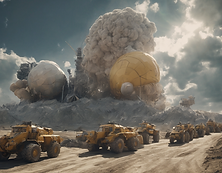
This image was generated with Dream Studio AI.

**"The Future of Education in 2040"**

In 2040, education in Europe was very different from what I knew in 2025. I was in a classroom, but it wasn't like any other conventional classroom. It was a flexible, adaptable space that adjusted to the way students learned, with walls that turned into interactive screens and tables that floated to reorganize into groups or as an individual workspace. On the opposite wall, an Albert Einstein hologram floated, explaining the theory of relativity in a fun and intuitive way. He wasn't really there, of course, but his presence was part of the new way of teaching history and science, which mixed past, present and future.

The great change that had happened over the last two decades was not only technological, but a profound transformation in the very philosophy of education. The teaching vision has been completely revised, and Europe has embraced an inclusive, holistic and student-centred model. The focus came to be not only technical and academic knowledge, but also personal and emotional development, skills that were previously neglected.

At the beginning of the journey, in 2025, schools began to change. Traditional education, centred on proofs and rigid disciplines, gave way to a project-based learning system, where students explored real and complex problems, working together with companies and organisations to find practical solutions. Schools were no longer just places of education but community centers, where families, teachers and students shared responsibilities and ideas.

In 2030, the European Union implemented a common project to ensure that all young people have access to quality education, regardless of their social or geographical context. This meant that rural areas, often neglected, began to benefit from cutting-edge educational resources, with highly interactive and personalized distance learning platforms, as well as access to mentors and global experts. The result was a generation of young people who were more informed, empathetic and better prepared to face the challenges of the future.

Now, in 2040, education was an ongoing process, without barriers of age or social status. I, now a professional in full development, continued to learn and grow. Courses and programs offered by universities and knowledge centers were available to everyone, adapted to the individual needs and pace of each person. It was a system where learning did not end with graduation, but continued throughout life, allowing anyone, regardless of their initial background, to requalify and thrive in new areas.

The integration of artificial intelligence (AI) technologies with education was one of the biggest advances. AI not only helped in teaching subjects such as mathematics, physics or history, but also in developing socio-emotional skills. They were powerful tools for teaching empathy, collaboration and ethics, essential aspects for a more just and conscious society. AI also helped teachers personalize teaching, creating unique learning paths for each student, rather than a one-size-fits-all approach.

Communities have also benefited from this change. Education has come to be seen as a collective good. Organizations and citizens were more involved in the educational process, creating localized learning networks that promoted collaboration between generations and cultures. Workshops, craft courses, entrepreneurship and sustainability were within everyone's reach, allowing each person to find their passion and purpose.

The future of education in 2040 was thus the true democratization of knowledge. A future where equality of opportunity was not just an ideal, but a lived reality. And all this was possible because society, Europe as a whole, understood that education is the basis for any positive transformation. The change was underway, and the horizon was more promising than ever.

related stories
hallo
Sociālā afvērtība - brīvības bira
Freedom in social networks will allow to follow people's actions, promote responsibility both privately and for officials. We will also have acquired personal responsibility for action not only in reality, but also in social networks, and thus we will be able to communicate productively and interestingly. We will not seek hatred in disputes, but grains of understanding. We will have calmed down the race for material benefits - we will live more slowly, buy less but better quality items. We will be able to see within ourselves and around us the spark of humanity.
hallo
on est vraiment sur la mauvaise pente
For me 2050 will have to take up the most important points of the past, a slower life, less technology, less social control, more freedom, a true democracy and not that of today where those who have the most power have never been chosen by the people, a sovereign Belgium that can make its own choices while working with its neighbours, including our Russian friends. More contact between people in cafes and resting, in the cinema, and less life via screen. And in our plate especially keep the quality of our local craftsmen and not the m*** indstrielle transcheese. Let us also return to traditional values and let the woke of the left find themselves in their real place ... in the asylum because they are dangerous And especially not touch my real steack raised with grass by farmers who love their craft. You will have understood ... the very opposite of the desires of the globalists of the EU:-)
hallo
zorica.bruski@gmail.com
Zamišljam 2040. godinu kao svijet u kojem je klimatska kriza stavljena pod kontrolu, a obnovljivi izvori energije u potpunosti dominiraju globalnim energetskim sustavom. Odabrao bih temu čiste energije i održivog razvoja. Želio bih da do 2040. godine svijet bude vođen zelenim tehnologijama, gdje su solarne, vjetroelektrane, hidroenergija i napredne baterije standard, a fosilna goriva stvar prošlosti. Gradovi bi bili puni zelenih površina, zgrada s vertikalnim vrtovima i samoodrživih zajednica. Električni automobili, javni prijevoz na vodik ili baterije te pametna infrastruktura omogućili bi minimalnu emisiju CO₂. U ovoj budućnosti, ljudi bi živjeli u harmoniji s okolišem, reciklaža i ponovna upotreba materijala bili bi norma, a klimatske katastrofe smanjene na minimum. Globalna suradnja i razvoj novih tehnologija donijeli bi stabilnost i pravedniju raspodjelu resursa, čime bi se smanjilo siromaštvo i povećala kvaliteta života za sve. To je svijet kakvom težim – održiv, tehnološki napredan, ali prije svega human i u ravnoteži s prirodom.
hallo
Fantaziram
Instead of a short maternity mother, she could get a new job that is done from home to be with the child. Or he works part-time on a full-pay basis. In addition, bonuses and benefits for each subsequent child to boost the birth rate a little. The father would be a pillar of the family again. Children do not have to be condemned to spend their childhood in kindergarten. After that, the school system could prepare them for real life. They would learn the basic things necessary for the functioning of the household and the family. And later something from the profession that they are interested in and there is a real demand for it. At least 5 numbing subjects can be removed from regular classes because everything is available online (geography, history...) or the subject itself is unnecessary and boring to most children (musical, visual...). For 99% of things, one query to a chatgpt is enough, I can't imagine how much AI will progress in 15 years, mostly schooling is almost completely unnecessary. If the flow and similar tricks made by fools from children are banned, they could grow into relatively normal people who have a goal and purpose in life instead of just consuming air. They'd be paid at work, and they'd have time to rest. States would not fund all sorts of nonsense and would not absurdly print nonexistent money, we would turn more to the local community and self-sustainability. Pensions would not be needed, there could be some state social system that would allow pensioners to get everything free (up to a certain limit) instead of cash payments. They would live and work in smaller local communities. It's a pretty unrealistic scenario, because all those billions of dollars have to be washed away. There are no men of progress in us when greed and the desire for power reign.
Join #OurFutures now!

The future is shaped by our ideas and our actions today. Tell us about your visions of the future and help us create a futures narrative aimed at inspiring citizens, policy-makers and foresight experts alike!

OURfutures.png

The European Commission support does not constitute endorsement of the contents which reflects the views only of the authors, and the Commission cannot be held responsible for any use which may be made of the information contained.

ERA_logo.jpg

We support the European Research Area aimed at creating a single, borderless market for research, innovation and technology in the EU.

©OurFutures 2025, All rights reserved.

  • Instagram
  • Facebook
  • LinkedIn
  • YouTube
bottom of page