top of page

O Futuro da Educação em 2040

Anonymous

March 19, 2025

O Futuro da Educação em 2040

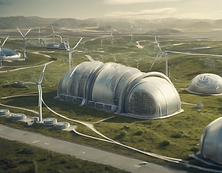
This image was generated with Dream Studio AI.

**"The Future of Education in 2040"**

In 2040, education in Europe was very different from what I knew in 2025. I was in a classroom, but it wasn't like any other conventional classroom. It was a flexible, adaptable space that adjusted to the way students learned, with walls that turned into interactive screens and tables that floated to reorganize into groups or as an individual workspace. On the opposite wall, an Albert Einstein hologram floated, explaining the theory of relativity in a fun and intuitive way. He wasn't really there, of course, but his presence was part of the new way of teaching history and science, which mixed past, present and future.

The great change that had happened over the last two decades was not only technological, but a profound transformation in the very philosophy of education. The teaching vision has been completely revised, and Europe has embraced an inclusive, holistic and student-centred model. The focus came to be not only technical and academic knowledge, but also personal and emotional development, skills that were previously neglected.

At the beginning of the journey, in 2025, schools began to change. Traditional education, centred on proofs and rigid disciplines, gave way to a project-based learning system, where students explored real and complex problems, working together with companies and organisations to find practical solutions. Schools were no longer just places of education but community centers, where families, teachers and students shared responsibilities and ideas.

In 2030, the European Union implemented a common project to ensure that all young people have access to quality education, regardless of their social or geographical context. This meant that rural areas, often neglected, began to benefit from cutting-edge educational resources, with highly interactive and personalized distance learning platforms, as well as access to mentors and global experts. The result was a generation of young people who were more informed, empathetic and better prepared to face the challenges of the future.

Now, in 2040, education was an ongoing process, without barriers of age or social status. I, now a professional in full development, continued to learn and grow. Courses and programs offered by universities and knowledge centers were available to everyone, adapted to the individual needs and pace of each person. It was a system where learning did not end with graduation, but continued throughout life, allowing anyone, regardless of their initial background, to requalify and thrive in new areas.

The integration of artificial intelligence (AI) technologies with education was one of the biggest advances. AI not only helped in teaching subjects such as mathematics, physics or history, but also in developing socio-emotional skills. They were powerful tools for teaching empathy, collaboration and ethics, essential aspects for a more just and conscious society. AI also helped teachers personalize teaching, creating unique learning paths for each student, rather than a one-size-fits-all approach.

Communities have also benefited from this change. Education has come to be seen as a collective good. Organizations and citizens were more involved in the educational process, creating localized learning networks that promoted collaboration between generations and cultures. Workshops, craft courses, entrepreneurship and sustainability were within everyone's reach, allowing each person to find their passion and purpose.

The future of education in 2040 was thus the true democratization of knowledge. A future where equality of opportunity was not just an ideal, but a lived reality. And all this was possible because society, Europe as a whole, understood that education is the basis for any positive transformation. The change was underway, and the horizon was more promising than ever.

related stories

hallo
Die KI der Zukunft zu Hause
Life is AI-controlled. No area in which it does not operate or even dominate in whole or in part. Whether in road traffic, and especially in public transport, health care and medicine, in education from the KiTa to schools to universities, in all branches of the economy and especially in our everyday life at home. The AI is the first to welcome us when we open the door at home. By means of voice recognition, she immediately knows which family member has just entered the apartment, recognizes the mood of this person by various parameters such as breathing, blood pressure, body temperature, etc., plays the appropriate music at ideal volume , adjusts the lighting and the room temperature appropriately and prepares a corresponding drink. She asks what she can do to make the end of the day / further daily routine and to improve the mood. She makes suggestions and presents ideas-based on the habits and preferences of the human being-about whom she knows everything that one can somehow find out. The AI is almost the best roommate you could wish for, isn't it …?!
hallo
Švarus pasaulis
Imagine 2040, where clean and sustainable energy is the key change. In this world, almost all energy comes from renewable sources such as the sun, wind, hydropower and nuclear fusion. Energy storage technologies are so advanced that there is no waste of energy, and each building can generate and store its own electricity on its own. The transport system is also revolutionary, with fully autonomous electric vehicles and hydrogen vehicles dominating the roads and urban streets redesigned to make pedestrian and cyclist comfort a priority. City-to-city travel is carried out by ultra-fast electric trains, which replace most flights over short distances, reducing pollution. The climate crisis has been contained through targeted emission reductions and the use of carbon capture technologies. Cities have become greener, with vertical farms on skyscrapers, green roofs and smart air filtration solutions supporting clean air. Natural ecosystems have been restored and populations of endangered species have stabilised. In addition, access to energy has revolutionised society by making the basic cost of living (electricity, transport) almost free, allowing people to focus more on creativity, science and personal development than just working for living. It would be a future in which life would become not only more sustainable, but also more comfortable, giving more freedom to every person.
hallo
Osebna asistenca ni več kamen spotike v naši drzavi
I want people with disabilities to be treated more fairly in our society.To make it easier for them to get suitable jobs for those who can work, but those who cannot get adequate financial compensation so that they can live comfortably and also enjoy some luxury.The rights granted to them should be exercised consistently, especially the right to personal assistance.I hope that they will significantly increase the salaries of personal assistants, because for some people with disabilities they are the only bright spot or bright window into the world.If higher salaries will also be available more personal assistants and users, that is, people with disabilities will not ask for them on social networks or search for them on other sources of employment
hallo
inekehouwers@chello.nl
I hope that there will be peace all over the world and that there will be no dictators . Let's Live in a Fine World and That We've Achieved the Climate Goals . I think my grandchildren live in a beautiful world where human goals have been realized . We can once again enjoy a nice world without fear and without war .The medical world has made great progress and found a solution to my heart trouble . It's a pity that I can't enjoy that ,hopefully my grandchildren certainly if they also get this hereditary heart disease .
Join #OurFutures now!

The future is shaped by our ideas and our actions today. Tell us about your visions of the future and help us create a futures narrative aimed at inspiring citizens, policy-makers and foresight experts alike!

OURfutures.png

The European Commission support does not constitute endorsement of the contents which reflects the views only of the authors, and the Commission cannot be held responsible for any use which may be made of the information contained.

ERA_logo.jpg

We support the European Research Area aimed at creating a single, borderless market for research, innovation and technology in the EU.

©OurFutures 2025, All rights reserved.

  • Instagram
  • Facebook
  • LinkedIn
  • YouTube
bottom of page