O Futuro da Educação em 2040

Anonymous
March 19, 2025

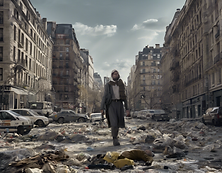
This image was generated with Dream Studio AI.
**"The Future of Education in 2040"**
In 2040, education in Europe was very different from what I knew in 2025. I was in a classroom, but it wasn't like any other conventional classroom. It was a flexible, adaptable space that adjusted to the way students learned, with walls that turned into interactive screens and tables that floated to reorganize into groups or as an individual workspace. On the opposite wall, an Albert Einstein hologram floated, explaining the theory of relativity in a fun and intuitive way. He wasn't really there, of course, but his presence was part of the new way of teaching history and science, which mixed past, present and future.
The great change that had happened over the last two decades was not only technological, but a profound transformation in the very philosophy of education. The teaching vision has been completely revised, and Europe has embraced an inclusive, holistic and student-centred model. The focus came to be not only technical and academic knowledge, but also personal and emotional development, skills that were previously neglected.
At the beginning of the journey, in 2025, schools began to change. Traditional education, centred on proofs and rigid disciplines, gave way to a project-based learning system, where students explored real and complex problems, working together with companies and organisations to find practical solutions. Schools were no longer just places of education but community centers, where families, teachers and students shared responsibilities and ideas.
In 2030, the European Union implemented a common project to ensure that all young people have access to quality education, regardless of their social or geographical context. This meant that rural areas, often neglected, began to benefit from cutting-edge educational resources, with highly interactive and personalized distance learning platforms, as well as access to mentors and global experts. The result was a generation of young people who were more informed, empathetic and better prepared to face the challenges of the future.
Now, in 2040, education was an ongoing process, without barriers of age or social status. I, now a professional in full development, continued to learn and grow. Courses and programs offered by universities and knowledge centers were available to everyone, adapted to the individual needs and pace of each person. It was a system where learning did not end with graduation, but continued throughout life, allowing anyone, regardless of their initial background, to requalify and thrive in new areas.
The integration of artificial intelligence (AI) technologies with education was one of the biggest advances. AI not only helped in teaching subjects such as mathematics, physics or history, but also in developing socio-emotional skills. They were powerful tools for teaching empathy, collaboration and ethics, essential aspects for a more just and conscious society. AI also helped teachers personalize teaching, creating unique learning paths for each student, rather than a one-size-fits-all approach.
Communities have also benefited from this change. Education has come to be seen as a collective good. Organizations and citizens were more involved in the educational process, creating localized learning networks that promoted collaboration between generations and cultures. Workshops, craft courses, entrepreneurship and sustainability were within everyone's reach, allowing each person to find their passion and purpose.
The future of education in 2040 was thus the true democratization of knowledge. A future where equality of opportunity was not just an ideal, but a lived reality. And all this was possible because society, Europe as a whole, understood that education is the basis for any positive transformation. The change was underway, and the horizon was more promising than ever.
related stories