top of page

O Futuro da Educação em 2040

Anonymous

March 19, 2025

O Futuro da Educação em 2040

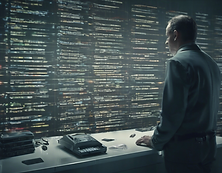
This image was generated with Dream Studio AI.

**"The Future of Education in 2040"**

In 2040, education in Europe was very different from what I knew in 2025. I was in a classroom, but it wasn't like any other conventional classroom. It was a flexible, adaptable space that adjusted to the way students learned, with walls that turned into interactive screens and tables that floated to reorganize into groups or as an individual workspace. On the opposite wall, an Albert Einstein hologram floated, explaining the theory of relativity in a fun and intuitive way. He wasn't really there, of course, but his presence was part of the new way of teaching history and science, which mixed past, present and future.

The great change that had happened over the last two decades was not only technological, but a profound transformation in the very philosophy of education. The teaching vision has been completely revised, and Europe has embraced an inclusive, holistic and student-centred model. The focus came to be not only technical and academic knowledge, but also personal and emotional development, skills that were previously neglected.

At the beginning of the journey, in 2025, schools began to change. Traditional education, centred on proofs and rigid disciplines, gave way to a project-based learning system, where students explored real and complex problems, working together with companies and organisations to find practical solutions. Schools were no longer just places of education but community centers, where families, teachers and students shared responsibilities and ideas.

In 2030, the European Union implemented a common project to ensure that all young people have access to quality education, regardless of their social or geographical context. This meant that rural areas, often neglected, began to benefit from cutting-edge educational resources, with highly interactive and personalized distance learning platforms, as well as access to mentors and global experts. The result was a generation of young people who were more informed, empathetic and better prepared to face the challenges of the future.

Now, in 2040, education was an ongoing process, without barriers of age or social status. I, now a professional in full development, continued to learn and grow. Courses and programs offered by universities and knowledge centers were available to everyone, adapted to the individual needs and pace of each person. It was a system where learning did not end with graduation, but continued throughout life, allowing anyone, regardless of their initial background, to requalify and thrive in new areas.

The integration of artificial intelligence (AI) technologies with education was one of the biggest advances. AI not only helped in teaching subjects such as mathematics, physics or history, but also in developing socio-emotional skills. They were powerful tools for teaching empathy, collaboration and ethics, essential aspects for a more just and conscious society. AI also helped teachers personalize teaching, creating unique learning paths for each student, rather than a one-size-fits-all approach.

Communities have also benefited from this change. Education has come to be seen as a collective good. Organizations and citizens were more involved in the educational process, creating localized learning networks that promoted collaboration between generations and cultures. Workshops, craft courses, entrepreneurship and sustainability were within everyone's reach, allowing each person to find their passion and purpose.

The future of education in 2040 was thus the true democratization of knowledge. A future where equality of opportunity was not just an ideal, but a lived reality. And all this was possible because society, Europe as a whole, understood that education is the basis for any positive transformation. The change was underway, and the horizon was more promising than ever.

related stories
hallo
Sicherheit durch Überwachung
The personal security of every individual, be it physical or property security, is very important to me. That is why I would curtail the rights of every individual citizen and create a comprehensive database in which DNA and an encrypted numerical code would be stored immediately after birth. In the event of a crime, this database could be used to determine who was at the scene of the crime on the basis of items found (hair, blood.....). Even if data protectionists would be up in arms about it, such an anonymous and encrypted database would certainly be a major deterrent for potential criminals. For me personally, even a chip that everyone gets implanted would be a conceivable way of determining who was at the scene of the crime at the time. DNA samples can still be used to deny the time of the crime. Many, many crimes such as murder, assaults, burglaries and hit-and-runs could easily be solved. On the other hand, it can also be used to prove that a suspect is not guilty and convictions based on false "witness statements" or accusations could be refuted very easily. I am not a friend of surveillance, but if it serves security and is encrypted, then I am all for it.
hallo
perekond, lapsed ja julgeolek
There is no war in Europe. To this end, governments, with the support of the people, have taken the necessary decisions to ensure security and punish aggressors. These decisions have been enforced. On crucial issues for the EU, it is not consensus that is needed, but the support of a majority of member states. The cultures and customs of indigenous peoples are respected. These are legally protected and enforced. Along with security, family and children are recognised as areas of national importance. All national decisions are taken in the light of their impact on security and families, and subsequently on the wider economy and environment. Reducing regulations and state subsidies in the economy. We are moving towards a situation in which regulation must be justified only by exceptional need, and public subsidies are only available in the social sphere (emergency aid, welfare, etc.), education and culture. No tax will be levied on donations and activities that are voluntary. Europe has taken the initiative to develop a new organisation to replace the UN, bringing together the countries of the world and working on a predominantly voluntary basis. This organisation will also have its own enforcement mechanism. The nations of Europe will lead by example, first and foremost through their actions; the time for talk is over.
hallo
Futur meilleur
Inevitably, the world is going to change, thanks to technological advances. I think, or at least I hope, that we'll be living on a less polluted planet. That humans will have more respect for the environment, that we'll have access to healthcare for everyone. Less delinquency and more respect for the elderly. That everyone can have a minimum of comfort.
hallo
Tehnoloogia areng
Health is the most important thing for a person to stay alive. Timely access to medical care is very poor today. I am very hopeful of advances in technology that will give people the possibility of timely diagnosis and treatment of illness by an artificial arm. After all, the situation today is that a doctor prescribes a diagnosis and medication to a patient based on the symptoms described by the patient over the phone or in an e-health centre without seeing the person. The development of a self-driving car service would provide people with better mobility, regardless of where they live, their age or their state of health.
Join #OurFutures now!

The future is shaped by our ideas and our actions today. Tell us about your visions of the future and help us create a futures narrative aimed at inspiring citizens, policy-makers and foresight experts alike!

OURfutures.png

The European Commission support does not constitute endorsement of the contents which reflects the views only of the authors, and the Commission cannot be held responsible for any use which may be made of the information contained.

ERA_logo.jpg

We support the European Research Area aimed at creating a single, borderless market for research, innovation and technology in the EU.

©OurFutures 2025, All rights reserved.

  • Instagram
  • Facebook
  • LinkedIn
  • YouTube
bottom of page