top of page

Old x New Europe

Anonymous

March 19, 2025

Old x New Europe

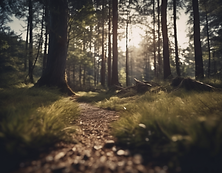
This image was generated with Dream Studio AI.

A Day in 2050: A New Dawn for Europe

The sun rose over the horizon, its rays glistening off the shimmering glass and greenery that had taken over Europe’s once-industrial skyline. It was 2050, and the continent had transformed in ways unimaginable just 25 years ago. Today, as I step outside my apartment in the heart of Paris, the first thing I notice is the air—crisp, clean, and full of vitality. The smog of the 2020s, a constant companion in the major cities, had long been banished by the global shift towards renewable energy. Solar panels, wind farms, and vertical forests were now commonplace in every city, with technology woven into the very fabric of daily life.

As I hop onto my self-driving, electric bike, I pass by a newly built pedestrian hub that had once been a major highway, now repurposed as green space. The streets are quieter, save for the hum of electric transport, and I can hear birds chirping in what used to be a densely polluted area. People stroll, chat, and share the space with the occasional robot delivering groceries, parcels, or even meals, thanks to Europe’s seamless integration of AI and robotics into daily tasks.

Europe’s transformation began in 2025, when the Green Deal accelerated the region’s commitment to carbon neutrality. The EU, which had always been a hub of political innovation, implemented bold policies that put sustainability at the forefront of every decision. By 2030, most of Europe had already abandoned fossil fuels. Public transport was electrified, and solar and wind energy powered the majority of homes. From local farms to big cities, there was a collective effort to decentralize energy production, making each community self-sufficient in clean power.

In 2035, the big shift came. Artificial Intelligence, powered by advancements in quantum computing, reached a level of sophistication that made many traditional jobs obsolete. While the transition was difficult for some, the European Union implemented universal basic income (UBI) and retraining programs, allowing people to find new purpose in a world no longer reliant on routine labor. People had more time for creativity, research, and personal growth. In this new society, work wasn’t the primary source of identity—it was just one aspect of life, if that.

By 2040, Europe had created a pan-continental network of smart cities. From Stockholm to Lisbon, every city had become an interconnected organism where transportation, energy, education, and healthcare were all managed by an intelligent grid. If you needed to travel, an autonomous vehicle would pick you up, and you could focus on reading, working, or simply relaxing. Health care had become preventative—personalized medicine using AI would monitor everyone’s health, making sure that no one ever fell through the cracks.

The workforce had become more diversified, with many people focusing on arts, education, and innovative projects that focused on humanity’s connection to nature. The rising importance of biodiversity preservation meant that green spaces flourished, and society truly began to value the environment—not just as a resource to be exploited, but as an essential part of what it meant to be human.

Looking out over the Seine this morning, I think about how different life was just a few decades ago. There were protests, fear about climate change, and the social unrest that stemmed from inequality. But in this new Europe, collaboration had become the cornerstone of progress. The past had been a difficult journey, but it was worth it.

Now, as I make my way through a park, I see children playing with advanced technology, yet they seem free from the burdens of competition that defined previous generations. They communicate effortlessly in multiple languages, thanks to AI-powered translation devices that had been perfected by 2035. The walls of national identity had faded, and Europe had embraced its rich mosaic of cultures as an interconnected whole.

As I reach the futuristic yet ancient café by the river, I smile. I think about the future ahead. It’s a future that is no longer just about surviving—it’s about thriving, together.

related stories
hallo
Le monde utopique
Serein’mobile technology without war without famine with care accessible to all and housing down and education for all and especially without hatred with respect for others in all its forms including Religion and above all more fairness and government and politics that work for the common good and not for their personal benefit and this requires salaries in an honorary and capped capacity and above all without being able to benefit from preferential treatment. There will always be rich but more distributions and no longer work in atrocious conditions for MEN including children who must all be schooled and not worked in factories or fields. And stop destroying our habitat we are our worst enemy and despite being the most evolved animal we do not learn from our mistakes
hallo
Évolution au travail
I would like us to have spent a long time in the 4-day work week, that teleworking allows us to work from anywhere. That finally in France we recognize the pain that women can have during their cycle and that like many other countries we are entitled to one day per month of paid stoppage due to our sometimes unbearable pains. Let the world change positively. That there is a self-help day imposed paid but not worked in the office rather to help the elderly.
hallo
L'avenir en 2040
In 2040, I would like there to be a lot of green , small buildings not very high Lots of safety in cities and countryside , That cars are no longer polluting.That roads are better maintained. That in schools we learn what is necessary and especially that children learn tolerance . Let each one be content with what he has.Let care be given to all
hallo
Freiheit, Recht und Ordnung ohne belogen, betrogen und entmündigt zu werden
Writing is not one of my core competencies and so I ask for leniency in advance. A better future I would like to see would be: In Europe, each Member State is responsible for its own activities. There would be a free basic order that prohibits any form of surveillance and restriction of opinion. Prohibits manipulative press and fake news accordingly and checks journalism for truthfulness and regulates it accordingly in the event of violations. Ideological behavior no longer exists, as it is punished as fraud. Free market economy should be possible without obstructive regulations. By this I mean that only regulations that have been tested for their usefulness and cost-effectiveness are still possible and such excesses as we have experienced in the last 40 years are no longer possible. Taxes can only be collected and used for national tasks. Further funds must be raised either through donations or as part of a referendum. Waste of taxpayers' money will be punished and politicians will be held accountable for their violations. The EU can only monitor the requirements of the Community, but cannot develop its own rules. The surveillance mania of the authorities has been reduced to a normal level and the fundamental rights, similar to our Basic Law of 1970, are protected again. Crime is fought and enforced together across the EU. There may be a single tax law and the influence of industry, NGO ´s, super-rich and other interest groups on politicians is strictly prohibited. Politics only makes politics in the interest of its citizens and is liable for misconduct. Taxes and levies collected may only be used for specific purposes and all decisions are examined by independent people. The self-interest of incumbents has come to an end and the citizen is once again at the forefront of all political decisions. Education then starts already in kindergarten and the children no longer have to learn outdated garbage, but are trained to learn. With the aim of creating a better world free of ideology, they have also learned to question everything we are able to independently come to the right results. Manipulation is a crime that is taken very seriously. In the event of a crisis, people can be welcomed and cared for in our country. In case of violations of the guest right, these persons must leave our economic area immediately. Every radical belief is banned and all assets confiscated. Subcultures are no longer possible in the EU, as they are also anti-democratic. In 2040, the highest goods in our EU are: free opinion, freedom of travel, no poverty, inviolability of personal rights, chemical-free food, education at the highest level for everyone, free choice of profession, a real democracy. Unfortunately, there will continue to be crimes and for known criminals there will be a perfect surveillance that proves another crime immediately. We have more and more computers and machines that have replaced the human worker. For these devices, an assessment must then be made of how many workers are replaced by this device and minus the equipment costs, the salary for the workers is then transferred to the tax office as a tax. This can then be used to pay the unemployed and incapacitated, families and pensioners. Smoked goods, drugs and other toxins have not been used and sold for years. All this could be achieved through education and without prohibitions. I'd think of a thousand more points, but that's so unsorted and completely confused, so I'm ending it now.
Join #OurFutures now!

The future is shaped by our ideas and our actions today. Tell us about your visions of the future and help us create a futures narrative aimed at inspiring citizens, policy-makers and foresight experts alike!

OURfutures.png

The European Commission support does not constitute endorsement of the contents which reflects the views only of the authors, and the Commission cannot be held responsible for any use which may be made of the information contained.

ERA_logo.jpg

We support the European Research Area aimed at creating a single, borderless market for research, innovation and technology in the EU.

©OurFutures 2025, All rights reserved.

  • Instagram
  • Facebook
  • LinkedIn
  • YouTube
bottom of page