top of page

OPENING AUTHORITY (ΚΑΙΝΟΥΡΓΙΑ ΑΡΧΗ)

Anonymous

April 26, 2023

OPENING AUTHORITY (ΚΑΙΝΟΥΡΓΙΑ ΑΡΧΗ)

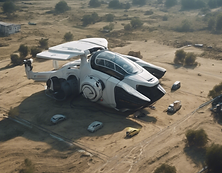
This image was generated with Dream Studio AI.

The digital age that should mark people’s improved and more comfortable lives has shifted a balance of modern human beings. Any real feeling and experience is now considered obsolete and anything we are new to try, banal. Social networks determine our relationships, which either do not expand or do not evolve to a large extent in their absence. At the same time, society suffers from difficult economic problems. Corrupt governments of states could only bring the situation to the end of the barley. A barbour that can only be crossed with real values. But also. Ethical principles are missing from governments, civil servants, education, young people from all over the world. Every act is considered normal as long as it satisfies our egoism. And if this egoism leads to at least one subtle spiritual investigation or an attempt to rehabilitate the labour market, we are lucky. Because most of them imitate the prominence and dreams. Most try to win the beauty when it should not have a place in their lives. What beauty do we talk to? Each defines it differently. The issue is that what is now considered to be a “coul” is often the one that destroys the whole. But everything is good! The cigarettes in each recess are scattered, such as margarites on a mountain pasture, and the graffiti are fired in the urban galleries, making a spectacle... What beautiful our cities are! Car smoke does not disturb us. Forgotten bins do not tempt us. It is enough that our cities are not flooded by climate change. It is enough that COP27 did not discuss us at all, but about something bitter African farmers who cannot feed their children.

If at least half of these problems could be solved by 2040, I would be happy. But we will find the values to bridge the gap between modern realities and real life?

related stories
hallo
Împlinire
I've been through a lot as a human being in the last few decades and I've finally learned something from it all: wars, pandemics, economic crises, etc. So far we have gone with the wave and we have not taken action, but we could not continue like this because we were going down the drain. We have started to understand what is really important and to take action. We are all so much happier and fulfilled. Health is good, we have a beautiful and fulfilling vomit. Smiles are no longer missing from our face.
hallo
By 2050, the world could be a better place if humanity invests in sustainability, technology and empathy. The use of renewable energies, such as solar and wind power, will help reduce pollution and the impacts of climate change. In addition, advanced recycling and reforestation will make cities more balanced. Technology will also play a key role, with artificial intelligence and automation improving transportation and services. Advances in medicine could eradicate diseases and increase quality of life. Building a fairer world will depend on respect and equality between people. With more opportunities and global cooperation, challenges such as humanitarian crises can be solved. To achieve this future, each individual needs to act consciously from now on. With responsibility and unity, 2050 could be a year in which the planet is more sustainable, inclusive and harmonious.
hallo
It would be a future in which everyone would live in peace and harmony. Everyone on planet Earth would have a home, health and enough income to live without financial worries. Nature would be much more respected and this would be evident in the rivers, seas and forests that would be greener and full of life.
hallo
Magie
In 2050, the city was a fascinating blend of advanced technology and regenerated nature. The streets were smooth and quiet, with most vehicles being electric and autonomous. Drones flew over people's heads, delivering packages, and solar power feeds almost every building, making them independent of traditional grids. It was February 18, and the sun was setting on a world that had changed a lot in the last 25 years. In 2025, climate change had been an imminent threat and governments were just starting to take action. But since then, people have been collaborating globally more than ever. Carbon capture technologies were implemented on a large scale, and artificially planted forests helped restore the natural balance. The world was going through an energy revolution. In 2027, the first fusion nuclear power plants offering clean, cheap and almost unlimited energy were created. That was a turning point. A global decision to ban petrol and diesel cars followed, and public transport became fully electric and autonomous. What had previously been a dream – cities without traffic, clean air, and responsible consumption – had now become reality. People had more time for themselves, their families, and their education. Instead of spending hours in traffic, they were able to learn or create. Schools around the world had been transformed, with education based on practical learning and the development of critical thinking, not just on memorizing information. Another important step between 2025 and 2050 had been in personalized medicine. DNA tests and genetic therapies had helped prevent many diseases, and people's biological age had decreased. People lived longer and healthier lives, and the concept of ‘aging’ had transformed, and it was now a much slower process and much less related to physical limitations. On this day in February 2050, a 25-year-old man was walking through an urban park, surrounded by plants, trees and flowers that had perfectly integrated into the modern structures of the city. Around him, everything seemed to have found a perfect balance: Technology did not destroy nature, but protected and enriched it. He was thinking about how the future has changed thanks to the work and dedication of past generations, who have not allowed themselves to be influenced by obstacles, but have sought solutions for a sustainable future. He knew that this future would not have been possible without sacrifice. In a world where climate change threatened the entire ecosystem and where natural resources were on the verge of extinction, people had come to realize the true value of the planet. This was the vital lesson his generation had learned from the experiences of 2025-2035: how to live in harmony with the environment and how to protect what is really important. "We may have made a difference," he thought, feeling the fresh, warm air of the evening, "but we must never forget what was before." And so, in the silence of that February day, the future seemed more promising than ever.
Join #OurFutures now!

The future is shaped by our ideas and our actions today. Tell us about your visions of the future and help us create a futures narrative aimed at inspiring citizens, policy-makers and foresight experts alike!

Our-futures-banner-coloured_v3.jpg

The European Commission support does not constitute endorsement of the contents which reflects the views only of the authors, and the Commission cannot be held responsible for any use which may be made of the information contained.

ERA_logo.jpg

We support the European Research Area aimed at creating a single, borderless market for research, innovation and technology in the EU.

©OurFutures 2025, All rights reserved.

  • Instagram
  • Facebook
  • LinkedIn
  • YouTube
bottom of page