top of page

The European Dream

Anonymous

March 31, 2026
The European Dream

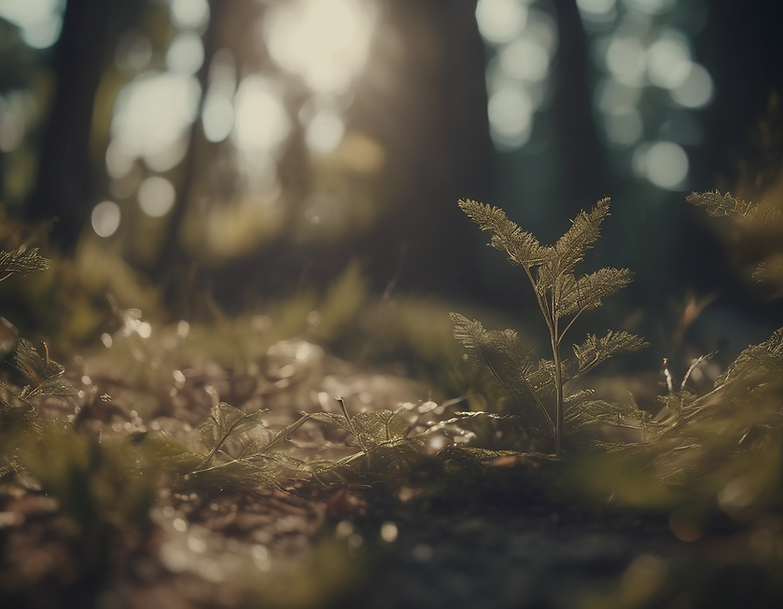
This image was generated with Dream Studio AI.

After the severe economic shock of 2026–2030, triggered by rising US geopolitical instability, a stock market crash, and the first major wave of AI-driven job displacement, hope felt in short supply. Across Europe, people shared the same anxious question: How did we let this happen again? Memories of the 2008 financial crisis returned, along with the unsettling sense that the world was moving backwards.

The years that followed were marked by chaos, anger and growing polarisation. But from that instability came a realisation: Europe’s future could not be built on division. It could only be built on deeper cooperation. As the world became more fragmented, Europeans began to understand a simple truth more clearly than ever before: divided, we are weak; united, we are strong.

By the early 2030s, politics began to change. Citizens stopped rewarding outrage, blame and division, and started demanding compromise, seriousness and shared purpose. Political leaders responded. What followed was something few had thought possible: the European Union federalised, and a new kind of superpower emerged.

Europe did not rise through conquest, aggression or domination. It rose through cohesion, partnership and collaboration. We cut through the bureaucracy that had long slowed progress, not to pursue growth at any cost, but to build growth that was sustainable, fair and widely shared. Europe became more agile, more innovative and more confident in shaping its own destiny.

As tensions between China and the United States deepened, Europe became the world’s common ground: a reliable partner, a trusted trading bloc, and a defender of liberal democracy, human rights and international order. In an increasingly unstable world, it became one of the few places where peace, predictability and freedom still felt secure.

Now, in 2040, the European experiment is thriving. Europe has become a global centre of innovation, economic dynamism and social stability. The European Dream is no longer an aspiration, but a reality: a society where people have the freedom to build a business, raise a family and live with dignity and peace of mind.

We have reversed population decline. In 2039, the EU recorded its highest birth rate in decades. Cross-European relationships and identities have flourished, helped by expanded Erasmus programmes and greater mobility across the Union. More and more people now see themselves not as French, Portuguese or Dutch first, but as European first, and proudly rooted in their region second.

Europe also chose a different path on technology. While other powers used AI to intensify competition, control and division, the EU focused on using it to improve lives, strengthen public services and support strategic resilience. As a united bloc, we achieved far greater independence in energy, production and food security. Rather than causing mass long-term unemployment, this technological transition helped unlock a new era of job creation, renewal and opportunity.

And Europe did not turn inward. It remained open to the world and became its safest and most trusted economic partner. The euro became the world’s leading reserve currency. Investment flowed toward stability, credibility and the rule of law. The Union continued to grow, with the UK rejoining in 2032 and Ukraine becoming part of the European project as well.

Looking back from 2040, it is clear that the crises of the late 2020s did not destroy the European idea. They forced it to evolve. At the moment when everything seemed to be falling apart, Europe discovered that the only way forward was together. The European Dream became not just a vision of survival, but a model of renewal for the world.

related stories

hallo
Retour sur la logique des choses
I wake up one morning in the new year, 2040. Like any other morning, I'm getting ready for an ordinary day. Today, it's safe to walk the streets. Delinquency shaves the walls, since repression is harsh but fair, a little like in the Middle Ages, but effective (caning, reopening of prisons). Controlled immigration and the deportation of delinquents have contributed to all this. Men have realized that women can do as well as, if not better than, them. That said, parity and quotas are a thing of the past - we live in a world of meritocracy. Women are breathing a sigh of relief, and rapists and sex offenders are being severely punished. They have also understood that if they want to please, they have to accept being looked at, admired and approached by other people of all genders. In fact, there are now only 2, masculine or feminine. Non-binary people, those who feel like a flowerpot every 4 mornings..., are followed up for shrink failure. Society has become fairer, and freeloaders no longer exist. People who live on assistance without ever working are no longer entitled to it. All work deserves a salary, so no work = no income or benefits. Social security is on the mend, since we've stopped treating all the world's misery. Young people are better educated, thanks to ever more innovative new technologies, but above all thanks to a culture of effort and hard work. But above all, we've stopped doing anything that didn't make sense. For example, to import foreign products, they have to meet the same production standards. This encourages "local consumption", reduces carbon impact, and reinvigorates agriculture. Repair shops are to be found just about everywhere: no more systematic replacement, today we repair, just like in my youth. Containers are being reused, thanks to the return of the glass bottle deposit scheme. Tourism has taken a knock, which seems normal to me, but it came late. If you want to preserve places, you have to protect them from man. Apart from that, and it's not bad, I'm happy to have a quality of life like this, better purchasing power, better health, security, justice, well thought-out decisions but above all logic. So, although this future makes me dream, I'm not going to be impatient to get there because I'll be 15 years older :-/
hallo
La paix dans le monde
I'd like to see world peace in 2040, where people can travel and emigrate freely. To achieve this, we need to put an end to dictatorships, the desire to conquer territories, power and material domination, and live in peaceful, intelligent communities.
hallo
DANS 15 ANS SUR CETTE TERRE
it will be 15 years from now. it seems to me that this future is close and uncertain. the great leaders of certain countries have delusions of grandeur, and if they succeed in obtaining a result, it's the ordinary citizen who will suffer the consequences of their very personal ambitions. Our earth could become uninhabitable due to climate change and its consequences, and humans will destroy themselves.
hallo
The collaps of Green Deal economy saves the Nature and European civilization
After huge pressure from un-corrupted scientists, reasonable environment protection groups and indigenous people of EU, EU leaders realized in 2025 that the construction of huge wind generators and solar parks at the expense of wildlife destruction is not sustainable and stopped this industrial scale activity. Only small (and low) wind generators and solar parks directly near the point of consumption are allowed, as particularly great destruction of nature resulted not only from the parks themselves, but also from the construction of new power lines to the scattered wind and solar parks in the natural landscape. Immigration has stopped, as there is not enough energy to heat living quarters and people from warmer parts of the world prefer North Africa to Europe. Additionally, as EU economy collapsed in 2028 due to wrong energy policies, there is no resources to offer social aid for immigrants who do not work. Without social aid money and worm living space there is no incentive to move to Europe. Declining population and real nature protection, with small local energy production from wind, solar, hydro and biogas from waste, cities are declining and rural population is growing. Cities did not have enough place to produce enough energy and so people started to move to smaller towns.The environment is gradually recovering from the damages caused to it by the green turn, food is healthier and produced 90% locally. World wide transportation is so expensive that only very rich can allow to eat bananas and drink coffee.
Join #OurFutures now!

The future is shaped by our ideas and our actions today. Tell us about your visions of the future and help us create a futures narrative aimed at inspiring citizens, policy-makers and foresight experts alike!

OURfutures.png

The European Commission support does not constitute endorsement of the contents which reflects the views only of the authors, and the Commission cannot be held responsible for any use which may be made of the information contained.

ERA_logo.jpg

We support the European Research Area aimed at creating a single, borderless market for research, innovation and technology in the EU.

©OurFutures 2025, All rights reserved.

  • Instagram
  • Facebook
  • LinkedIn
  • YouTube
bottom of page