The European Dream

Anonymous
March 31, 2026

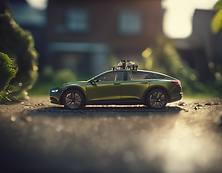
This image was generated with Dream Studio AI.
After the severe economic shock of 2026–2030, triggered by rising US geopolitical instability, a stock market crash, and the first major wave of AI-driven job displacement, hope felt in short supply. Across Europe, people shared the same anxious question: How did we let this happen again? Memories of the 2008 financial crisis returned, along with the unsettling sense that the world was moving backwards.
The years that followed were marked by chaos, anger and growing polarisation. But from that instability came a realisation: Europe’s future could not be built on division. It could only be built on deeper cooperation. As the world became more fragmented, Europeans began to understand a simple truth more clearly than ever before: divided, we are weak; united, we are strong.
By the early 2030s, politics began to change. Citizens stopped rewarding outrage, blame and division, and started demanding compromise, seriousness and shared purpose. Political leaders responded. What followed was something few had thought possible: the European Union federalised, and a new kind of superpower emerged.
Europe did not rise through conquest, aggression or domination. It rose through cohesion, partnership and collaboration. We cut through the bureaucracy that had long slowed progress, not to pursue growth at any cost, but to build growth that was sustainable, fair and widely shared. Europe became more agile, more innovative and more confident in shaping its own destiny.
As tensions between China and the United States deepened, Europe became the world’s common ground: a reliable partner, a trusted trading bloc, and a defender of liberal democracy, human rights and international order. In an increasingly unstable world, it became one of the few places where peace, predictability and freedom still felt secure.
Now, in 2040, the European experiment is thriving. Europe has become a global centre of innovation, economic dynamism and social stability. The European Dream is no longer an aspiration, but a reality: a society where people have the freedom to build a business, raise a family and live with dignity and peace of mind.
We have reversed population decline. In 2039, the EU recorded its highest birth rate in decades. Cross-European relationships and identities have flourished, helped by expanded Erasmus programmes and greater mobility across the Union. More and more people now see themselves not as French, Portuguese or Dutch first, but as European first, and proudly rooted in their region second.
Europe also chose a different path on technology. While other powers used AI to intensify competition, control and division, the EU focused on using it to improve lives, strengthen public services and support strategic resilience. As a united bloc, we achieved far greater independence in energy, production and food security. Rather than causing mass long-term unemployment, this technological transition helped unlock a new era of job creation, renewal and opportunity.
And Europe did not turn inward. It remained open to the world and became its safest and most trusted economic partner. The euro became the world’s leading reserve currency. Investment flowed toward stability, credibility and the rule of law. The Union continued to grow, with the UK rejoining in 2032 and Ukraine becoming part of the European project as well.
Looking back from 2040, it is clear that the crises of the late 2020s did not destroy the European idea. They forced it to evolve. At the moment when everything seemed to be falling apart, Europe discovered that the only way forward was together. The European Dream became not just a vision of survival, but a model of renewal for the world.
related stories