top of page

The European Dream

Anonymous

March 31, 2026
The European Dream

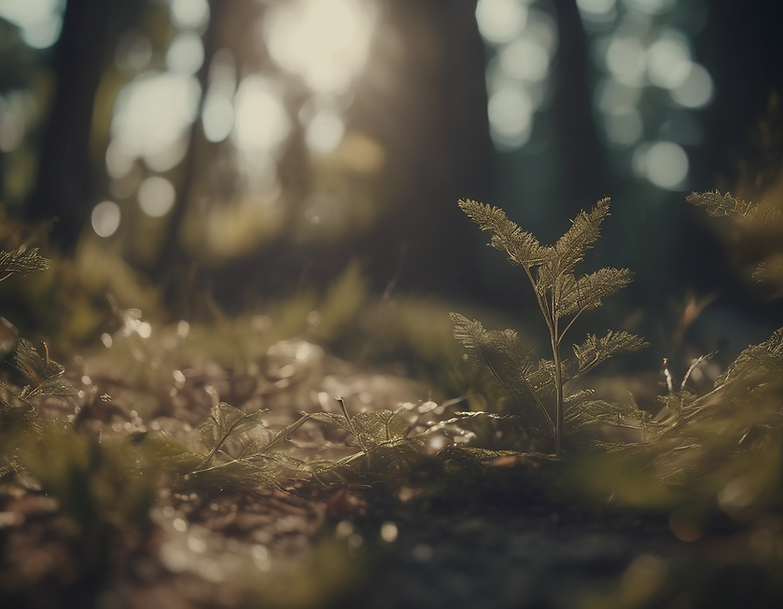
This image was generated with Dream Studio AI.

After the severe economic shock of 2026–2030, triggered by rising US geopolitical instability, a stock market crash, and the first major wave of AI-driven job displacement, hope felt in short supply. Across Europe, people shared the same anxious question: How did we let this happen again? Memories of the 2008 financial crisis returned, along with the unsettling sense that the world was moving backwards.

The years that followed were marked by chaos, anger and growing polarisation. But from that instability came a realisation: Europe’s future could not be built on division. It could only be built on deeper cooperation. As the world became more fragmented, Europeans began to understand a simple truth more clearly than ever before: divided, we are weak; united, we are strong.

By the early 2030s, politics began to change. Citizens stopped rewarding outrage, blame and division, and started demanding compromise, seriousness and shared purpose. Political leaders responded. What followed was something few had thought possible: the European Union federalised, and a new kind of superpower emerged.

Europe did not rise through conquest, aggression or domination. It rose through cohesion, partnership and collaboration. We cut through the bureaucracy that had long slowed progress, not to pursue growth at any cost, but to build growth that was sustainable, fair and widely shared. Europe became more agile, more innovative and more confident in shaping its own destiny.

As tensions between China and the United States deepened, Europe became the world’s common ground: a reliable partner, a trusted trading bloc, and a defender of liberal democracy, human rights and international order. In an increasingly unstable world, it became one of the few places where peace, predictability and freedom still felt secure.

Now, in 2040, the European experiment is thriving. Europe has become a global centre of innovation, economic dynamism and social stability. The European Dream is no longer an aspiration, but a reality: a society where people have the freedom to build a business, raise a family and live with dignity and peace of mind.

We have reversed population decline. In 2039, the EU recorded its highest birth rate in decades. Cross-European relationships and identities have flourished, helped by expanded Erasmus programmes and greater mobility across the Union. More and more people now see themselves not as French, Portuguese or Dutch first, but as European first, and proudly rooted in their region second.

Europe also chose a different path on technology. While other powers used AI to intensify competition, control and division, the EU focused on using it to improve lives, strengthen public services and support strategic resilience. As a united bloc, we achieved far greater independence in energy, production and food security. Rather than causing mass long-term unemployment, this technological transition helped unlock a new era of job creation, renewal and opportunity.

And Europe did not turn inward. It remained open to the world and became its safest and most trusted economic partner. The euro became the world’s leading reserve currency. Investment flowed toward stability, credibility and the rule of law. The Union continued to grow, with the UK rejoining in 2032 and Ukraine becoming part of the European project as well.

Looking back from 2040, it is clear that the crises of the late 2020s did not destroy the European idea. They forced it to evolve. At the moment when everything seemed to be falling apart, Europe discovered that the only way forward was together. The European Dream became not just a vision of survival, but a model of renewal for the world.

related stories
hallo
Frieden
I wish for a peaceful world in 2040. The world is open to other people and religions. No war and no hunger, just a better world where people accept and respect each other. No hatred, no violence and no terror and attacks. No people who die in war or in an attack.
hallo
saveinnella@libero.it
The technological future. Robots will no longer be an idea, they will be the present, with vehicles that will not only be electric, but will also have the characteristic of being able to fly for great distances on highways designed with special lights through the skies and buildings in the world. We will all have a helper at home made of technology to facilitate the work of the home and the education of our children, designed according to the needs of each one. Jobs will be increasingly remote and labor mobility will be better, making it easier for you to be hired anywhere in the world, as long as you have good computer equipment and a large capacity internet, that instead of being disadvantageous, will make it easier for information to travel at greater speed and immediacy
hallo
cortinovis.fabio@inwind.it
In 2040, everyday life is profoundly transformed by technology. Cities are smart, with self-sufficient buildings using solar energy and self-driving transport networks. Autonomous cars are finally a reality, reducing road traffic and reducing polluting emissions. Artificial intelligence is embedded in every aspect of society: Virtual assistants manage the house, book appointments and optimize work activities. Remote working is the norm, with holograms replacing video calls, making meetings more immersive. Medicine has also made great strides. Thanks to biotechnology, genetic diseases have almost disappeared and nanotechnologies allow immediate treatment for many diseases. Human longevity has increased, with many people over 100 in excellent health. Education is fully personalised where students learn through interactive experiences. However, new challenges are emerging. Dependence on technology raises ethical and social issues, and humanity must address the delicate balance between progress and mental well-being. Overall, 2040 is an era of extraordinary possibilities, where innovation continues to redefine the way we live, work and interact with the world.
hallo
jukka.sarvi@gmail.com
I see a united Europe, a federation that decides by majority vote with binding force. Money is common. Europe mainly produces its own food, and agriculture is planned with the rest of the world in such a way that food is distributed, sold to everyone as needed. The population has decreased according to the carrying capacity of nature. There is no war in Europe and the war is over. There is one common army in the world, ,, that controls the entire ball. Europe is involved in this. The production of energy relies on wind and solar power, which has been built all over the world from common resources. Nuclear power is part of the energy mix. The state of nature has been improved and 30% of land and water areas are in their own peace without human intervention. All operations are financed from a single fund and the surplus is returned to this fund. Citizens have a living income (citizens' wages) and everyone is equal, but also obliged to work of their choice. The profit-seeking of companies and people is limited to a very small amount. Everyone has the right to vote and decisions are preceded by extensive civic surveys.
Join #OurFutures now!

The future is shaped by our ideas and our actions today. Tell us about your visions of the future and help us create a futures narrative aimed at inspiring citizens, policy-makers and foresight experts alike!

OURfutures.png

The European Commission support does not constitute endorsement of the contents which reflects the views only of the authors, and the Commission cannot be held responsible for any use which may be made of the information contained.

ERA_logo.jpg

We support the European Research Area aimed at creating a single, borderless market for research, innovation and technology in the EU.

©OurFutures 2025, All rights reserved.

  • Instagram
  • Facebook
  • LinkedIn
  • YouTube
bottom of page