top of page

The European Dream

Anonymous

March 31, 2026
The European Dream

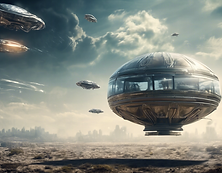
This image was generated with Dream Studio AI.

After the severe economic shock of 2026–2030, triggered by rising US geopolitical instability, a stock market crash, and the first major wave of AI-driven job displacement, hope felt in short supply. Across Europe, people shared the same anxious question: How did we let this happen again? Memories of the 2008 financial crisis returned, along with the unsettling sense that the world was moving backwards.

The years that followed were marked by chaos, anger and growing polarisation. But from that instability came a realisation: Europe’s future could not be built on division. It could only be built on deeper cooperation. As the world became more fragmented, Europeans began to understand a simple truth more clearly than ever before: divided, we are weak; united, we are strong.

By the early 2030s, politics began to change. Citizens stopped rewarding outrage, blame and division, and started demanding compromise, seriousness and shared purpose. Political leaders responded. What followed was something few had thought possible: the European Union federalised, and a new kind of superpower emerged.

Europe did not rise through conquest, aggression or domination. It rose through cohesion, partnership and collaboration. We cut through the bureaucracy that had long slowed progress, not to pursue growth at any cost, but to build growth that was sustainable, fair and widely shared. Europe became more agile, more innovative and more confident in shaping its own destiny.

As tensions between China and the United States deepened, Europe became the world’s common ground: a reliable partner, a trusted trading bloc, and a defender of liberal democracy, human rights and international order. In an increasingly unstable world, it became one of the few places where peace, predictability and freedom still felt secure.

Now, in 2040, the European experiment is thriving. Europe has become a global centre of innovation, economic dynamism and social stability. The European Dream is no longer an aspiration, but a reality: a society where people have the freedom to build a business, raise a family and live with dignity and peace of mind.

We have reversed population decline. In 2039, the EU recorded its highest birth rate in decades. Cross-European relationships and identities have flourished, helped by expanded Erasmus programmes and greater mobility across the Union. More and more people now see themselves not as French, Portuguese or Dutch first, but as European first, and proudly rooted in their region second.

Europe also chose a different path on technology. While other powers used AI to intensify competition, control and division, the EU focused on using it to improve lives, strengthen public services and support strategic resilience. As a united bloc, we achieved far greater independence in energy, production and food security. Rather than causing mass long-term unemployment, this technological transition helped unlock a new era of job creation, renewal and opportunity.

And Europe did not turn inward. It remained open to the world and became its safest and most trusted economic partner. The euro became the world’s leading reserve currency. Investment flowed toward stability, credibility and the rule of law. The Union continued to grow, with the UK rejoining in 2032 and Ukraine becoming part of the European project as well.

Looking back from 2040, it is clear that the crises of the late 2020s did not destroy the European idea. They forced it to evolve. At the moment when everything seemed to be falling apart, Europe discovered that the only way forward was together. The European Dream became not just a vision of survival, but a model of renewal for the world.

related stories

hallo
Ein Tag im Europa des Jahres 2050
The morning sun bathes the Berlin skyline in a golden light. I open the windows of my energy self-sufficient apartment - built from recycled materials, climate-neutral and fully connected. My personal AI assistant suggests sustainable options for the day: An appointment with an international team in a virtual conference environment, followed by a visit to the urban garden on the roof of our apartment complex. Europe has changed fundamentally since 2025. The transition to a circular economy has been accelerated by political decisions and fossil fuels have long been a thing of the past. Thanks to new technologies and AI-supported automation, society is more flexible and fairer. Education is digital, individualized and available throughout life. Social security systems guarantee a decent life for all. Vehicles drive silently and autonomously on the roads. Public transportation is free, financed by a Europe-wide digital tax. The air is clean, green parks dot the cities. I meet up with friends in a café where food waste no longer exists - everything is used sustainably. As I enjoy the view, I think about the challenges that Europe has overcome: Climate change, social inequality and economic disruption. But by acting together, we have created a future that is more sustainable, fairer and more liveable - for all Europeans.
hallo
Un avenir inclusif et solidaire
In 2040, I'd like to see a world where education is truly inclusive and values all pathways, especially vocational education. A system where every student finds his or her place and develops his or her talents, with no hierarchy between streams. Inequalities in access to culture and healthcare would be reduced thanks to ambitious policies. Preventive health care would be a priority, with fair treatment for all. Finally, society would be more ecological, with responsible consumer choices and technological advances serving the common good. A fairer, more united and more respectful world.
hallo
All together in peace
There is an artificial protective shell in the atmosphere, high above the earth. This protects living creatures from harmful conditions and keeps the climate at a constant 22 degrees Celsius. Movement is ensured by magnetic levitation trains and vehicles. Cars and motorcycles no longer exist. Everywhere there are vertical gardens that feed people. Farm animals no longer exist either. Most people work in research or in the gardens. All payment transactions are digital. People live in communities that correspond to their interests, i.e. family communities, sports communities, and a lot of value is placed on social interaction. I imagine a peaceful world without wars and without class differences. What counts is us, togetherness and life.
hallo
Bessere Welt
I hope that there will be no more wars and that all people can live together in peace. I wish for the environment to be better protected and for there to be no more pollution. I wish for animal welfare so that endangered species do not become extinct.
Join #OurFutures now!

The future is shaped by our ideas and our actions today. Tell us about your visions of the future and help us create a futures narrative aimed at inspiring citizens, policy-makers and foresight experts alike!

OURfutures.png

The European Commission support does not constitute endorsement of the contents which reflects the views only of the authors, and the Commission cannot be held responsible for any use which may be made of the information contained.

ERA_logo.jpg

We support the European Research Area aimed at creating a single, borderless market for research, innovation and technology in the EU.

©OurFutures 2025, All rights reserved.

  • Instagram
  • Facebook
  • LinkedIn
  • YouTube
bottom of page