The Future of Sustainable Cities in 2040

Anonymous
March 19, 2025

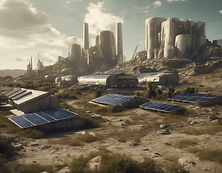
This image was generated with Dream Studio AI.
The Future of Sustainable Cities in 2040
The year is 2040, and the world has undergone a transformation in how we live, work, and interact with our environment. One of the most significant changes has been the rise of truly sustainable cities—urban areas that are no longer a burden on the planet but instead operate in harmony with nature. These cities are not just places to live; they are ecosystems designed to enhance human well-being while protecting the Earth.
When I walk through a city in 2040, the first thing I notice is the air—clean, crisp, and filled with the scent of trees and flowers. Gone are the days of thick smog and pollution. Decades of investment in green technology, urban planning, and renewable energy have eliminated our dependence on fossil fuels. The streets are lined with trees that help regulate temperature, absorb CO₂, and provide natural beauty. These trees are part of a broader network of green spaces, including vertical gardens on buildings, rooftop farms, and expansive urban forests.
Renewable Energy and Smart Infrastructure
One of the most remarkable advancements is the energy infrastructure. Cities are now powered entirely by renewable energy sources such as solar, wind, hydro, and even next-generation nuclear fusion. Buildings are designed to generate more energy than they consume, with solar panels seamlessly integrated into roofs, windows, and roads. Energy storage has been revolutionized, making power readily available at all times, regardless of weather conditions.
Smart grids allow for real-time energy distribution, ensuring efficiency and sustainability. Artificial intelligence (AI) plays a crucial role in optimizing energy use by predicting demand and adjusting supply accordingly. Every home and office has an energy management system that learns usage patterns and reduces waste automatically.
Transportation: Clean, Fast, and Efficient
Gone are the days of traffic jams and honking horns. In 2040, transportation is seamless, quiet, and emission-free. Personal car ownership has declined significantly as people rely on shared, autonomous electric vehicles (EVs) and an extensive network of high-speed trains and hyperloops. These self-driving electric taxis are available on demand, reducing congestion and freeing up space once dedicated to parking lots and highways.
Bicycles and electric scooters remain popular for short trips, and the streets are designed to accommodate pedestrians and cyclists rather than cars. Elevated walkways and underground transit systems connect different parts of the city, making commuting effortless. Public transportation is completely free, funded by a system that prioritizes sustainability and equity.
A Circular Economy
Consumer culture has also shifted dramatically. Instead of the throwaway economy of the early 21st century, cities now operate on a circular economy model, where waste is virtually eliminated. Products are designed to be repaired, repurposed, or recycled with minimal environmental impact. Single-use plastics are a thing of the past, replaced by biodegradable materials and reusable alternatives.
Food production is hyper-local, with vertical farms and community gardens supplying fresh produce directly to neighborhoods. These farms use hydroponics and aeroponics to grow food efficiently with minimal water and no soil degradation. Urban agriculture has not only reduced food transportation emissions but also strengthened community bonds.
Social and Technological Advancements
Technology is deeply integrated into daily life, but it serves people rather than dominating them. AI and robotics handle many repetitive or hazardous jobs, allowing people to focus on creative, meaningful work. Universal Basic Income (UBI) has been implemented in many countries, ensuring that everyone has access to basic necessities like housing, food, and healthcare.
Education is lifelong and personalized, accessible to anyone, anywhere, thanks to immersive virtual reality (VR) and AI tutors. Students learn through interactive experiences tailored to their interests and abilities. Schools emphasize critical thinking, emotional intelligence, and problem-solving rather than rote memorization.
Healthcare has also evolved dramatically. Personalized medicine, powered by genetic engineering and AI diagnostics, ensures that diseases are detected and treated before they become serious. Hospitals are rare because most treatments occur in the home via wearable health monitors and AI-assisted care.
A More Equitable Society
Perhaps the most inspiring change is the shift in global priorities. In 2040, society values well-being, sustainability, and equity over unregulated growth and corporate profits. Governments and businesses operate with transparency, and citizens actively participate in decision-making through digital democracy platforms. Wealth inequality has been significantly reduced, as economic systems are designed to ensure fair distribution rather than extreme accumulation.
Work-life balance is a reality, not just an aspiration. People work fewer hours and have more time for leisure, family, and personal growth. Creativity, art, and community engagement flourish as people are no longer trapped in the relentless pursuit of survival.
Challenges and the Road Ahead
This future was not easy to achieve. The journey
related stories