top of page

THE TECHNOLOGY DILEMMA

Anonymous

April 26, 2023

THE TECHNOLOGY DILEMMA

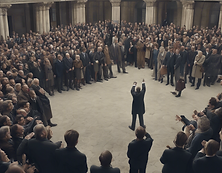
This image was generated with Dream Studio AI.

Who decides if we are hired? Who decides if we get a loan? The answer is simple, an algorithm. Many people still ignore this aspect, but the reality is that more and more algorithms make decisions for our lifetime. Of course, technology is fundamental in our lives, and I could not imagine a life without it; but its development without control could bring us many social and ethical issues.
Firstly, an algorithm works from all the data that all the users from the media provide, and then, taking all this data, the system learns to pull out its conclusions. This process is known as machine learning.
Imagine an algorithm that it's learning through social media, for instance, Twitter. The algorithm takes many tweets from different users and analyzes them, but what happens if one tweet is homophobic? The algorithm won't know that, and it will think that insulting gay people is right. This is just an example, but there are plenty of cases like this and even more complex ones.
In 2040 I imagine a future where the development of technology is under control and whose progress is taking part at the same time that human evolution. A future where people of all knowledge branches (philosophers, engineers...) are working together to solve all the social dilemmas and to improve the citizen's quality of life through the right improvement of technology.

related stories
hallo
un réve .
Europe would be united, France would have a responsible government without all the current lefties! which would control the migratory flow and in addition would take decisions quickly in order to make things advance without having laws or associations which prevent the good functioning of the society, reform of the constitution, in-depth reform of justice, dissolution of various commissions which cost France and brings nothing! in short there is work!
hallo
Hlfe im Alltag
I would like an automated world for this time. I can organize my mobility without any special effort. Public transport can be used everywhere and at any time at low cost. Energy is available to everyone in sufficient quantities and at a reasonable price. Sufficient living space is available to everyone. Shopping can be done from home without any problems. Deliveries are made directly to the apartment. Cultural life is accessible to everyone.
hallo
Mildere tijden
I walk down a sunny street in Utrecht, where children sit on benches with their noses deep in books. Not because they have to, but because stories inspire them. In 2030, people realized that technology is great, but it shouldn't kill imagination. So there were reading squares everywhere, interactive libraries and writers telling schools how stories could change the world. Meanwhile, the walls of new homes were literally growing. We discovered how to make building materials from CO₂ from the air, combined with bio-concrete that regenerates itself. This is how we solve climate problems while building sustainable homes. In healthcare, something extraordinary has happened. Robots and AI are taking over tasks, but not at the expense of humanity. Care workers actually have more time for patients. Everyone is seen, heard and helped. And perhaps best of all: people have become milder. We have learned that working together is more rewarding than winning. A smile on the street is normal again, and granting is more important than owning. This is Europe, 2050. And it feels good.
hallo
Utopia kommt ein Stück näher
I would like to see the conflict between economy and ecology overcome by 2040. Companies will no longer have to strive for extreme profit, but will be rewarded for sustainable production. In addition, products produced in this way are subsidized by the state so that almost everyone can buy them. The neo-liberal economic ideas have finally been consigned to the dustbin and no one would think of following the capitalist ideas any more. In addition, the social systems have been harmonized so that the major gaps have been closed and no one has to work beyond the age of 65. The professional civil service has been abolished and only a few essential professions (police, fire department, judiciary) still have civil servants in the necessary positions. Private health insurance has been abolished and transferred to the statutory system so that all employees pay equally into the social security system and stability is guaranteed. Parliaments have shrunk to reasonable sizes (Bundestag 301 members, the rest staggered according to population up to a maximum of 49) and the associated bureaucracy has also shrunk. The money could be used for sensible projects to reduce legal regulations, so that digitalization could also be decisively advanced.
Join #OurFutures now!

The future is shaped by our ideas and our actions today. Tell us about your visions of the future and help us create a futures narrative aimed at inspiring citizens, policy-makers and foresight experts alike!

Our-futures-banner-coloured_v3.jpg

The European Commission support does not constitute endorsement of the contents which reflects the views only of the authors, and the Commission cannot be held responsible for any use which may be made of the information contained.

ERA_logo.jpg

We support the European Research Area aimed at creating a single, borderless market for research, innovation and technology in the EU.

©OurFutures 2025, All rights reserved.

  • Instagram
  • Facebook
  • LinkedIn
  • YouTube
bottom of page