top of page

Too busy for jobs

Anonymous

April 26, 2023

Too busy for jobs

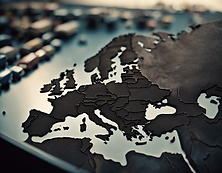
This image was generated with Dream Studio AI.

By 2040 nobody has a job. It’s not that we ran out of things to do, it is just that we don’t use the model based on labor and income anymore. It all started with the application of the universal basic income. People used to take the best job they could find while relying on their savings. Sometimes they stuck to their jobs because they feared not finding something better. Even governments offered legal concessions to businesses in exchange for fixing large amounts of labor. Once people didn’t have to choose their jobs out of scarcity, they became pickier about the jobs they were taking. Taking a job wasn’t a completely free choice before. Now only those truly willing to perform some activity do it. No one is looking after the paycheck. We got better practitioners, and they are highly motivated.

Some jobs have disappeared as they were particularly unpleasant for people. There are no teleoperators taking calls for clothing brands full-time, nor concierges attending the building hall, also there are way fewer fishermen. Since there were increasingly fewer people willing to take these roles, we had to redesign many of our processes, making them more intuitive.

Of course, technology had a role in all of this. However, we haven’t automated every task to replicate how life used to be. We are using robots in heavier industries. We are also applying AI nurtured with public data as an asset for the common good to improve decision-making and minimize workload. Nonetheless, there are way too many tasks that we can't automate. For those activities, we have to arrange deals with each other. People now have to take over way more tasks than they used to. Many of them are related to care, such as cleaning common spaces, cooking, or gardening. For example, when you go eating outside there are usually no waiters anymore, you have to serve yourself. Gamification is the cornerstone of our society. People are not forced to do anything in exchange for money. Then, they need to enjoy the activities they do or at least understand their purpose.

We still have people who study biology, people with amazing sewing skills, and people who fly planes. They have various incentives to do these activities, either creativity expression, prestige, curiosity, or self-fulfillment. They just don’t have to do these activities every day full-time. They do these when they want to or have committed with the people they work with. We had to find new ways of collaboration that were not based on labor to keep on having some of the systems we enjoyed, such as traveling. The experts create associations and manage their work to provide a stable service.

People take on other activities the rest of their day, like looking after their loved ones, crafting, or resting. Monday to Fridays are not all about work, and there is way less anxiety over productivity. In the beginning, many people didn’t know how to manage all that free time. It is actually always free time now. The fixed schedule of labor was frustrating, but it provided certainty to people’s life. People weren’t used to associating freely or reciprocity culture. It has taken some years for people to imagine new lifestyles that are not defined by their profession but by their purpose. Now people are too busy doing their own thing to think about jobs.

related stories

hallo
rdecicvet352@gmail.com
In 2040, they had cars that don't need gasoline, but will work on electricity, and everything will be avomtatitzed at all. Something will probably change about the exploration of the universe and the worlds around us. I wish there were no wars, but that's not going to happen. I think we're going to live in such a polluted world in 2040 that it's going to be pretty bad. Social disparities will increase, there will be too many people in the world, so I'm worried about how it will be. Artificial intelligence will be everywhere in our lives. It will probably have a negative impact on all of us, there will certainly be no greater prosperity. I imagine that everything goes to hell if we don't fundamentally change our relationship with the Earth and the environment. I'll be gone, but I'm worried about future generations.
hallo
Demokrati och rättigheter
By 2040, there will be no war in Europe. Everyone has an open dialogue with other countries and all countries in Europe are democracies where regular elections are held. There is freedom for people to move across borders. There are many opportunities for jobs and to develop.There is the freedom to express one's opinion even if not everyone likes it. In addition, there are strict enough laws for harsh crimes against people such as rape and murder. Children's rights are respected and corruption is something that does not exist and also something that is not tolerated.
hallo
Kova dėl ateities, vyksta dabar
The artificial intellect is the future of the 2040s and beyond. It will also be a positive and negative aspect of human life. Harmful because the privacy of a person may disappear, and the advantage that a person will be integrated into the wider world of technology, this will allow a better knowledge of human health, life. In the future, climate problems will be much more pronounced. Water levels will rise drastically and air pollution will be the highest in human history. Together with technology, people will strive to scale up and finally improve the Green Deal. The current struggle in Ukraine, in the geopolitical world, is deciding the future of the Ruropa states first in 100 years, so today we must take measures not only to reduce pollution, but also to support the states fighting for democracy. Otherwise, we will find ourselves in a witness situation where the war on the European continent will affect every European and take us back, not 100 years.
hallo
A balance between freedom and security. More horizontal links.
Europe's future is secure, with convenient transport links to any point in the union. Low taxes, allowing entrepreneurship to develop. Improved public services allowing most actions to be done electronically, like in Estonia. Fewer regulatory restrictions (environmental, AI, etc.). Compulsory higher education for all citizens. More nuclear power plants and compact safe reactors. Less bureaucracy, more horizonal links and public self-regulation on the ground.
Join #OurFutures now!

The future is shaped by our ideas and our actions today. Tell us about your visions of the future and help us create a futures narrative aimed at inspiring citizens, policy-makers and foresight experts alike!

Our-futures-banner-coloured_v3.jpg

The European Commission support does not constitute endorsement of the contents which reflects the views only of the authors, and the Commission cannot be held responsible for any use which may be made of the information contained.

ERA_logo.jpg

We support the European Research Area aimed at creating a single, borderless market for research, innovation and technology in the EU.

©OurFutures 2025, All rights reserved.

  • Instagram
  • Facebook
  • LinkedIn
  • YouTube
bottom of page