top of page

Too busy for jobs

Anonymous

April 26, 2023

Too busy for jobs

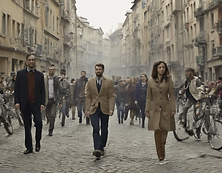
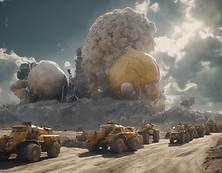
This image was generated with Dream Studio AI.

By 2040 nobody has a job. It’s not that we ran out of things to do, it is just that we don’t use the model based on labor and income anymore. It all started with the application of the universal basic income. People used to take the best job they could find while relying on their savings. Sometimes they stuck to their jobs because they feared not finding something better. Even governments offered legal concessions to businesses in exchange for fixing large amounts of labor. Once people didn’t have to choose their jobs out of scarcity, they became pickier about the jobs they were taking. Taking a job wasn’t a completely free choice before. Now only those truly willing to perform some activity do it. No one is looking after the paycheck. We got better practitioners, and they are highly motivated.

Some jobs have disappeared as they were particularly unpleasant for people. There are no teleoperators taking calls for clothing brands full-time, nor concierges attending the building hall, also there are way fewer fishermen. Since there were increasingly fewer people willing to take these roles, we had to redesign many of our processes, making them more intuitive.

Of course, technology had a role in all of this. However, we haven’t automated every task to replicate how life used to be. We are using robots in heavier industries. We are also applying AI nurtured with public data as an asset for the common good to improve decision-making and minimize workload. Nonetheless, there are way too many tasks that we can't automate. For those activities, we have to arrange deals with each other. People now have to take over way more tasks than they used to. Many of them are related to care, such as cleaning common spaces, cooking, or gardening. For example, when you go eating outside there are usually no waiters anymore, you have to serve yourself. Gamification is the cornerstone of our society. People are not forced to do anything in exchange for money. Then, they need to enjoy the activities they do or at least understand their purpose.

We still have people who study biology, people with amazing sewing skills, and people who fly planes. They have various incentives to do these activities, either creativity expression, prestige, curiosity, or self-fulfillment. They just don’t have to do these activities every day full-time. They do these when they want to or have committed with the people they work with. We had to find new ways of collaboration that were not based on labor to keep on having some of the systems we enjoyed, such as traveling. The experts create associations and manage their work to provide a stable service.

People take on other activities the rest of their day, like looking after their loved ones, crafting, or resting. Monday to Fridays are not all about work, and there is way less anxiety over productivity. In the beginning, many people didn’t know how to manage all that free time. It is actually always free time now. The fixed schedule of labor was frustrating, but it provided certainty to people’s life. People weren’t used to associating freely or reciprocity culture. It has taken some years for people to imagine new lifestyles that are not defined by their profession but by their purpose. Now people are too busy doing their own thing to think about jobs.

related stories
hallo
jasminka.varga7@gmail.com
I imagine that I am in Pula, alive and healthy and my family is healthy. As I currently have health problems, I imagine and wish that quality health protection is available to people at all times that it is free and of good quality. For everyone. I imagine that I live in a society where no disease is stigmatized and that society prioritises the elderly, the sick and the disabled. I imagine that as humans we have overcome greed, egoism and care for each other. And again that we have bedpmatous health, everyone has free medication, free dental services and that then mental hygiene will be a priority. Namely, everyone can do without shame and fear to go regularly to the psychologist for discussion and advice. Every nation has priority for the health of its inhabitants , both physically and mentally. For what kind of nation and civilization are we if the health service is not available to everyone and not to profit from someone's illness and powerlessness. Healthy people are the basis for a healthy society.
hallo
Sociālā afvērtība - brīvības bira
Freedom in social networks will allow to follow people's actions, promote responsibility both privately and for officials. We will also have acquired personal responsibility for action not only in reality, but also in social networks, and thus we will be able to communicate productively and interestingly. We will not seek hatred in disputes, but grains of understanding. We will have calmed down the race for material benefits - we will live more slowly, buy less but better quality items. We will be able to see within ourselves and around us the spark of humanity.
hallo
on est vraiment sur la mauvaise pente
For me 2050 will have to take up the most important points of the past, a slower life, less technology, less social control, more freedom, a true democracy and not that of today where those who have the most power have never been chosen by the people, a sovereign Belgium that can make its own choices while working with its neighbours, including our Russian friends. More contact between people in cafes and resting, in the cinema, and less life via screen. And in our plate especially keep the quality of our local craftsmen and not the m*** indstrielle transcheese. Let us also return to traditional values and let the woke of the left find themselves in their real place ... in the asylum because they are dangerous And especially not touch my real steack raised with grass by farmers who love their craft. You will have understood ... the very opposite of the desires of the globalists of the EU:-)
hallo
zorica.bruski@gmail.com
Zamišljam 2040. godinu kao svijet u kojem je klimatska kriza stavljena pod kontrolu, a obnovljivi izvori energije u potpunosti dominiraju globalnim energetskim sustavom. Odabrao bih temu čiste energije i održivog razvoja. Želio bih da do 2040. godine svijet bude vođen zelenim tehnologijama, gdje su solarne, vjetroelektrane, hidroenergija i napredne baterije standard, a fosilna goriva stvar prošlosti. Gradovi bi bili puni zelenih površina, zgrada s vertikalnim vrtovima i samoodrživih zajednica. Električni automobili, javni prijevoz na vodik ili baterije te pametna infrastruktura omogućili bi minimalnu emisiju CO₂. U ovoj budućnosti, ljudi bi živjeli u harmoniji s okolišem, reciklaža i ponovna upotreba materijala bili bi norma, a klimatske katastrofe smanjene na minimum. Globalna suradnja i razvoj novih tehnologija donijeli bi stabilnost i pravedniju raspodjelu resursa, čime bi se smanjilo siromaštvo i povećala kvaliteta života za sve. To je svijet kakvom težim – održiv, tehnološki napredan, ali prije svega human i u ravnoteži s prirodom.
Join #OurFutures now!

The future is shaped by our ideas and our actions today. Tell us about your visions of the future and help us create a futures narrative aimed at inspiring citizens, policy-makers and foresight experts alike!

Our-futures-banner-coloured_v3.jpg

The European Commission support does not constitute endorsement of the contents which reflects the views only of the authors, and the Commission cannot be held responsible for any use which may be made of the information contained.

ERA_logo.jpg

We support the European Research Area aimed at creating a single, borderless market for research, innovation and technology in the EU.

©OurFutures 2025, All rights reserved.

  • Instagram
  • Facebook
  • LinkedIn
  • YouTube
bottom of page