top of page

Top down versus bottom up reconciliation.

Anonymous

April 26, 2023

Top down versus bottom up reconciliation.

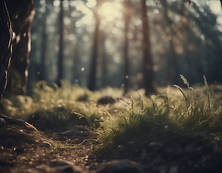
This image was generated with Dream Studio AI.

I choose to speak about a happy 2040 and not about the one I fear. If we have progressed on a path of sustainable development, it is due to far better connections between top down and bottom up processes. So far, these connections are very scarce. Decision makers at the international levels are not aware of the most pressing challenges at the local levels and vice-versa. This creates at all levels the wrong perceptions linked to "complotism" in general. The main cause of this dialogues de sourds between local and global levels of policy-making is the hierarchy between economic, social and environmental goals, actors and processes. The borders between economics, social sciences and environmental sciences and the lack of transdisciplinary culture are largely responsible for this lack of mutual understanding and consideration. My hope is that in 2040 the borders between these political and scientific silos will be replaced by an overall focus on the difference between bottom up (cacophony of actors) and top down (hierarchy of institutions with economic ones at the top) actions and the elaboration of instruments which are needed to interconnect them.

related stories

hallo
Αμφιλεγόμενο
paraskeuaidis.nicolas@gmail.com
hallo
gittevandegraveele@gmail.com
By 2040, I would like the way we deal with food and public space to have fundamentally changed. An ideal image I have in mind, based on the projects I am working on, such as Fruitstraat Gent, is that cities have been completely transformed into green, edible landscapes. In this future, cities are not only functional living spaces, but also productive ecosystems where fruit trees, vegetables and herbs grow lushly in streets, squares and parks. Everyone has access to healthy and local food thanks to the myriad of commons such as communal gardens and fruit trees, where residents have free access to pick. The idea of a short and sustainable food chain is fully embedded in urban life: people harvest their own food or buy it directly from neighborhood cooperatives, without the intervention of polluting, long distribution chains. In addition, there is a broad awareness of the importance of community and participation. Speculative design projects are no longer just a niche, but have been given a central role in shaping urban development. Residents are actively involved in designing the future of their city, with participation and engagement at the heart of policy decisions. Each district has its own projects and experiments that constantly contribute to the improvement of the living environment, both socially, economically and ecologically. This vision of the future would result in a healthier, cohesive and more resilient society in which people not only have a connection with each other, but also with nature and the food they consume.
hallo
My dream of future
Maybe personally I will be very happy to enjoy the high-tech convenience just like I can order the food by done delivery .That’s insane and also many diseases can be handled simultaneously.Tje climate might be not habitable for us,due to our over development.
hallo
Et maintenant, en 2040.
Join #OurFutures now!

The future is shaped by our ideas and our actions today. Tell us about your visions of the future and help us create a futures narrative aimed at inspiring citizens, policy-makers and foresight experts alike!

Our-futures-banner-coloured_v3.jpg

The European Commission support does not constitute endorsement of the contents which reflects the views only of the authors, and the Commission cannot be held responsible for any use which may be made of the information contained.

ERA_logo.jpg

We support the European Research Area aimed at creating a single, borderless market for research, innovation and technology in the EU.

©OurFutures 2025, All rights reserved.

  • Instagram
  • Facebook
  • LinkedIn
  • YouTube
bottom of page