top of page

transports collectifs

Anonymous

March 19, 2025
transports collectifs

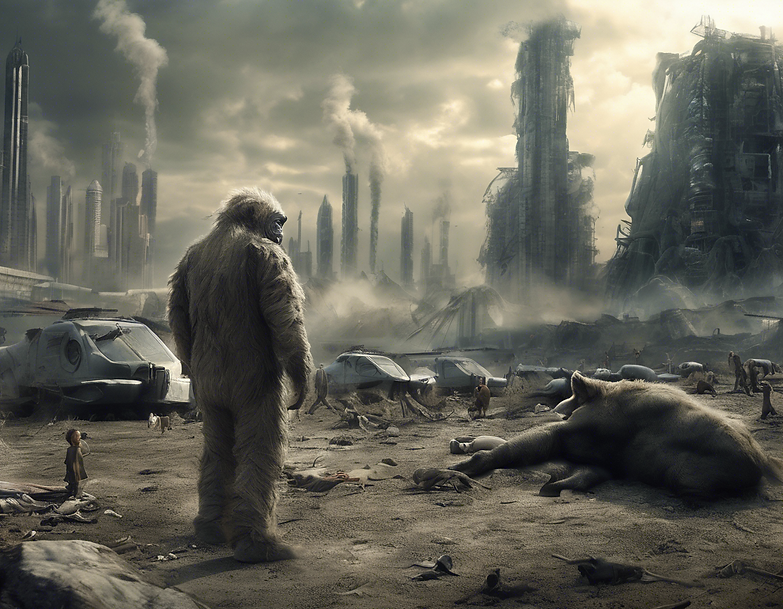
This image was generated with Dream Studio AI.

In 2040, if I'm still alive, I'll be almost 90. But, given my average health, I'll surely be dead, as will many other animals and humans, given current pollution and climate degradation, if it weren't for the murderous and warlike madness of the so-called humans who outbid us.
But if we give up our egoism, in particular by abandoning individual means of transport such as the fossil-powered car or the all-too-easy airplane, we could develop numerous modes of public transport - trains, streetcars, buses and coaches - and recreate a dense enough network to encourage useful or leisure travel, as well as favoring transport by boat instead of airplane.
All this can be developed by collectivizing the means to produce them.
One of my grandmothers, almost 111, could still jokingly say: "I've lived through 3 centuries, the 19th, 20th and 21st", because she lived a healthy life, almost self-sufficiently with her husband, wounded in the 1914-18 war.
On the other hand, at the age of 10, between the years 1900 and 1910, she remembered being amazed by her first automobile trip when a wealthy neighbor drove her 2 kilometers from school to home. At the same time, the students took turns carrying a log of wood in their bags to heat the school in winter. She would surely be sorry to know that today this "Wonder" has contributed to the destruction of the Earth. Or to learn, as I did, belatedly that the American industrialists of the early days of the automobile bought up public means of transport, only to abandon and destroy them immediately to develop their own financially juicy industries, and that the Europeans followed suit.
My father, born in 1920, could still take 2 or 3 local trains or streetcars as a child, with connections, to travel 40 kilometers from Dunois to Perche-Gouët".
We can recreate this spirit, this frugality and good living, even this joy of public transport.

related stories

hallo
Zrównoważone miasta przyszłości
In 2040, cities are green, smart and attuned to people, not cars. Streets are full of trees and air-purifying plants, and the roofs of buildings are covered with gardens and vertical farms that produce local food. Energy comes entirely from renewable sources, and transportation is electric, autonomous and shared. Thanks to advanced urban technology, the cities are resident-friendly - they have plenty of space for pedestrians, and AI systems take care of efficient traffic and resource management. There are no traffic jams or smog, and everyone can get where they want quickly using environmentally friendly transportation. People work less, as artificial intelligence and automation have taken over many monotonous tasks. Society has focused on quality of life, education, mental health and human relationships. Shorter work weeks prevail, and more time is spent developing passions and building communities. Education is accessible to all, and learning is based on hands-on experience and creative thinking. Technology serves people, not the other way around - instead of being addictive, it helps balance digital and real life. It's a world where man and nature coexist, instead of fighting for space. A world where progress means a better quality of life for everyone, not just the few.
hallo
Une belle utopie
The future would have changed a great deal, with people of all nationalities, political persuasions, genders and skin colors finally realizing that the planet has been influenced by mankind and that we have all escaped certain death because of our selfishness and our refusal to listen to the climatologists. Thanks to everyone's efforts, the values of tolerance, generosity and sharing are part of our daily lives. Solidarity is back, and its values are once again rooted in us.
hallo
Schöne, neue Welt
We live in harmony with nature, food is produced regionally, in good quality and with respect for plants and animals. Spending time together is valuable, but we also respect boundaries and individualism. Long-distance travel is not very important; we appreciate the beauty of our immediate surroundings. It doesn't matter how much someone has, only whether they are happy and make a contribution to society.
hallo
Drošība un stabilitāte
It's 2040, I feel safe in Europe, I can travel safely and it's safe to be in my own country, Life is so good because I don't have to worry about any riots or wars. Financial stability finally gives you the opportunity to live like a normal person, who doesn't have to live on potatoes for two weeks until the next salary, which will only be enough to pay the bills or feed the children.
Join #OurFutures now!

The future is shaped by our ideas and our actions today. Tell us about your visions of the future and help us create a futures narrative aimed at inspiring citizens, policy-makers and foresight experts alike!

OURfutures.png

The European Commission support does not constitute endorsement of the contents which reflects the views only of the authors, and the Commission cannot be held responsible for any use which may be made of the information contained.

ERA_logo.jpg

We support the European Research Area aimed at creating a single, borderless market for research, innovation and technology in the EU.

©OurFutures 2025, All rights reserved.

  • Instagram
  • Facebook
  • LinkedIn
  • YouTube
bottom of page