top of page

Uus haridusajastu

Anonymous

March 19, 2025

Uus haridusajastu

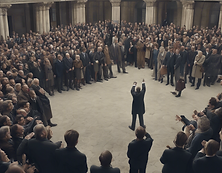
This image was generated with Dream Studio AI.

One major change would be in the education system. Up to the sixth form, teaching would be as usual, except that a pupil would be assigned a personal teacher, specially trained for young children and young people, who would explain difficult subjects to them if necessary. From grade 6 onwards, each pupil, taking into account his future plans and personal interests, would draw up his own personal timetable, with optional subjects, and, if necessary, professional help and support in drawing it up. This would give him or her a better preparation for studying the desired profession. The fact that the student draws up his/her own timetable would give him/her more motivation to learn. Some classes or courses could be online, giving the possibility of a flexible timetable. Once a student reaches upper secondary level, he or she would have the choice between a regular programme of classes, with electives and a flexible timetable, or an intensive programme over one year. This would give the opportunity for inquisitive students, including those who go on to university, to enter the labour market earlier, for example medical students. Schools and classes would be equipped according to the specific needs of age groups. These are just some of the changes that would take place in the education system.

related stories
hallo
un réve .
Europe would be united, France would have a responsible government without all the current lefties! which would control the migratory flow and in addition would take decisions quickly in order to make things advance without having laws or associations which prevent the good functioning of the society, reform of the constitution, in-depth reform of justice, dissolution of various commissions which cost France and brings nothing! in short there is work!
hallo
Hlfe im Alltag
I would like an automated world for this time. I can organize my mobility without any special effort. Public transport can be used everywhere and at any time at low cost. Energy is available to everyone in sufficient quantities and at a reasonable price. Sufficient living space is available to everyone. Shopping can be done from home without any problems. Deliveries are made directly to the apartment. Cultural life is accessible to everyone.
hallo
Mildere tijden
I walk down a sunny street in Utrecht, where children sit on benches with their noses deep in books. Not because they have to, but because stories inspire them. In 2030, people realized that technology is great, but it shouldn't kill imagination. So there were reading squares everywhere, interactive libraries and writers telling schools how stories could change the world. Meanwhile, the walls of new homes were literally growing. We discovered how to make building materials from CO₂ from the air, combined with bio-concrete that regenerates itself. This is how we solve climate problems while building sustainable homes. In healthcare, something extraordinary has happened. Robots and AI are taking over tasks, but not at the expense of humanity. Care workers actually have more time for patients. Everyone is seen, heard and helped. And perhaps best of all: people have become milder. We have learned that working together is more rewarding than winning. A smile on the street is normal again, and granting is more important than owning. This is Europe, 2050. And it feels good.
hallo
Utopia kommt ein Stück näher
I would like to see the conflict between economy and ecology overcome by 2040. Companies will no longer have to strive for extreme profit, but will be rewarded for sustainable production. In addition, products produced in this way are subsidized by the state so that almost everyone can buy them. The neo-liberal economic ideas have finally been consigned to the dustbin and no one would think of following the capitalist ideas any more. In addition, the social systems have been harmonized so that the major gaps have been closed and no one has to work beyond the age of 65. The professional civil service has been abolished and only a few essential professions (police, fire department, judiciary) still have civil servants in the necessary positions. Private health insurance has been abolished and transferred to the statutory system so that all employees pay equally into the social security system and stability is guaranteed. Parliaments have shrunk to reasonable sizes (Bundestag 301 members, the rest staggered according to population up to a maximum of 49) and the associated bureaucracy has also shrunk. The money could be used for sensible projects to reduce legal regulations, so that digitalization could also be decisively advanced.
Join #OurFutures now!

The future is shaped by our ideas and our actions today. Tell us about your visions of the future and help us create a futures narrative aimed at inspiring citizens, policy-makers and foresight experts alike!

Our-futures-banner-coloured_v3.jpg

The European Commission support does not constitute endorsement of the contents which reflects the views only of the authors, and the Commission cannot be held responsible for any use which may be made of the information contained.

ERA_logo.jpg

We support the European Research Area aimed at creating a single, borderless market for research, innovation and technology in the EU.

©OurFutures 2025, All rights reserved.

  • Instagram
  • Facebook
  • LinkedIn
  • YouTube
bottom of page