top of page

Magie

Anonymous

March 19, 2025
Magie

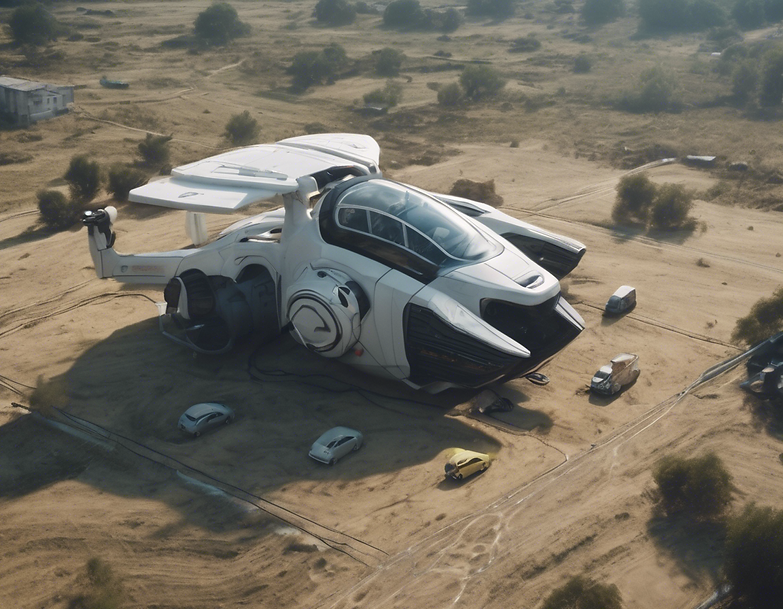
This image was generated with Dream Studio AI.

In 2050, the city was a fascinating blend of advanced technology and regenerated nature. The streets were smooth and quiet, with most vehicles being electric and autonomous. Drones flew over people's heads, delivering packages, and solar power feeds almost every building, making them independent of traditional grids.

It was February 18, and the sun was setting on a world that had changed a lot in the last 25 years. In 2025, climate change had been an imminent threat and governments were just starting to take action. But since then, people have been collaborating globally more than ever. Carbon capture technologies were implemented on a large scale, and artificially planted forests helped restore the natural balance.

The world was going through an energy revolution. In 2027, the first fusion nuclear power plants offering clean, cheap and almost unlimited energy were created. That was a turning point. A global decision to ban petrol and diesel cars followed, and public transport became fully electric and autonomous.

What had previously been a dream – cities without traffic, clean air, and responsible consumption – had now become reality. People had more time for themselves, their families, and their education. Instead of spending hours in traffic, they were able to learn or create. Schools around the world had been transformed, with education based on practical learning and the development of critical thinking, not just on memorizing information.

Another important step between 2025 and 2050 had been in personalized medicine. DNA tests and genetic therapies had helped prevent many diseases, and people's biological age had decreased. People lived longer and healthier lives, and the concept of ‘aging’ had transformed, and it was now a much slower process and much less related to physical limitations.

On this day in February 2050, a 25-year-old man was walking through an urban park, surrounded by plants, trees and flowers that had perfectly integrated into the modern structures of the city. Around him, everything seemed to have found a perfect balance: Technology did not destroy nature, but protected and enriched it. He was thinking about how the future has changed thanks to the work and dedication of past generations, who have not allowed themselves to be influenced by obstacles, but have sought solutions for a sustainable future.

He knew that this future would not have been possible without sacrifice. In a world where climate change threatened the entire ecosystem and where natural resources were on the verge of extinction, people had come to realize the true value of the planet. This was the vital lesson his generation had learned from the experiences of 2025-2035: how to live in harmony with the environment and how to protect what is really important.

"We may have made a difference," he thought, feeling the fresh, warm air of the evening, "but we must never forget what was before."

And so, in the silence of that February day, the future seemed more promising than ever.

related stories

hallo
The European Dream
After the severe economic shock of 2026–2030, triggered by rising US geopolitical instability, a stock market crash, and the first major wave of AI-driven job displacement, hope felt in short supply. Across Europe, people shared the same anxious question: How did we let this happen again? Memories of the 2008 financial crisis returned, along with the unsettling sense that the world was moving backwards. The years that followed were marked by chaos, anger and growing polarisation. But from that instability came a realisation: Europe’s future could not be built on division. It could only be built on deeper cooperation. As the world became more fragmented, Europeans began to understand a simple truth more clearly than ever before: divided, we are weak; united, we are strong. By the early 2030s, politics began to change. Citizens stopped rewarding outrage, blame and division, and started demanding compromise, seriousness and shared purpose. Political leaders responded. What followed was something few had thought possible: the European Union federalised, and a new kind of superpower emerged. Europe did not rise through conquest, aggression or domination. It rose through cohesion, partnership and collaboration. We cut through the bureaucracy that had long slowed progress, not to pursue growth at any cost, but to build growth that was sustainable, fair and widely shared. Europe became more agile, more innovative and more confident in shaping its own destiny. As tensions between China and the United States deepened, Europe became the world’s common ground: a reliable partner, a trusted trading bloc, and a defender of liberal democracy, human rights and international order. In an increasingly unstable world, it became one of the few places where peace, predictability and freedom still felt secure. Now, in 2040, the European experiment is thriving. Europe has become a global centre of innovation, economic dynamism and social stability. The European Dream is no longer an aspiration, but a reality: a society where people have the freedom to build a business, raise a family and live with dignity and peace of mind. We have reversed population decline. In 2039, the EU recorded its highest birth rate in decades. Cross-European relationships and identities have flourished, helped by expanded Erasmus programmes and greater mobility across the Union. More and more people now see themselves not as French, Portuguese or Dutch first, but as European first, and proudly rooted in their region second. Europe also chose a different path on technology. While other powers used AI to intensify competition, control and division, the EU focused on using it to improve lives, strengthen public services and support strategic resilience. As a united bloc, we achieved far greater independence in energy, production and food security. Rather than causing mass long-term unemployment, this technological transition helped unlock a new era of job creation, renewal and opportunity. And Europe did not turn inward. It remained open to the world and became its safest and most trusted economic partner. The euro became the world’s leading reserve currency. Investment flowed toward stability, credibility and the rule of law. The Union continued to grow, with the UK rejoining in 2032 and Ukraine becoming part of the European project as well. Looking back from 2040, it is clear that the crises of the late 2020s did not destroy the European idea. They forced it to evolve. At the moment when everything seemed to be falling apart, Europe discovered that the only way forward was together. The European Dream became not just a vision of survival, but a model of renewal for the world.
hallo
lubicaantalikova@gmail.com
The future would be colorful and colorful, the main topics in society would be respect, empathy and communication. The environment would not be filled with competition, beauty and perfection, but by emphasizing the individuality of the individual. From materialism to minimalism, people would be accepted as they are. The company would like to address the ecological crisis in a targeted manner.
hallo
Mon rêve pour les nations
I hope that nations will have understood that borders are indispensable for the survival of peoples, and must be re-established. I also hope that the European Commission will no longer be corrupt (we can dream...) or phagocytized by a corrupt woman and her minions. I hope that the national peoples will understand that it is up to them, and only them, to decide their future. Europe is just a continent, it is the countries that matter and must be sovereign at home. I would like, when I travel, to be able to do it safely, and discover the particularities of each country, without being in a standardized universe, otherwise, what interest is there in traveling? I would like countries to protect themselves and their nationals, and we should no longer be seen as the trash can of the world, where we can send all waste, whatever it may be. Let nature, animals, be respected and no longer exploited for the benefit of a minority that sees itself as an elite.
hallo
mfkali1953@orange.fr
I think that European life and people in 2040 will be completely different from what they are today. I will in principle be 86 years old, and I believe that if I go out again I will no longer recognise the places I know as they are today. With the immigration of people from communities and religions different from ours, which is growing at a very high rate, it will be necessary to share work and wealth so that everyone lives decently and intelligently. But can I still say that the future of the generations of my children, grandchildren and others anguish me a lot, and that I am not the only one who thinks so?
Join #OurFutures now!

The future is shaped by our ideas and our actions today. Tell us about your visions of the future and help us create a futures narrative aimed at inspiring citizens, policy-makers and foresight experts alike!

OURfutures.png

The European Commission support does not constitute endorsement of the contents which reflects the views only of the authors, and the Commission cannot be held responsible for any use which may be made of the information contained.

ERA_logo.jpg

We support the European Research Area aimed at creating a single, borderless market for research, innovation and technology in the EU.

©OurFutures 2025, All rights reserved.

  • Instagram
  • Facebook
  • LinkedIn
  • YouTube
bottom of page