top of page

My struggle

Anonymous

March 19, 2025
My struggle

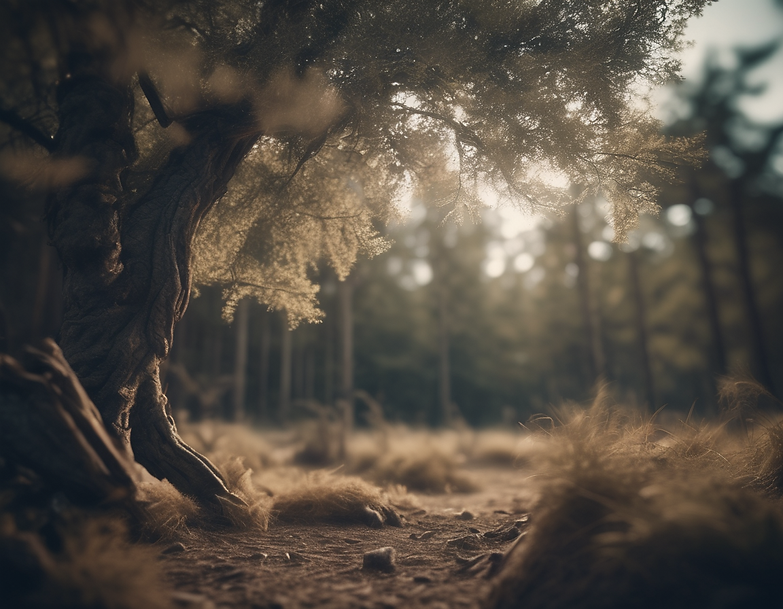
This image was generated with Dream Studio AI.

The world as it is now is better technologically, socially, medically and economically than it was a hundred years ago. But what we have imagined our contemporary world to be is far from what we are all currently experiencing. The future right now seems quite uncertain. In times where people witness on their mobile devices and in real time the destruction of nature, the pollution of our seas, skies and lands, the mass murders of children, women and animals all over the world, yet remain unperturbed, it's quite hard to imagine something can change.
Do we have to be completely and utterly shaken by all these events in order to wake up?
Do we have to be the ones filming atrocities to act? And how much more suffering do we have to witness to stop prioritising costs over lives, profits over well-being?
It can be so tiring and discouraging. Let's take a look at a few examples.

Every few years, there would be democratic protests in Eastern Europe. We fight against corruption, against malignant influence, against malpractices in various sectors and institutions. We fight for democratic values - rule of law, equality, education, safety for everyone and especially the vulnerable groups, liberty. And we always look to the EU, to Europe, to Western Europe. And we would politely ask Europe to hear us out, to listen, to show support. Only to be presented as corrupt, hostile and backward-thinking in the next annual summary. Because an MP would pick up on our movements just to further their own career or an agenda. In reality and unlike most people in the West, Eastern Europeans know and remember all too well the price of not upholding democratic order. We know it, we feel it, we remember it. We are no longer at the periphery of Europe, we are Europe. And it's disheartening when we see that when the much-needed help arrives, it tends to team up with the same corrupt interests we've been trying to deroot for decades. And one of the issues we notice here is inequality, Eastern Europeans are often seen as a cliche, as those that little to nothing depends on. But we are witnessing a shift in history right here, right now. Doing right by the East is a prospect for redemption. Having equal access to political, financial and economic opportunities will drive Europe forward and stabilise its positions.

A crucial point in covering safe environment for the current and future generations is environmental sustainability. There is a severe danger of extinction of plant and animal species and we must act now by initiating and maintaining practices that will help conserve nature, maintain biodiversity and diminish the consequences of industrialisation, pollution and energy consumption.

End to poverty and wars. Conflicts and wars lead to poverty, dicplacement of vulnerable groups, destruction of infrastructure, further pollution of the already endangered environment. Wars do not have place in a civilised world that aims to progress.

Animal safety. Even now we learn of thousands of animals being mistreated or subjected to cruelty. Whether it is in farms, homes and labs, financial gains should never be put before the well-being of animals.

Gender equality. Men and women should be presented with equal access to political, financial, health, education, social, and economic opportunities.

Acess to medical care for everyone.

Innovations that enhance environmental sustainability.

There are certainly a lot more aspects that we need to highlight and there is definitely work done on many of them, however, as we witness the changing world around us, it is just not enough and it might seem a little too late.

But isn't it darkest just before dawn?

related stories
hallo
A Fragile Balance
In the year 2040, the world had transformed in ways both hopeful and uncertain. Cities now thrived as green, interconnected hubs, their skyline dotted with sleek, solar-powered vehicles that hovered above the streets. Public transport, once overcrowded and polluting, had been replaced by autonomous electric pods, moving people swiftly through airways and tunnels, reducing congestion and emissions. The once-imposing traffic jams were a thing of the past. Yet, as humanity reveled in its advancements, the Earth was also telling its story—a story of recovery and fragility. Nature, scarred by decades of climate chaos, had begun to heal, but not without difficulty. Vast forests, once endangered, were now flourishing thanks to restored ecosystems and rewilding projects. Cities had reclaimed their green spaces, integrating vertical gardens, green rooftops, and urban farms. These innovations, born out of necessity, had become a symbol of hope for the planet. But the scars of past negligence lingered. Weather patterns had become unpredictable, and natural disasters, while less frequent, still struck with unrelenting power. A warning bell echoed in the back of people's minds—how much time was left before the tipping point came? On the global level, nations had united in an unprecedented alliance, working toward a common goal: food security and environmental stability. Vertical farming, once a novel idea, had become the norm. Skyscrapers in every major city were now home to expansive farms that grew everything from grains to vegetables, using less water and land than traditional methods. The Earth’s soil had been treated with respect, and sustainable farming practices had revived once barren fields. It was a revolution in agriculture—one that seemed to promise a future free from hunger. Yet, even as the world seemed to bloom, there were whispers of concern. Some wondered whether the changes were enough. Could technology truly fix everything? Could humans repair the damage of centuries in just a few short decades? It was unclear, but what was certain was that the path forward was one of careful balance—an ongoing dance between progress and preservation. The future, both hopeful and wary, was a world of resilience, powered by innovation and a deep connection to nature. But the greatest question remained: Would humanity sustain the fragile balance they had fought so hard to build? Only time would tell.
hallo
Τεχνικη νοημοσυνη
In 2040 we will have technical intelligence in our lives and a great evolution in computer programs.There will be no cash and we will only pay with cards and electronics.This evolution will have its positives but it will also have its negatives.I believe there will be a great evolution in health and surgery.
hallo
Ezt kívánom Magyarország!
This is a test translation for request ID: test-1742517249373
hallo
Bettering education and nurturing youths
Increasing wages for teacher and giving schools more funding. Isn't education important? But in Slovakia many new teachers suffer with low salaries while carrying the burden of taking responsibility for students. For those that pave the way for the future workforse of every country they should be rewarded accordingly. There may be professions which will disappear as technology and ai advances but schools and teachers are one of the few professions that have remained through history.
Join #OurFutures now!

The future is shaped by our ideas and our actions today. Tell us about your visions of the future and help us create a futures narrative aimed at inspiring citizens, policy-makers and foresight experts alike!

Our-futures-banner-coloured_v3.jpg

The European Commission support does not constitute endorsement of the contents which reflects the views only of the authors, and the Commission cannot be held responsible for any use which may be made of the information contained.

ERA_logo.jpg

We support the European Research Area aimed at creating a single, borderless market for research, innovation and technology in the EU.

©OurFutures 2025, All rights reserved.

  • Instagram
  • Facebook
  • LinkedIn
  • YouTube
bottom of page