top of page

My struggle

Anonymous

March 19, 2025
My struggle

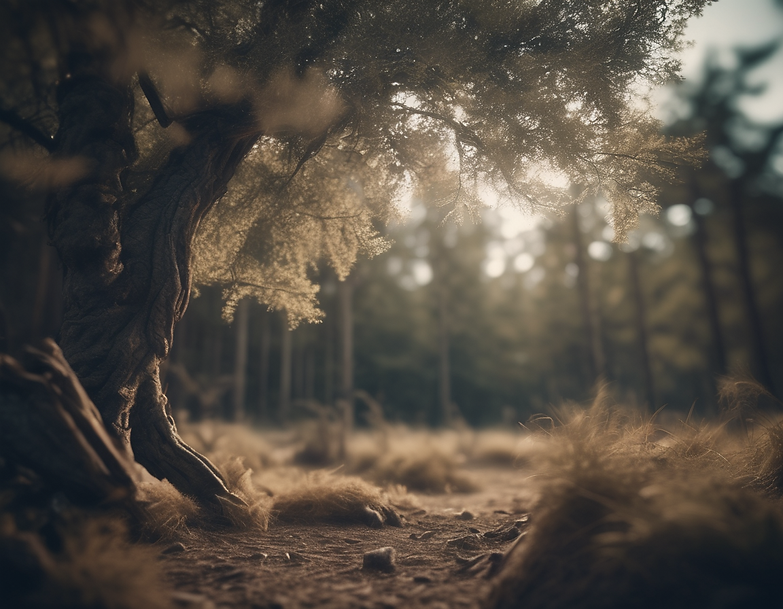
This image was generated with Dream Studio AI.

The world as it is now is better technologically, socially, medically and economically than it was a hundred years ago. But what we have imagined our contemporary world to be is far from what we are all currently experiencing. The future right now seems quite uncertain. In times where people witness on their mobile devices and in real time the destruction of nature, the pollution of our seas, skies and lands, the mass murders of children, women and animals all over the world, yet remain unperturbed, it's quite hard to imagine something can change.
Do we have to be completely and utterly shaken by all these events in order to wake up?
Do we have to be the ones filming atrocities to act? And how much more suffering do we have to witness to stop prioritising costs over lives, profits over well-being?
It can be so tiring and discouraging. Let's take a look at a few examples.

Every few years, there would be democratic protests in Eastern Europe. We fight against corruption, against malignant influence, against malpractices in various sectors and institutions. We fight for democratic values - rule of law, equality, education, safety for everyone and especially the vulnerable groups, liberty. And we always look to the EU, to Europe, to Western Europe. And we would politely ask Europe to hear us out, to listen, to show support. Only to be presented as corrupt, hostile and backward-thinking in the next annual summary. Because an MP would pick up on our movements just to further their own career or an agenda. In reality and unlike most people in the West, Eastern Europeans know and remember all too well the price of not upholding democratic order. We know it, we feel it, we remember it. We are no longer at the periphery of Europe, we are Europe. And it's disheartening when we see that when the much-needed help arrives, it tends to team up with the same corrupt interests we've been trying to deroot for decades. And one of the issues we notice here is inequality, Eastern Europeans are often seen as a cliche, as those that little to nothing depends on. But we are witnessing a shift in history right here, right now. Doing right by the East is a prospect for redemption. Having equal access to political, financial and economic opportunities will drive Europe forward and stabilise its positions.

A crucial point in covering safe environment for the current and future generations is environmental sustainability. There is a severe danger of extinction of plant and animal species and we must act now by initiating and maintaining practices that will help conserve nature, maintain biodiversity and diminish the consequences of industrialisation, pollution and energy consumption.

End to poverty and wars. Conflicts and wars lead to poverty, dicplacement of vulnerable groups, destruction of infrastructure, further pollution of the already endangered environment. Wars do not have place in a civilised world that aims to progress.

Animal safety. Even now we learn of thousands of animals being mistreated or subjected to cruelty. Whether it is in farms, homes and labs, financial gains should never be put before the well-being of animals.

Gender equality. Men and women should be presented with equal access to political, financial, health, education, social, and economic opportunities.

Acess to medical care for everyone.

Innovations that enhance environmental sustainability.

There are certainly a lot more aspects that we need to highlight and there is definitely work done on many of them, however, as we witness the changing world around us, it is just not enough and it might seem a little too late.

But isn't it darkest just before dawn?

related stories

hallo
Annika.r.hansson@gmail.com
It's hard to think so far because I'm 75 now. Above all, I want my children and grandchildren to live in a safe world with democratic values, have the opportunity to work and education based on their conditions , have access to a nature that is not private and also a culture that is not expensive
hallo
Älter werden im Dorf
Ich bin älter geworden. Ich habe mir mit meinem Partner den Traum erfüllt, nochmal ein Haus zu bauen - im Garten des alten Hauses war ja schließlich noch Platz! Kleiner als das alte Haus ist es nicht geworden, dafür besser aufgeteilt. Wir haben uns in die obere Wohnung zurückgezogen - das Büro im Untergeschoss wird nicht mehr gebraucht, seit wir uns aus dem Arbeitsleben zurückgezogen haben. Jetzt dient es als Appartement, wenn Kinder und Enkel zu Besuch kommen. Unsere Nachbarschaft verändert sich ständig. Trennungen und Todesfälle sorgen für Wechsel. Die Häuser stehen nicht lange leer. Es ist sehr beliebt, im Dorf zu wohnen. Hier achtet man immer noch aufeinander und das Zusammenleben funktioniert. Es gibt viele Angebote für Jung und Alt, dem meisten Leuten ist es wichtig, sich ehrenamtlich zu engagieren. Insgesamt eine gute Umgebung, älter zu werden.
hallo
kerjaan.dea@gmail.com
I would like 2040 to be antidiscriminate for people above 26 years old to get job. I mean here 26 years old is unmet to apply jobs. I mean its limited only from 18 to 25 years old. And the rest people are jobless even 40s and 50s years old. The issues are a lot. But i can't believe it its difficult here also to do business or self employee. Because everyone also have no job, and less moneys, to buy our products very challenging. I wanna see this will improved and people are secure financialy, can pay taxes, more integrity, prosper. I can't describe the future would be. Clearly, the future i wish is full of blessings and prosperity.
hallo
The European Dream
After the severe economic shock of 2026–2030, triggered by rising US geopolitical instability, a stock market crash, and the first major wave of AI-driven job displacement, hope felt in short supply. Across Europe, people shared the same anxious question: How did we let this happen again? Memories of the 2008 financial crisis returned, along with the unsettling sense that the world was moving backwards. The years that followed were marked by chaos, anger and growing polarisation. But from that instability came a realisation: Europe’s future could not be built on division. It could only be built on deeper cooperation. As the world became more fragmented, Europeans began to understand a simple truth more clearly than ever before: divided, we are weak; united, we are strong. By the early 2030s, politics began to change. Citizens stopped rewarding outrage, blame and division, and started demanding compromise, seriousness and shared purpose. Political leaders responded. What followed was something few had thought possible: the European Union federalised, and a new kind of superpower emerged. Europe did not rise through conquest, aggression or domination. It rose through cohesion, partnership and collaboration. We cut through the bureaucracy that had long slowed progress, not to pursue growth at any cost, but to build growth that was sustainable, fair and widely shared. Europe became more agile, more innovative and more confident in shaping its own destiny. As tensions between China and the United States deepened, Europe became the world’s common ground: a reliable partner, a trusted trading bloc, and a defender of liberal democracy, human rights and international order. In an increasingly unstable world, it became one of the few places where peace, predictability and freedom still felt secure. Now, in 2040, the European experiment is thriving. Europe has become a global centre of innovation, economic dynamism and social stability. The European Dream is no longer an aspiration, but a reality: a society where people have the freedom to build a business, raise a family and live with dignity and peace of mind. We have reversed population decline. In 2039, the EU recorded its highest birth rate in decades. Cross-European relationships and identities have flourished, helped by expanded Erasmus programmes and greater mobility across the Union. More and more people now see themselves not as French, Portuguese or Dutch first, but as European first, and proudly rooted in their region second. Europe also chose a different path on technology. While other powers used AI to intensify competition, control and division, the EU focused on using it to improve lives, strengthen public services and support strategic resilience. As a united bloc, we achieved far greater independence in energy, production and food security. Rather than causing mass long-term unemployment, this technological transition helped unlock a new era of job creation, renewal and opportunity. And Europe did not turn inward. It remained open to the world and became its safest and most trusted economic partner. The euro became the world’s leading reserve currency. Investment flowed toward stability, credibility and the rule of law. The Union continued to grow, with the UK rejoining in 2032 and Ukraine becoming part of the European project as well. Looking back from 2040, it is clear that the crises of the late 2020s did not destroy the European idea. They forced it to evolve. At the moment when everything seemed to be falling apart, Europe discovered that the only way forward was together. The European Dream became not just a vision of survival, but a model of renewal for the world.
Join #OurFutures now!

The future is shaped by our ideas and our actions today. Tell us about your visions of the future and help us create a futures narrative aimed at inspiring citizens, policy-makers and foresight experts alike!

Our-futures-banner-coloured_v3.jpg

The European Commission support does not constitute endorsement of the contents which reflects the views only of the authors, and the Commission cannot be held responsible for any use which may be made of the information contained.

ERA_logo.jpg

We support the European Research Area aimed at creating a single, borderless market for research, innovation and technology in the EU.

©OurFutures 2025, All rights reserved.

  • Instagram
  • Facebook
  • LinkedIn
  • YouTube
bottom of page