top of page

The collaps of Green Deal economy saves the Nature and European civilization

Anonymous

March 19, 2025

The collaps of Green Deal economy saves the Nature and European civilization

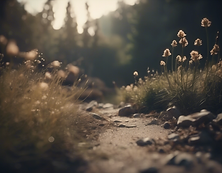
This image was generated with Dream Studio AI.

After huge pressure from un-corrupted scientists, reasonable environment protection groups and indigenous people of EU, EU leaders realized in 2025 that the construction of huge wind generators and solar parks at the expense of wildlife destruction is not sustainable and stopped this industrial scale activity. Only small (and low) wind generators and solar parks directly near the point of consumption are allowed, as particularly great destruction of nature resulted not only from the parks themselves, but also from the construction of new power lines to the scattered wind and solar parks in the natural landscape. Immigration has stopped, as there is not enough energy to heat living quarters and people from warmer parts of the world prefer North Africa to Europe. Additionally, as EU economy collapsed in 2028 due to wrong energy policies, there is no resources to offer social aid for immigrants who do not work. Without social aid money and worm living space there is no incentive to move to Europe. Declining population and real nature protection, with small local energy production from wind, solar, hydro and biogas from waste, cities are declining and rural population is growing. Cities did not have enough place to produce enough energy and so people started to move to smaller towns.The environment is gradually recovering from the damages caused to it by the green turn, food is healthier and produced 90% locally. World wide transportation is so expensive that only very rich can allow to eat bananas and drink coffee.

related stories
hallo
A Fragile Balance
In the year 2040, the world had transformed in ways both hopeful and uncertain. Cities now thrived as green, interconnected hubs, their skyline dotted with sleek, solar-powered vehicles that hovered above the streets. Public transport, once overcrowded and polluting, had been replaced by autonomous electric pods, moving people swiftly through airways and tunnels, reducing congestion and emissions. The once-imposing traffic jams were a thing of the past. Yet, as humanity reveled in its advancements, the Earth was also telling its story—a story of recovery and fragility. Nature, scarred by decades of climate chaos, had begun to heal, but not without difficulty. Vast forests, once endangered, were now flourishing thanks to restored ecosystems and rewilding projects. Cities had reclaimed their green spaces, integrating vertical gardens, green rooftops, and urban farms. These innovations, born out of necessity, had become a symbol of hope for the planet. But the scars of past negligence lingered. Weather patterns had become unpredictable, and natural disasters, while less frequent, still struck with unrelenting power. A warning bell echoed in the back of people's minds—how much time was left before the tipping point came? On the global level, nations had united in an unprecedented alliance, working toward a common goal: food security and environmental stability. Vertical farming, once a novel idea, had become the norm. Skyscrapers in every major city were now home to expansive farms that grew everything from grains to vegetables, using less water and land than traditional methods. The Earth’s soil had been treated with respect, and sustainable farming practices had revived once barren fields. It was a revolution in agriculture—one that seemed to promise a future free from hunger. Yet, even as the world seemed to bloom, there were whispers of concern. Some wondered whether the changes were enough. Could technology truly fix everything? Could humans repair the damage of centuries in just a few short decades? It was unclear, but what was certain was that the path forward was one of careful balance—an ongoing dance between progress and preservation. The future, both hopeful and wary, was a world of resilience, powered by innovation and a deep connection to nature. But the greatest question remained: Would humanity sustain the fragile balance they had fought so hard to build? Only time would tell.
hallo
Τεχνικη νοημοσυνη
In 2040 we will have technical intelligence in our lives and a great evolution in computer programs.There will be no cash and we will only pay with cards and electronics.This evolution will have its positives but it will also have its negatives.I believe there will be a great evolution in health and surgery.
hallo
Ezt kívánom Magyarország!
This is a test translation for request ID: test-1742517249373
hallo
Bettering education and nurturing youths
Increasing wages for teacher and giving schools more funding. Isn't education important? But in Slovakia many new teachers suffer with low salaries while carrying the burden of taking responsibility for students. For those that pave the way for the future workforse of every country they should be rewarded accordingly. There may be professions which will disappear as technology and ai advances but schools and teachers are one of the few professions that have remained through history.
Join #OurFutures now!

The future is shaped by our ideas and our actions today. Tell us about your visions of the future and help us create a futures narrative aimed at inspiring citizens, policy-makers and foresight experts alike!

Our-futures-banner-coloured_v3.jpg

The European Commission support does not constitute endorsement of the contents which reflects the views only of the authors, and the Commission cannot be held responsible for any use which may be made of the information contained.

ERA_logo.jpg

We support the European Research Area aimed at creating a single, borderless market for research, innovation and technology in the EU.

©OurFutures 2025, All rights reserved.

  • Instagram
  • Facebook
  • LinkedIn
  • YouTube
bottom of page