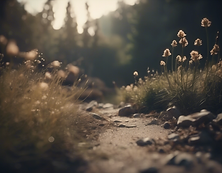
Winter Helsinki 2050 C (Talvinen Helsinki 2050 C)

Anonymous
July 21, 2023

This image was generated with Dream Studio AI.
In the morning, I wondered the morning of my morning to the link towards a nearby forest. In the morning, street lights ignited with what I close to me and closed behind. After the link, I stayed from the truck’s home and left towards the nearest fast track to which I travelled to the metro station. At the metro station, I got down to the metro. In metro, the clouds built there, when passing the fishing port, are cut off by cloud photographers. Nuostuani from the metro on the railway railway thus Finland’s main railway station
In all its old commands. Towards one of the dozens of offices in the centre The buildings that have been working longer than I say that the office is no longer in place since the last pandemic. AVAS computer and quantum computer for which I develop the system.
I live today in Tampere, but I now spend one night in Helsinki for work. I will travel to Helsinki by train early in the morning. The train journey lasted only one hour along a new line. Helsinki’s main railway station remains unchanged. It is surprisingly quiet on the outside, since private cars are currently prohibited in the city centre. I am very wondered about a white snow gang that is not used to see in the centre of Helsinki. Cars are no longer dirting it and street heating has been phased out to save energy and carbonise the heat island effect.
Prior to my posting, I will visit my homelands of childhood in the Arabian Bank. Pick up from the tram at the shopping centre. The old brick building is in place, but new dwellings have been built. There is no longer a demand for artisanal movements.
After reaching the beach, I will see how many grasslands have grown from the genome of an open area that was still grassland for decades ago. There is a clear improvement in biodiversity. Three towers are still familiar along the direction of the fishing port, as the construction project was not completed. The barrels of the Hana Island and Salmisaare power plants have disappeared from the landscape since they closed more than two decades ago.
After the works, I go to the evening of the Kaivo Park to spend time before the meeting. The sky of the sun is dark, the amount of waste light has been severely limited in order to save electricity and promote animal welfare. The perception of astronight has also been shown to contribute to people’s well-being. Helsinki has changed for the better from what it was three decades ago.
Belated worm and run-off. After getting out of the door, the knee up to the snow and I don’t need to be riaked. I therefore decide to walk and watch the landscape, because I am belated. The end-to-end green corridors of the city show little movement in winter. I need the voices of nature in the summer. Otherwise, nowadays, it is quiet because the volume of traffic is much smaller. So there are few voices, and only a whitle-white clean snow is visible. I walk to work in a calm landscape.
I received a report on the increase in Lepidoptera in Helsinki, where I was very satisfied. I have a certain success, because increasing biodiversity has been one of my objectives. It has been greatly affected by the expansion of urban vegetation areas and their naturalisation.
After the working day, I will decide to go to the nearby forest to see the stars, which I will do in most of the lunches. They are visible because I no longer have so much light pollution. Then in the direction of the meeting place of my group.
We meet and leave at our old secondary school towards Vallia
—Convenient when today’s roads are white
—in
—Is not brown
—no. Nor does it improve its driving so much
—No really not
an ongoing debate
—Helsinki did not achieve its objective of increasing the number of inhabitants;
ideally leave space for non-residential buildings in the city
it is also good in terms of the cost of services, including housing;
—No Joo
—albeit it has also fallen
—yes would be able to accommodate a large number of people if more cloud designers were built;
—is a problem here too;
—that is.
—they do not agilely increase the population;
—and create a lot of shadow that hampers all forms of vegetation;
—nii that they did not come;
—fortunately:
—although not much more buildings have been built;
—No did not need it when older people are already full of the place
—they have been able to repair
administrative buildings have also been saved from the 19th century when they have been renovated, i.e. no wonder that we have been able to work in the same way as other buildings
This has been saved yes to forests
I remember that, at least in the south of Laajasalo, the construction project was interrupted and the forest is safe
It was a stone
Indeed. In addition to the voyage of Laajasalo, many more forests have been left natural.
Excluding small paths
No Joo, but not much of the forest, if one part of the tree takes off the pole and moves further away to allow it to navigate
No. No.
The story has increased diversity, but much more
Dear so,
nature is better in the city
everything seems to go better than could have been imagined in the past
related stories