top of page

Stories for the future of Europe
Join us in exploring the possibilities of the future! Share your future perspectives, discover other people’s visions, and engage in a dialogue on what Europe and the world may look like in the future. We collect, share and distribute your visions in our stories database.
Share your visions of the future!
Your ideas matter – shape the future you want! Share your visions of tomorrow and join us in creating a narrative that inspires citizens, policymakers, and foresight experts. Together, we can co-create the future.
Write your future story and answer a few questions
Find out what others think by exploring other contributions
Take a look at the #ourfutures dashboard for some numbers
Your story, and those of others, are presented to EU policymakers
Stories - find your inspiration!
Stories do shape futures. Dive into the video tutorials to explore how future narratives are born. Further below, browse trough a series of inspiring, thought-provoking stories around challenges and opportunities of our futures.

Share your visions of the future!
Get inspiration from the Storiesfrom2050 project

Inside the first self-sustainable city on Mars - by ABIBOO studio
Construction of the city of Nüwa could start in 2054 and will see 250,000 people live inside the rock of a steep cliff. Freeze my body, melt me in 80 years, and send me to Mars. Architecture studio ABIBOO has revealed its plans to create the first self-sustainable city on the Red Planet, which is set to be ready for residents in 2100. The city will be called Nüwa and will be located at Tempe Mensa on one of the Martian cliffs. Its position inside a rock on the steep cliff will protect its residents from radiation and meteorites (cool!) while still giving them
Play the videos to learn how future narratives are born and how they can be rewritten
Play the videos to learn how to use the OurFutures dashboard for analysis or workshops
See more tags
#OurFutures stories by EU citizens
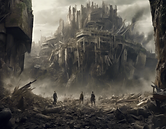
Équité mondiale et inclusion sociale
Not only has humanity put an end to the massive destruction of the environment, but it has also begun to restore the destroyed ecosystems. Forests recover, desertified lands are restored, oceans are effectively protected and coral reefs are repaired
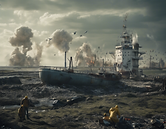
une époque idéale
Diseases are defeated , everyone lives in good health, accidents are rare and well cared for. Transport does not cause pollution thanks to new technologies. The world is in harmony with nature. Education is ongoing.

Barn och pensionärer.
I would like to see 2040 bet on the schools. There should be staff so that all children who need help can have a good day at school. They spend so much time in school and unfortunately many children do not feel well during school hours unfortunately. Then it will be spent on pensioners. In today's Sweden, there are too many poor pensioners. They've been working a whole life because when they can't work anymore they get to eat oatmeal 7 days a week. It is not a dignified life that awaits Sweden's many pensioners. After everything that has been with COVID and expensive loans, etc., we need a big investment in our pensioners. Sweden is good in many ways, but more equal wages between women and men would be a matter of course.
Optimist löpuni
Life has gotten better. The country still has to recover financially from the consequences of the idiocy of the green transition, but fish, birds and animals have started to return to the area after the wind turbines have been shut down and demolished. Young people seem to be inclined to grow their own food, and the fattening of corporations has almost been abandoned. This financial system, which the Muhuans thought out and developed, is making a difference. We no longer have to pay huge fees to Swedish banks. It was a good thing that the state had the courage to impose taxes on them. Eventually, they fled the country because the state wouldn't let them do business.
As there are more young people in the countryside, there are now more children here. And they're diligent. Workouts, circles, choral singing, they go everywhere.
Things seem to be going uphill in the country because these assets are still in the ground and, by the way, they have not been parsed off to foreign companies. The state digs for itself and in such a way that it will not be a problem for the lean water.
The future looks bright and at the same time the hard times that were in the 20's have been overcome :)
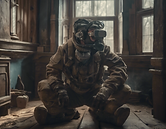
Gaišās vecumdienas
Given that I will be retired soon, I hope that I will be able to enjoy my old age peacefully. That there will be enough people in Latvia to get my old-age pension. I hope I could live climate neutrally, the House would be at least passive, or if it were still an apartment in the city, then in a thoroughly insulated house. I hope I can afford to buy and use an electric car by charging it from solar batteries right there in my house. Ideally, I have one car and kids on each electric car as well. I will definitely continue to sort the waste. I assume that it will be possible to separate the combustible lightweight packaging from the recyclable packaging. Also, the deposit system will hopefully be wider, adding more items to the current ones. And it would be good if every time you arrive to hand over the packaging, it would be possible to hand it over. I will probably continue to move around the city with public transport, which will hopefully be highly electric. I hope that most food will not be transported far away. Things that are available on site are better not to be transported far away. What is not available on site can be transported, but everything available on site will not be transported far away. Wind and solar energy will also be more widely available.
Minu linn ja selle elanikud
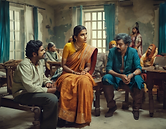
In 2040, my hometown and its inhabitants have changed. It has been concluded that screen addiction is still a serious addiction and there are more and more active attempts to move out of the online world in everyday activities. More community events and hobby groups are taking place, which has led to an increased interest in well-organised public spaces, and more and more sports and playgrounds are being built in the city, as well as opportunities to spend time indoors together, especially during cooler weather. It's a rare thing on the street that someone is on the phone. Residents increasingly value high-quality urban space and many cycle tracks and roads have been built. Sustainability is an important value - repair workshops and handicraft circles are a common phenomenon, clothes are preferred to be bought second-hand or made by themselves. There is no more separate packaging-free or "best before" grocery stores, but as a normal part of chain stores, there is as much packaging-free trading as possible, and there is a separate aisle for things that lose their shelf life. It has become normal to travel by bus, bicycle or foot, because the transport connections are very good, and in winter, light traffic can be reached everywhere, walking and cycling paths are opened first. There are essentially no vacant or unmaintained plots of land in the heart of the city and adjacent areas - as many historical sites as possible have been restored, unused sites have been taken into use. Priority will be given to densely populated areas and their bonuses. The banks of the Emajõgi River are in order and it is possible to walk along them for a long time throughout the city. The community is confident and warm, those in need always find support and are interested in each other's well-being even when they don't really know each other.

El fin de la pesadilla
It was born as a dream, but it became a nightmare. Once proud nations, with centuries of history behind them, were invaded by a human tide determined to shred them and ultimately conquer and erase everything they represented. Fortunately, there were brave people who faced the invasion, who understood that Europe was not a positive concept, but a trap. And, when sensible people finally came to power in the various nations that made up the so-called European Union, they made the only possible decision: abandon a failed entity and recover what made them great in the past. And Europe was once again what it was, what it should never have ceased to be: a continent made up of independent countries that looked out for their own interests.

Vivir
A more just and equitable world, where we fight to avoid war, end poverty and hunger. Where the energies used are as clean as possible and much or most of the natural resources have been recovered and preserved.
Harmonie
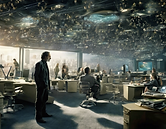
2040 : this figure seems a long way off, but it is only 15 years from now!
What were we doing 15 years ago: in 2010? Between that date and today there is more talk about artificial intelligence, climate, electric cars.
In 15 years, will we have made more effort to green our cities and build buildings that are consistent with the climate? It seems difficult to change people’s mindsets – especially when new buildings emerge from the ground without heat and cold insulation systems!
I must say that I hope that humans will act faster and less slow down because there is no profit.
I dream of plants in places where trees were torn off a few years ago in favor of slabs, etc.
I dream of rechargeable and non-disposable batteries that will pollute the planet even more
I dream of a decent income for everyone, and a decent roof.
I dream of a humanity that respects others on all levels.
énergie du futur
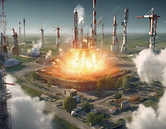
In 2040, the energy world underwent a radical transformation, the result of decades of innovation and efforts to reduce dependence on fossil fuels. Environmental challenges, rising global demand and technological advances have led to a reinvented energy landscape, where renewable sources dominate and energy efficiency has become a priority.
In 2040, solar and wind energy became the main sources of electricity. Photovoltaic panels, whose efficiency has exceeded 50%, cover not only the roofs of homes and businesses, but also roads and public infrastructure. Wind power has also progressed with floating turbines capable of exploiting more powerful and constant sea winds.
At the same time, storage technologies have grown dramatically. Graphene batteries, which are more efficient and durable than lithium-ion batteries of the past, make it possible to store excess energy produced for optimal redistribution.
Green hydrogen has also taken a central place in the energy transition. Produced by electrolysis of water thanks to electricity from renewable sources, it powers both heavy transport and industries, offering a clean alternative to fossil fuels.
With the progress of smart grids, energy management has become ultra-efficient. These networks allow distribution adapted to demand in real time, optimizing consumption and reducing waste. Homes and businesses have become energy producers thanks to autonomous and interconnected microgrids.
Artificial intelligence plays a key role in this revolution, predicting energy needs and adjusting production accordingly. Connected objects also enable fine-grained consumption management, offering users real-time recommendations to optimize their energy use.
In 2040, mobility became largely electrified. Thermal cars have almost disappeared, replaced by ultra-efficient electric vehicles, whose range exceeds 1000 km thanks to new batteries based on sodium and magnesium. Charging infrastructure is ubiquitous, integrated with roads and parking spaces for instant wireless charging.
Public transport has also been revolutionised. Hydrogen trains, hyperloops and autonomous electric buses have replaced the majority of traditional means of transport. In major metropolises, drones-taxis and solar bikes allow for fast and clean travel.
While nuclear energy slowed down in the years 2020-2030, it reappeared in a safer and cleaner form with molten salt reactors and small modular reactors (SMRs). These technologies allow stable production without radioactive waste in the long term.
Nuclear fusion, once reserved for science fiction, began to be exploited commercially. Fusion reactors operate without dangerous fissile fuel and offer an almost unlimited source of energy.
In 2040, the energy transition is based not only on production, but also on smarter and more responsible consumption. Energy efficiency has become an unavoidable standard. Buildings are designed to be self-sufficient, with intelligent materials capable of regulating the temperature without excessive use of air conditioning or heating.
Energy recycling has also developed. For example, the heat produced by data centers is recovered to power district heating networks. CO2 capture and storage systems reduce the industrial carbon footprint and produce new synthetic fuels.
In 2040, humanity entered an era where energy is clean, accessible and intelligently managed. Dependence on fossil fuels is no more than a memory, replaced by a sustainable system based on innovation and environmental responsibility. While challenges persist, notably in terms of fair energy distribution, the future looks bright and promising for a greener and more resilient planet.

Europas fald
With the economic collapse of Germany in 2027 and its withdrawal from the economic union, France and Italy failed to contain the polarised political developments that divided European unity. During the European political turmoil, the Soviet Empire was re-created in Eastern Europe with the incorporation of the Baltic states, encouraged by Slovakia, Hungary and Romania, which had previously withdrawn from the NATO pact. The Nordic Union was founded as a counter-party to the failed Europe and the Soviet Union. The Union introduced the common Nordic currency, the Crown. Europe's subsequent collapse resulted in massive Chinese acquisitions of key utilities. Unemployment across Europe is high and climate change has led to large uncultivated areas in southern Europe, resulting in massive migrations to the north, where food and basic necessities are scarce. Political systems are undermined by corruption, so maintaining order is governed by cartels across countries. Hunger, lawlessness and chaos are the cause of frequent conflicts and civil war-like conditions that are politically exploited by the Soviets, who are constantly expanding their territory to the west!
Cuando ya solo importemos nosotros.
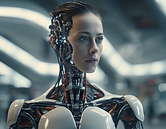
In this year I would like that technology, artificial intelligence, robotics and neurisciences have made people's work unnecessary and that we can devote as much time as possible in human relationships, without the conditioning of money. That society be free and that freedom be respected and respected by all human beings.
Stories
Heading 2

bottom of page